Last updated:
Electrical Diagnostics & Repair in Elkridge, MD
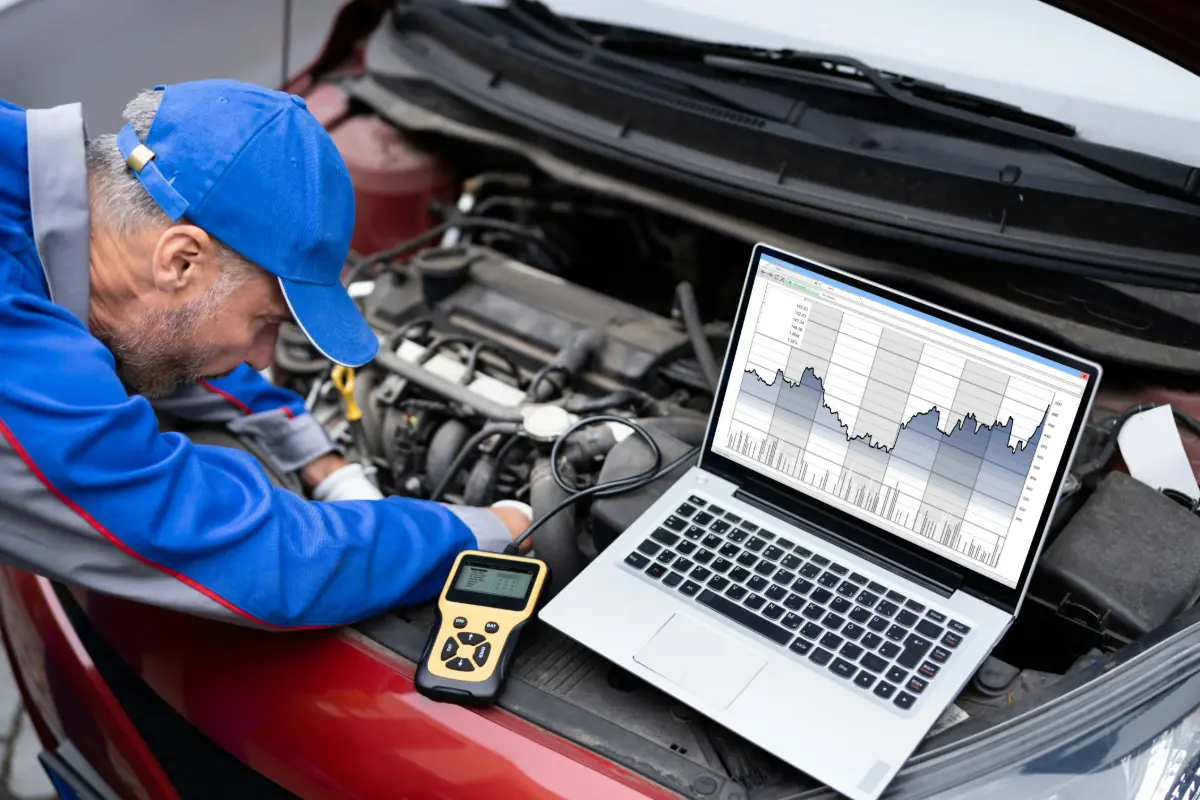
Modern vehicles rely heavily on complex electrical systems, from starting and charging to advanced onboard electronics. At API Auto Repair, our Electrical Diagnostics & Repair services are designed to accurately identify and resolve issues with your vehicle's wiring, sensors, modules, and electronic components. Whether you're experiencing problems with your battery, alternator, starter, lights, power windows, or dashboard warning lights, our expert technicians use state-of-the-art diagnostic tools to pinpoint the exact cause. We are skilled in repairing electrical shorts, open circuits, and replacing faulty sensors or control modules, ensuring all your vehicle's electrical systems function correctly and reliably.
Modern vehicles are rolling computer networks. The typical 2020-or-newer car contains 50 to 150 distinct electronic modules — each with its own processor, memory, and communication protocols — coordinating through several different networks (CAN, LIN, FlexRay, MOST, and Ethernet) at varying speeds. These systems control everything from the most basic functions like starting and lighting to sophisticated assistance features like adaptive cruise control, lane keeping, automatic emergency braking, and increasingly, partial automated driving. When an electrical problem develops in any of these systems, the symptoms can range from a single warning light to multiple cascading failures across seemingly unrelated systems. Accurate electrical diagnosis requires equipment that can communicate with every module, training that interprets complex network data, and the patience to trace problems through layered systems.
API Auto Repair has been performing electrical diagnostics in Elkridge for over thirty years. Our experience spans the full evolution from simple analog electrical systems through computerized engine controls, body computer networks, and today's sophisticated multi-network architectures. We've diagnosed and repaired everything from corroded ground straps causing intermittent stalling to failing CAN bus terminating resistors taking down entire vehicle networks to programming errors after battery replacement leaving vehicles with random feature failures. The same diagnostic skill applies whether you're driving a 1995 Ford pickup or a 2024 luxury SUV — the techniques scale with the technology.
The diagnostic challenge with modern electrical systems is that single underlying causes can produce wildly different surface symptoms. A weak battery can cause your radio to lose presets, your power windows to operate slowly, your transmission to shift roughly, and your check engine light to illuminate — all from one underlying voltage condition. A corroded ground at the engine block can cause intermittent stalling, dashboard warning lights, and erratic gauge readings. A single failing module can trigger fault codes throughout the entire vehicle as other modules detect missing communication on the network. Understanding these patterns is what separates accurate electrical diagnosis from random parts replacement.
We invest in manufacturer-grade diagnostic equipment because consumer-grade scan tools simply can't access the full picture of modern vehicle electrical systems. Our tools communicate with every module on every network protocol, display live data streams across multiple modules simultaneously, perform bidirectional control to test individual components, and access manufacturer-specific procedures for complex repairs like module reprogramming and security system relearns. The investment in equipment reflects our commitment to actually solving electrical problems rather than guessing at them.
Features
Battery & Charging System Test
Ensuring your battery and alternator are functioning correctly.
Wiring & Circuit Repair
Diagnosing and fixing electrical shorts or open circuits.
Sensor Replacement
Replacing faulty sensors affecting vehicle performance.
Module Reprogramming
Updating or repairing vehicle control modules.
Signs You Need This Service
Multiple Warning Lights On Simultaneously
When several dashboard warning lights illuminate at once — check engine, ABS, traction control, airbag, brake — the underlying cause is usually a single failure affecting multiple systems through shared communication or power. Common causes include low battery voltage, a failed module on the network, corroded grounds, or wiring damage.
Intermittent Starting Problems
A vehicle that starts perfectly some days but takes multiple attempts other days usually has an intermittent electrical issue: weak battery, failing starter solenoid, poor connections at battery terminals, intermittent ignition switch contact, or anti-theft system glitches. Intermittent issues are harder to diagnose than persistent ones because the symptom may not be present during the appointment.
Battery Drains Overnight
If your battery is dead in the morning despite being fine the previous evening, you have a parasitic drain — a circuit drawing current when the vehicle is off. Common culprits include faulty switches that don't fully turn off accessories, glove box or trunk lights with broken switches, aftermarket alarm systems, failing modules that don't sleep properly, and dome lights that didn't fully turn off.
Power Accessories Operating Erratically
Power windows that operate slowly or not at all, door locks that work intermittently, power seats that move haltingly, sunroofs that get stuck mid-cycle — these symptoms often indicate either weak battery voltage, motor failure, switch contact issues, or wiring problems in the door harness. Intermittent power accessory problems on multiple doors point to body control module or main wiring issues.
Lights Dimming or Flickering
Headlights or dashboard lights that dim during idle or flicker while driving usually indicate alternator problems, weak battery, or poor ground connections. Lights that brighten with engine RPM and dim at idle suggest the alternator can't maintain full output. Lights that flicker independent of engine speed often point to failing voltage regulators or wiring issues.
Dashboard Gauges Reading Incorrectly
Speedometer reading wrong speeds, fuel gauge stuck at a specific level, temperature gauge reading inaccurately, or tachometer behaving erratically all indicate either sensor failures, gauge cluster problems, or communication issues between modules. Modern instrument clusters receive data digitally rather than from individual sensors, so cluster-wide problems often trace to communication or module failures.
Strange Smells of Burning Plastic or Electrical
Burning plastic or burning rubber smells from the dashboard or under the hood are urgent — they typically indicate a wire short or component overheating. Stop driving as soon as safely possible and have the vehicle inspected immediately. Electrical fires in vehicles are rare but they happen, and the warning signs always precede the fire.
Our Service Process
- 1
Detailed Customer Interview
Electrical diagnosis depends heavily on understanding when symptoms occur and under what conditions. We ask detailed questions: when did it start, what was happening when it first appeared, are there specific conditions that trigger it, what other recent service has been performed. Customer-reported information often reveals the actual cause faster than diagnostic equipment alone.
- 2
Battery and Charging System Test
Almost every electrical diagnosis starts with verifying the battery and charging system are healthy. Low voltage causes symptoms across every electronic system in the vehicle. We test battery state of charge, cold cranking amps under load, alternator output, and voltage regulation. Many electrical 'problems' resolve when battery and charging system issues are addressed first.
- 3
Multi-Module Diagnostic Scan
We connect a manufacturer-grade scan tool that communicates with every module on the vehicle's networks. We retrieve active codes, pending codes, and stored historical codes from every module. We document network communication health — modules that aren't responding may have power issues, wiring problems, or actual module failure. This comprehensive picture guides where to focus diagnosis.
- 4
Live Data Stream Analysis
Codes alone don't always identify root cause. We watch live data from multiple sensors simultaneously to see what's actually happening when symptoms occur. Voltage levels, sensor readings, communication traffic, and timing relationships all reveal patterns that lead to specific component identification. Modern scan tools can data-log over extended periods for intermittent problems.
- 5
Wiring and Connection Inspection
Many electrical problems trace to wiring issues rather than component failures: corroded connectors, damaged wire insulation, broken solder joints in modules, oxidized ground points, and chafed wires in harnesses. We physically inspect connectors and wiring at suspected locations, often finding the actual cause where component substitution would have failed.
- 6
Voltage Drop and Continuity Testing
Specific electrical problems require targeted testing with multimeters, oscilloscopes, and specialty equipment. Voltage drop tests identify high-resistance connections that cause intermittent problems. Continuity tests verify circuits have clean paths from source to ground. Oscilloscope traces reveal signal quality issues that affect sensor readings.
- 7
Component Activation and Bidirectional Tests
Modern scan tools can directly command components to operate independently of normal control logic. We can fire individual fuel injectors, cycle the cooling fan, activate door lock actuators, command window motors to move, and dozens of similar tests. These bidirectional tests verify whether components themselves are functional, separating component failure from circuit failure or computer command issues.
- 8
Diagnosis Confirmation and Repair
Once we've identified the root cause, we confirm by isolating the suspect component or circuit and verifying that addressing it resolves the symptom. We provide a written diagnostic report listing what we found, what we tested, our conclusions, and a written estimate for the repair. Only after your authorization do we proceed with parts replacement or repair.
What's Included in This Service
Battery State and Load Test
Voltage, cold cranking amps, and reserve capacity verified under load.
Alternator Output Test
Charging voltage at idle and at higher RPM verified within manufacturer specifications.
Starter Current Draw Test
Starter motor current draw measured to identify excessive draw indicating wear or binding.
Multi-Module Diagnostic Scan
Every module on every network scanned for codes; communication health verified.
Live Data Stream Capture
Real-time sensor and module data captured during symptom occurrence when applicable.
Voltage Drop Testing on Suspect Circuits
Targeted testing to identify high-resistance connections that cause intermittent problems.
Ground Strap and Connection Inspection
All major ground points checked for corrosion, looseness, or damage.
Visual Inspection of Wiring Harnesses
Visible wiring inspected for chafing, corrosion, rodent damage, and connector condition.
Component Activation Testing
Bidirectional control used to verify component function independent of normal control logic.
Written Diagnostic Report and Estimate
Comprehensive report with findings, test results, conclusions, and repair recommendations.
Why Choose API Auto Repair
Manufacturer-Grade Scan Tools, Not Generic Code Readers
Free code readers and basic OBD-II scanners can't access the full picture of modern vehicle electrical systems. We invest in factory-level diagnostic equipment that communicates with every module on every network. The right tools mean we identify actual electrical problems instead of guessing.
30+ Years of Pattern Recognition
Some electrical problems repeat across specific vehicle generations. We've seen the BMW E46 secondary air pump issues, the Ford F-150 IWE solenoid failures, the Subaru wheel speed sensor corrosion patterns, the GM EBCM failures. Pattern recognition often saves hours of diagnosis because we already know what's commonly behind specific symptoms.
Module Programming and Reprogramming Capability
Many modern repairs require module programming or reprogramming — replacing a module requires loading the right software for the specific vehicle, and some repairs require updating software to address known issues. We have the tools and access required for most module programming work.
Honest Diagnosis vs Parts-Cannon Approach
Electrical problems are tempting to diagnose by elimination — replace components hoping one of them is the issue. We diagnose by isolating root cause through testing, then confirm before replacing. This approach saves customers thousands by avoiding unnecessary parts replacement.
Diagnostic Fee Credited Toward Authorized Repairs
We charge for diagnosis because the equipment, training, and time are real costs. But we credit the diagnostic fee toward authorized repairs, so customers who get the work done with us effectively pay only for the repair itself.
Electrical Diagnostic and Repair Pricing in Elkridge, MD
Electrical diagnostic fees at API Auto Repair typically run $100–$250 for standard problems, depending on complexity. Simple battery and charging system diagnosis is at the low end. Complex intermittent problems requiring extended data logging, network analysis, or specialty equipment may run $250–$500 for diagnosis alone. We always quote diagnostic time upfront, and the fee is typically credited toward authorized repairs.
Common electrical repair pricing varies widely based on what's actually needed. Battery replacement runs $130–$400 installed depending on type. Alternator replacement is typically $400–$1,000. Starter replacement runs $400–$900 for most vehicles. Wiring repair is highly variable — a simple connector replacement might be $50, while tracing and repairing a complex wiring harness fault can run $300–$800. Module replacement varies enormously: a simple body control module might be $300, while a complex powertrain control module replacement with programming can run $800–$2,500.
Some electrical repairs are deceptively expensive because of programming requirements. Replacing a powertrain control module on a modern vehicle requires loading the correct software, programming the immobilizer, and sometimes performing crash data clearance. Some luxury vehicle modules require dealer-only programming that we'll let you know about upfront if applicable. We always explain pricing components clearly so there are no surprises, and we discuss honest trade-offs when there are options between OEM and aftermarket parts.
Tips to Extend the Life of Your Service
Replace Batteries Before They Fail
Most batteries give warning signs of impending failure: slow cranking, reduced capacity in cold weather, age over 4 years. Don't wait for total failure — proactive replacement at year 4 or 5 prevents the cascade of problems that low voltage causes throughout modern electrical systems.
Keep Battery Terminals Clean
Corroded battery terminals create high resistance that causes the same symptoms as a weak battery. Clean terminals annually and apply terminal protectant. White or green corrosion indicates active deterioration that needs immediate cleaning.
Don't Ignore Warning Lights
Modern vehicles have dozens of warning indicators, and most have specific meanings. Ignoring them lets small problems compound into expensive ones. Even informational warnings — service required, low fluid, scheduled maintenance — should prompt attention rather than dismissal.
Address Parasitic Drains Promptly
If your battery dies overnight or after a few days of disuse, you have a parasitic drain. Letting it continue accelerates battery wear and creates inconvenience. Diagnosis identifies the source — often a stuck switch, faulty module, or aftermarket accessory — and the fix is usually inexpensive.
Have the Charging System Tested Annually
Alternators degrade gradually before failing completely. Annual charging system testing catches weak alternators before they leave you stranded. We test charging systems for free during regular maintenance visits — including oil changes — and flag developing issues before they become problems.
Disconnect the Battery for Long Storage
Vehicles that sit for weeks or months should have the battery disconnected to prevent parasitic drains from killing it. Alternatively, use a battery maintainer (trickle charger) that maintains charge without overcharging. Modern vehicles' parasitic loads can drain a fully charged battery in 2–4 weeks of disuse.
Be Cautious With Jump Starts
Modern vehicles can be damaged by improper jump starts. Reverse polarity, sudden voltage spikes, or jumping from a running vehicle's high-output alternator can damage modules. Use the manufacturer-specified jump points (often labeled in the owner's manual or under the hood), and prefer jump packs over car-to-car jumping when possible. If your vehicle is reluctant to jump, the safer approach is calling for service rather than risking module damage.
Document Aftermarket Modifications
If you've added aftermarket accessories — alarms, remote start, lighting, audio, dash cameras — keep documentation of the installation including which circuits were tapped, which fuses were added, and where modules were placed. This documentation accelerates diagnosis if problems develop and helps future shops avoid making the situation worse during unrelated repairs.
Address Corrosion Early
Visible corrosion on battery terminals, ground straps, or under-hood connectors should be cleaned and protected when first noticed. Corrosion progresses — what's a five-minute cleaning today becomes a multi-hour wiring repair next year. Annual under-hood inspection during oil change service catches developing corrosion before it causes electrical symptoms.
Use Quality Replacement Parts on Critical Circuits
Cheap aftermarket sensors, ignition components, and modules often produce out-of-specification readings that cascade through the vehicle's network. Spend the small premium for OEM-equivalent quality on safety and emissions-related components. The labor savings from not chasing repeat issues more than offsets the parts cost difference.
Serving Elkridge & Howard County, MD
Howard County's seasonal extremes create predictable electrical wear patterns. Maryland winters with their freeze-thaw cycles and salt-laden roads accelerate corrosion on connectors and grounds, particularly at exposed body grounds and wheel-area connectors. Summer humidity contributes to corrosion at less-protected connection points. We see seasonal spikes in electrical problems — January and February for cold-start issues and corroded connections, July and August for heat-related module failures and wiring insulation breakdown.
Vehicles operated primarily in I-95 commuter traffic experience accelerated electrical component wear because of the sheer number of restart and high-load cycles per mile. Each restart loads the starter motor heavily; each high-load acceleration stresses the alternator; each idle period at temperature stresses cooling fan motors and HVAC components. We commonly see Howard County commuter vehicles needing electrical service somewhat earlier than vehicles used for highway-dominant driving.
We work with several Howard County customers who own classic vehicles, project cars, and restoration vehicles. These vehicles often have unique electrical challenges — outdated wiring insulation, undocumented modifications, components no longer in production. We approach classic-vehicle electrical work with appropriate care and patience, sometimes recommending wiring harness replacement for vehicles where 40+ year old insulation has dry-rotted into a fire risk.
Understanding Vehicle Networks: CAN, LIN, FlexRay, and Ethernet
Modern vehicles use multiple distinct networks to communicate between modules, each optimized for different requirements. Understanding the basics of vehicle networks helps explain why some electrical problems are simple sensor failures while others cascade through the entire vehicle. The most common network is CAN bus (Controller Area Network), used since the 1990s for engine, transmission, and chassis module communication. Standard CAN runs at 500 kilobits per second on a two-wire twisted pair. Higher-speed CAN-FD and ISO 11898 variants run at 1–8 megabits per second on newer vehicles.
LIN (Local Interconnect Network) is a single-wire network running at much lower speeds, typically used for less time-critical functions like window motors, seat motors, mirror adjustment, and other body controls. LIN networks are simpler and cheaper than CAN and don't need the bandwidth of safety-critical systems. Most modern vehicles have multiple LIN sub-networks branching off from a master CAN bus controller.
FlexRay is a high-bandwidth deterministic network found primarily on luxury vehicles and used for safety-critical applications like advanced driver assistance and adaptive suspension. FlexRay runs at 10 megabits per second with predictable timing guarantees that CAN can't provide. MOST (Media Oriented Systems Transport) was used historically for infotainment data; it's increasingly being replaced by automotive Ethernet for high-bandwidth applications like camera feeds for parking assist and lane monitoring.
When networks fail, the symptoms can be dramatic. A single failed module can pull a network down — preventing other healthy modules from communicating. Network failure cascades trigger multiple warning lights as each module detects missing data from its peers. Properly diagnosing network failures requires equipment that can identify which module isn't responding and why. We have the tools to do this; basic OBD-II scanners cannot.
Why Modern Electrical Diagnosis Takes Longer Than It Used To
Customers sometimes express frustration that electrical diagnostics seem to take longer (and cost more) on modern vehicles than older ones. The reason is straightforward: modern vehicles have orders of magnitude more electrical complexity. A 1985 vehicle had perhaps a dozen electrical circuits and one or two simple modules. A 2024 vehicle has dozens of modules, hundreds of inputs, thousands of possible diagnostic codes, and multiple communication networks. Diagnosing a problem in a system this complex requires more equipment, more training, and more time.
Diagnosis itself has become a specialty discipline. The technician needs to understand not just the basic electrical system but also how networks behave, how modules communicate, how programming affects function, and how to read the increasingly complex diagnostic data that scan tools produce. Some shops opt out of complex electrical work entirely because the equipment investment is significant and the diagnostic skill takes years to develop. We've made the investment because complex electrical work is increasingly common and customers need shops that can handle it.
The labor time guides published by manufacturers and aftermarket data services often understate the actual time needed for accurate electrical diagnosis. The guides cover specific repair operations but typically allocate only generic 'diagnostic time' that's often inadequate for complex problems. We sometimes diagnose for hours on intermittent problems that the labor guide allows 30 minutes for. Honest diagnostic billing reflects actual time spent rather than under-estimated guide values.
The other factor that makes modern diagnosis longer is the prevalence of multiple-cause problems. Older vehicles tended to have single-point failures: one component fails, replacing it fixes the issue. Modern vehicles often have problems that result from interaction between multiple components, software calibration issues, or data communication problems. Sorting these out takes systematic, methodical work — exactly what we do, and what generic diagnosis approaches miss.
When Aftermarket Accessories Cause Electrical Problems
Aftermarket accessories — auxiliary lighting, audio system upgrades, dash cameras, remote start systems, alarm systems, GPS trackers, trailer brake controllers — are common sources of electrical problems we diagnose. The issue is rarely the accessory itself. It's almost always how the accessory was installed and integrated with the vehicle's existing electrical system. We see installations where someone tapped into a power lead that wasn't designed to support additional load, where ground wires were attached to painted metal that doesn't make good electrical contact, where wires were routed through pinch points that eventually wear through insulation, or where modules were spliced into vehicle networks without proper protection.
The symptoms of bad aftermarket installations are sometimes obvious — the accessory doesn't work properly — but more often the symptoms appear elsewhere. The vehicle starts having intermittent electrical problems weeks or months after the installation: random module faults, parasitic drains, intermittent network communication issues, premature battery failures. Tracking these problems back to the original installation requires methodical inspection. Sometimes we recommend removing the aftermarket accessory entirely, sometimes we recommend a re-installation by qualified shops, sometimes we can repair the integration to be done correctly.
Remote start systems are particularly common sources of trouble. They typically integrate with the vehicle's ignition, security, and powertrain control systems, requiring careful wiring and module programming. Cheap remote start installations often work initially but cause cascading problems — interference with security systems, intermittent starting issues, parasitic drains, communication faults on the vehicle network. We often see customers in our shop after they've experienced multiple weird issues following a remote start installation, and tracing the problem back to the installation is the actual diagnosis.
If you're considering aftermarket electrical accessories for your vehicle, we recommend professional installation by shops experienced with your specific vehicle model. Different vehicles have different electrical architecture, and what works on a 2015 Toyota Camry doesn't apply to a 2022 BMW. We can recommend installers we trust, or perform the installation work ourselves for accessories where we have the necessary expertise.
Common Maryland-Specific Electrical Issues We See
Several electrical problem categories appear at higher rates on Maryland vehicles than on vehicles from milder climates. The most common is salt-induced connector corrosion, particularly at wheel-area sensors (ABS, wheel speed, tire pressure) and at body-panel connectors exposed to road spray. Corroded connectors create high resistance that can cause intermittent symptoms, sensor reading drops, and module communication faults. The fix is often simple — clean and re-tension the connector, or replace if damage is severe — but identifying the affected connector requires methodical inspection.
Ground strap corrosion is similarly common. Maryland vehicles often have engine-to-frame, transmission-to-frame, and body-to-frame ground straps that develop high resistance from salt corrosion over time. Symptoms include erratic gauge readings, intermittent stalling, dashboard light flickering, and occasionally module communication faults. Cleaning and treating ground points often resolves these issues without component replacement.
Module failures from water intrusion are another regional issue. Vehicles that have driven through deep puddles or experienced flooding can have water reach electronic modules in the floor pan, kick panels, or under-dash locations. Even if the vehicle didn't appear submerged, road spray during heavy rain can find its way into vulnerable areas. Affected modules may not fail immediately but can fail months or years later as corrosion progresses internally. Diagnosing these requires both fault code analysis and physical inspection of module locations for moisture damage signs.
Battery-related issues are also more common in Maryland's climate extremes. Heat is harder on batteries than cold (despite the conventional wisdom), and Maryland summers regularly exceed 95°F with high humidity that accelerates internal battery deterioration. Most batteries that fail in winter actually had heat damage during the previous summer that finally manifested when cold-weather demands exceeded reduced capacity. Annual battery testing catches these issues before they leave customers stranded.
Module Programming and Why It's Increasingly Required
Modern vehicles increasingly require module programming for repairs that previously involved simple parts replacement. The shift toward programming-required repairs has accelerated significantly over the past decade and continues to grow. Understanding what's involved helps explain why some 'simple' replacements have grown more expensive. When a vehicle module is replaced — whether engine control, transmission control, body control, ABS, or other — the new module is typically blank or contains generic firmware. To work in your specific vehicle, the module must be programmed with your vehicle's specific software, including the calibrations matched to your engine, transmission, options, and security configuration.
Programming requires manufacturer-specific tools and access. Some programming can be done with universal aftermarket scan tools that have appropriate subscriptions. Other programming, particularly for security-related modules and some emissions-critical components, can only be done by dealerships with manufacturer access. We have tools and subscriptions covering most mainstream vehicles for most programming work, and we'll let you know upfront when a repair will require dealer programming.
Battery replacement now sometimes requires module-level programming as well. Some BMW, Audi, Mercedes, and VW vehicles have battery management systems that need to be reset and reconfigured when batteries are replaced. Without proper reset, the charging system may overcharge or undercharge the new battery, leading to premature failure. We have the tools to perform these resets correctly during battery replacement.
Programming also enables some types of repairs that don't involve replacement at all. Some modules can be reflashed (reprogrammed) with updated software to address known issues — manufacturers periodically release updates that improve drivability, fix bugs, or address recalls. We can perform many of these updates as part of broader service or as standalone repairs when symptoms point to software issues.
Related Services
Car Battery Testing & Replacement in Elkridge
Dead battery? Visit API Auto Repair in Elkridge, MD for fast testing and high-quality battery replacements.
Check Engine Light Diagnostics in Elkridge, MD
Don’t ignore your check engine light. Get accurate diagnostics at API Auto Repair in Elkridge, MD today.
Engine Tune-Up in Elkridge, MD
Boost performance and fuel efficiency with an engine tune-up at API Auto Repair in Elkridge, MD.
Certified Maryland State Inspections in Elkridge
Need a Maryland state inspection? Visit API Auto Repair in Elkridge for fast, certified service.
Fuel System Services in Elkridge, MD
Rough idle or poor MPG? API Auto Repair in Elkridge, MD offers full fuel system cleaning and repair.
Got Questions?