Last updated:
Brake Repair & Replacement in Elkridge, MD
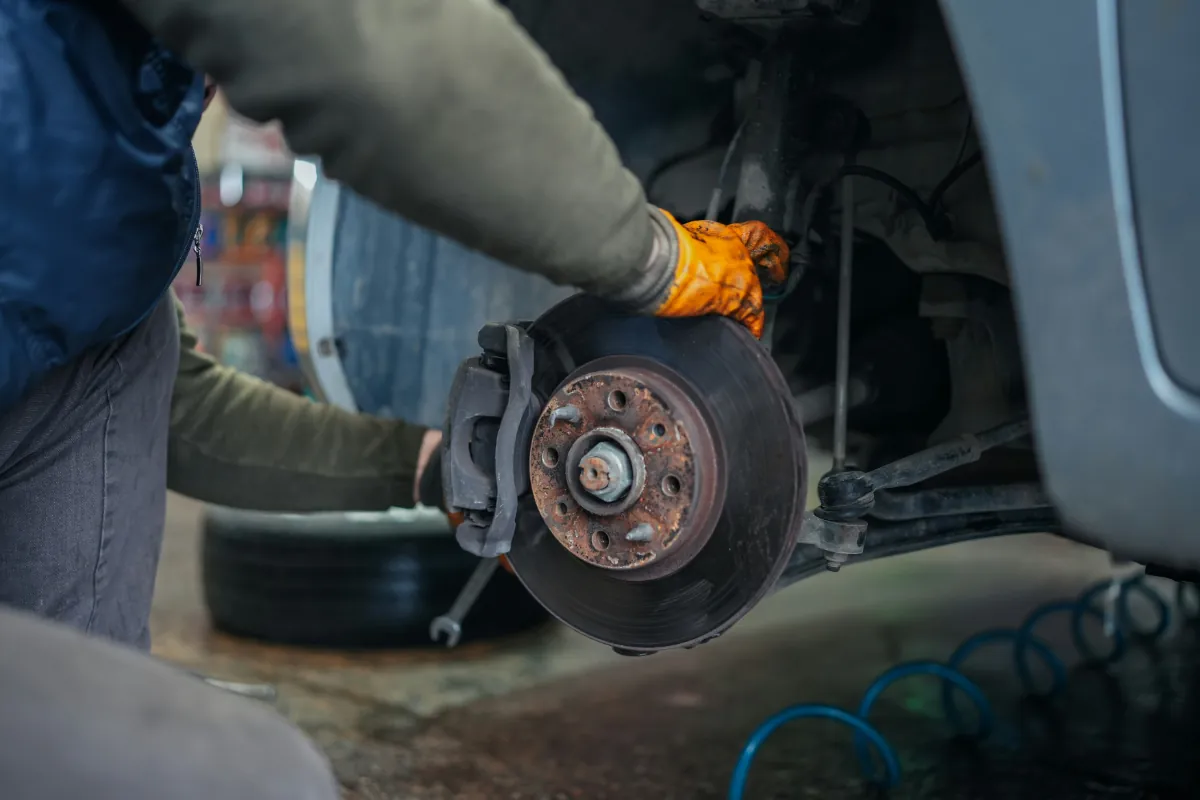
Your vehicle's braking system is its most critical safety feature. At API Auto Repair, our Brake Repair & Replacement services are designed to ensure your brakes are always performing at their peak, providing you with reliable stopping power and peace of mind. Our certified technicians conduct thorough inspections of your entire braking system, including pads, rotors, calipers, and fluid lines, to accurately diagnose any issues. We use only high-quality, OEM-equivalent parts for all repairs and replacements, ensuring durability and optimal performance. Whether you're experiencing squealing, grinding, a soft pedal, or simply need routine brake maintenance, our experts are here to provide efficient and effective solutions. Drive confidently knowing your brakes are in top condition.
Your braking system is the single most important safety system on your vehicle. Every other component — engine, transmission, suspension, electrical — exists to make the car go and handle. The brakes exist to make it stop. When brakes fail or perform below specification, the entire safety envelope of the vehicle collapses. That's why API Auto Repair treats every brake job, no matter how routine it appears, as a complete safety system inspection rather than a parts swap. Pads, rotors, calipers, hydraulic lines, master cylinder, brake fluid, ABS sensors, parking brake mechanism, and brake hardware are all interconnected — neglecting any of them shortens the life of the others and degrades stopping performance.
We approach brake repair from a diagnostic-first perspective. Many shops will replace the part you came in for and send you on your way. We measure pad thickness, rotor minimum thickness, fluid moisture content, caliper slide pin freedom, and ABS module function before recommending any work. Sometimes our diagnosis reveals that the noise you heard is from rust dust on rotors and a quick clean is all that's needed. Sometimes it reveals that what looked like a pad replacement is actually a stuck caliper that contaminated a perfectly good pad set. Doing the diagnostic work first means you get the actual fix the first time, not a ''partial fix'' that turns into a return visit two months later.
Maryland driving conditions are uniquely hard on brakes. Howard County drivers spend significant miles in stop-and-go traffic on I-95, I-695, US-1, and Route 100, which generates more heat and friction events per mile than highway-dominant driving. Road salt and brine treatment in winter accelerates corrosion on caliper slide pins, brake hardware, and exposed rotor surfaces — particularly problematic for vehicles parked outdoors. Hilly terrain on routes through Ellicott City, Catonsville, and Patapsco State Park area increases rotor temperature on extended descents, glazing pad surfaces and warping rotors over time. We see all of these patterns regularly, and our brake recommendations factor in how Maryland's environment specifically wears your vehicle.
Brake repair customers fall into a few common categories. Daily commuters typically need front pads every 25,000 to 50,000 miles and rotors every other pad service or so. Fleet and delivery vehicles wear brakes faster — often every 15,000 to 30,000 miles — because of frequent stops and heavier loads. Drivers who tow or carry heavy cargo experience accelerated wear and may benefit from upgraded pads or rotors. Pre-purchase brake inspections catch unsafe brakes on used vehicles before you buy, often saving thousands in negotiation. We work with all of these scenarios, and we tailor our recommendations to your driving pattern, vehicle, and budget — not a one-size-fits-all parts list.
Features
Brake Inspection
Thorough inspection of brake pads, rotors, calipers, and fluid.
Pad Replacement
Replacement of worn brake pads with high-quality new ones.
Rotor Resurfacing/Replacement
Addressing warped or worn rotors for smooth braking.
Brake Fluid Flush
Replacing old brake fluid to maintain system integrity.
Signs You Need This Service
Squealing or High-Pitched Squeaking When Braking
Most brake pads have built-in wear indicators — small metal tabs that contact the rotor when the pad is worn to its replacement point. The squeal is intentional. Don't ignore it; the noise becomes grinding within a few hundred to a few thousand miles, at which point you're damaging rotors and increasing the repair cost significantly.
Grinding or Metal-on-Metal Noise
Grinding means the pad material is gone and the metal backing plate is contacting the rotor. This rapidly damages rotors (which are 3–5x more expensive than pads), can damage calipers, and dramatically reduces stopping power. Stop driving and have the brakes inspected immediately.
Brake Pedal Vibration or Steering Wheel Shake When Stopping
Vibration during braking usually indicates warped rotors — typically caused by overheating from aggressive braking, towing, or descending hills. Sometimes the rotors can be machined back to flat; other times they need replacement. We measure rotor thickness and runout before deciding.
Soft, Spongy, or Sinking Brake Pedal
A pedal that feels soft, sinks slowly under your foot, or requires multiple pumps to firm up usually indicates air in the brake lines, a brake fluid leak, a failing master cylinder, or contaminated brake fluid. This is a serious safety issue — get it diagnosed immediately.
Vehicle Pulls to One Side During Braking
Pulling during braking points to uneven pad wear, a stuck caliper, contaminated brake fluid in one circuit, or alignment issues. The fix depends on the cause — sometimes it's as simple as freeing a stuck slide pin, other times it requires caliper replacement.
Dashboard Brake Warning Light Illuminated
The brake warning light can indicate low brake fluid, an active hydraulic leak, an engaged parking brake, an ABS fault, or a failing pressure differential switch. Each cause has different urgency. Don't reset the light without diagnosis — it exists to warn you of real safety issues.
Burning Smell After Hard Braking
A sharp, acrid burning smell after extended braking — particularly during downhill driving — usually means brake pads have overheated and started to glaze. Glazed pads have reduced friction and require replacement. Repeated overheating also damages rotors and brake fluid.
Our Service Process
- 1
Inspection & Diagnostic Drive
We start every brake service with a brief road test (when safe to drive) followed by a thorough static inspection on the lift. The road test confirms the symptoms you reported and reveals others — pulling, vibration, ABS activation, parking brake drag — that don't show up in the parking lot.
- 2
Pad and Rotor Measurement
We measure pad thickness with a micrometer at multiple points on each pad. We measure rotor thickness against the manufacturer's published minimum, and we check rotor runout (warpage) with a dial indicator. These numbers go on your written report so you can see exactly where each component stands.
- 3
Caliper, Slide Pin, and Hardware Inspection
We disassemble the caliper, lubricate slide pins (or replace them if seized), inspect caliper boots for tears, and verify piston retraction. Stuck calipers are the hidden cause of premature pad wear that many shops miss — fixing them now prevents the same problem from recurring in 5,000 miles.
- 4
Brake Fluid Test and Hydraulic Check
We test brake fluid moisture content with a refractometer or copper strip test. Fluid older than 2 years or showing high moisture absorbs heat poorly and causes spongy pedal feel. We also pressure-test the hydraulic system for leaks at lines, hoses, calipers, and the master cylinder.
- 5
Written Estimate and Customer Authorization
Before any parts are removed or installed, you receive a written estimate listing every recommended item with parts and labor costs. We explain what's required versus what's recommended, and we never proceed without your explicit authorization. If you decline a recommendation, we document it and continue without it.
- 6
Repair Work — Pad and Rotor Service
Pads are replaced as full sets per axle. Rotors are either resurfaced (if above minimum thickness with adequate material remaining) or replaced. We use OEM-equivalent parts from trusted suppliers — Akebono, Wagner, Brembo, Centric, and similar quality tiers — matched to your vehicle's specifications.
- 7
Brake Hardware and Lubrication
We replace abutment clips, anti-rattle hardware, and pad shims as part of every brake service. We apply high-temperature brake lubricant to slide pins, caliper bracket abutments, and pad backing plates. Skipping hardware replacement is a common shortcut that causes squealing, vibration, and uneven wear.
- 8
Post-Repair Road Test and Bedding-In
After reassembly, we perform a road test to confirm pedal feel, no pulling, no vibration, and proper ABS function. New pads require a bedding-in process — a series of moderate-then-firm stops from 30 mph to 5 mph — that we perform on the test drive to transfer pad material onto the rotor surface uniformly.
What's Included in This Service
Front Brake Pad Replacement
OEM-equivalent pads installed per axle, with hardware kit and proper torque to manufacturer specs.
Rear Brake Pad Replacement
Available as a separate or combined service; some vehicles use rear drums instead — we service both.
Rotor Resurfacing or Replacement
Rotors machined flat if thickness allows, replaced if below minimum or warped beyond machineable.
Caliper Inspection and Service
Slide pins lubricated or replaced, boots checked for damage, piston retraction verified.
Brake Fluid Top-Off or Flush
Fluid topped off as part of the service; full system flush available when fluid is contaminated or aged.
Brake Hardware Replacement
Anti-rattle clips, abutment shims, and retaining hardware replaced with new components.
ABS System Verification
ABS warning light cleared if applicable; sensors inspected for proper installation and function.
Parking Brake Adjustment
Cable tension and engagement tested; integrated parking brakes (most modern vehicles) verified.
Pre- and Post-Repair Road Test
Confirms reported symptoms before work begins, and verifies proper operation after repairs.
Written Inspection Report and Warranty
Detailed report with measurements; 12-month/12,000-mile warranty on parts and labor.
Why Choose API Auto Repair
ASE-Certified Brake Specialists
Brake work is one of the most consequential repairs we perform. Every API technician is ASE-certified, with several holding ASE Master Technician credentials. Our brake training is current with anti-lock braking systems, electronic parking brakes, regenerative braking on hybrids, and advanced driver-assist systems that interact with the brake system.
OEM-Equivalent Parts, Not Cheap Knockoffs
We don't install bargain-bin pads that squeal and dust everywhere. Our default parts are OEM or OEM-equivalent (Akebono, Wagner, Brembo, Centric Premium) that match your vehicle's original braking performance. Premium upgrades are available for performance vehicles or towing applications.
Same-Day Service for Most Brake Jobs
Standard pad-and-rotor jobs are typically completed the same day, often within 2–3 hours. More involved repairs — caliper replacement, hydraulic line repairs, master cylinder replacement — may take longer, but we communicate timing upfront so you can plan around the work.
12-Month / 12,000-Mile Warranty on Parts and Labor
Standard warranty on brake repairs is 12 months or 12,000 miles, whichever comes first. Premium parts carry longer warranties when applicable. If you experience any issue with brake work performed at our shop within the warranty window, bring it back at no charge — we stand behind our work.
Honest Recommendations, Not Upsell-Driven Quotes
We don't quote rotor replacement when machining will work. We don't replace fluid that's still within specification. We don't push premium pads on commuter vehicles. Our recommendations are based on what your vehicle and driving pattern actually require — that's why our customers come back, and why we have a 4.8-star average across 117+ Google reviews.
Brake Repair Pricing in Elkridge, MD
Brake pad replacement at API Auto Repair typically runs $150 to $300 per axle for most passenger vehicles using quality OEM-equivalent pads. The exact price depends on your vehicle's pad type (some performance vehicles require premium ceramic compounds that cost more), labor difficulty (some vehicles have caliper designs that take longer to service), and whether new hardware is required. Trucks, large SUVs, and performance vehicles can run $200–$450 per axle. We always provide a written quote before starting work.
When rotor service is included, the per-axle cost typically rises to $300–$600 depending on whether rotors can be machined or need replacement. Roughly half of brake jobs require rotor work — particularly if pads have been worn to metal or rotors are below the manufacturer's minimum thickness specification. Resurfacing (machining) is cheaper than replacement when the rotor still has enough material remaining. Replacement is required when rotors are below minimum, severely warped, or showing heat checking and stress cracks.
Larger brake repairs — caliper replacement (typically $250–$600 per caliper installed), brake hose replacement ($150–$350 per hose), brake fluid flush ($120–$200 for a complete flush), or master cylinder replacement ($400–$900 depending on vehicle) — vary based on vehicle complexity and parts availability. We use OEM-equivalent or OEM parts, not the lowest-bid components, because brake parts directly affect your safety. If cost is a concern, talk to us — we'll explain the trade-offs honestly and help prioritize what needs to happen now versus what can wait.
Tips to Extend the Life of Your Service
Avoid Riding the Brakes on Long Descents
Continuous light brake pressure on hills generates heat that glazes pads and warps rotors. On long downhill stretches (descending into the Patapsco Valley, for example), use engine braking by downshifting rather than holding the brake pedal. Apply firm brake pressure briefly, then release — repeat as needed.
Drive Smoothly to Maximize Pad Life
Hard, last-second braking generates more heat and wear than gentle, anticipated braking. Looking further ahead in traffic and easing off the gas earlier extends pad life dramatically — on the order of 30–50% in city driving. It also extends rotor life and reduces fuel consumption.
Flush Brake Fluid Every 2 Years
Brake fluid is hygroscopic — it absorbs moisture from the air over time. Moisture-contaminated fluid boils at lower temperatures and can vaporize during heavy braking, causing pedal fade. A 2-year flush schedule keeps fluid fresh and prevents corrosion in the hydraulic system.
Listen for the Wear Indicator Squeal
Most pads include a metal wear indicator that squeals when the pad is worn to about 25% remaining. Don't ignore the squeal — it's giving you weeks to schedule a replacement before grinding starts and rotors get damaged.
Address Pulling and Vibration Promptly
Brakes that pull or vibrate often have a fixable underlying issue (stuck caliper, hardware problem, debris on rotor) that's cheap to fix early. Ignoring it accelerates wear on the affected side and turns a $50 fix into a $300 repair. If something feels different, get it checked.
Don't Slam to a Stop with New Brakes
After brake work, avoid hard stops for the first 200–300 miles. New pads need to bed in — transferring a thin, even layer of friction material onto the rotor surface. Hard stops during this period can glaze pads or create uneven deposits that cause vibration and noise later.
Serving Elkridge & Howard County, MD
Howard County drivers face brake conditions that are often harsher than national averages. The combination of stop-and-go traffic on I-95 and I-695, the climb-and-descent pattern of routes through the Patapsco watershed, and Maryland's heavy use of road salt and brine in winter all conspire to wear brakes faster than in milder climates with smoother traffic patterns. We see brake jobs on cars with as few as 25,000 miles when those miles are accumulated mostly in regional traffic.
Road salt is the silent enemy of Maryland brakes. The brine and salt treatments applied to roads from December through March accelerate corrosion on brake hardware, slide pins, caliper brackets, parking brake mechanisms, and exposed rotor surfaces. Vehicles parked outdoors during winter months — common for Howard County commuters using BWI park-and-ride lots, MARC train stations in Halethorpe and Dorsey, and similar — accumulate corrosion faster than garaged vehicles. We frequently see brake jobs where the pads still have life left but the hardware is so corroded the system can't function properly.
We work with regional fleet customers including delivery services, contractors, and small business fleets across Howard County. Fleet brake jobs follow predictable patterns — front-heavy wear, frequent rear drum service on lighter trucks, premature caliper replacement from sustained heat cycling. If you operate a fleet in the Elkridge, Columbia, Hanover, or BWI corridor area and need a maintenance plan that addresses regional wear patterns, we can design a brake-specific service schedule.
Brake Pad Materials Compared: Which Is Right for Your Vehicle?
Brake pads come in three primary friction material categories, each with distinct strengths and trade-offs. Understanding the differences helps you choose the right pad for your driving style and vehicle. Ceramic brake pads are the most popular choice for daily drivers in vehicles like sedans, crossovers, and small SUVs. They produce minimal brake dust (the kind that coats your wheels), operate quietly across temperature ranges, and have long lifespans — typically 50,000 to 70,000 miles for typical commuter use. Their main limitation is performance under sustained heavy load: ceramics don't generate as much initial bite as metallic pads when cold, and they can fade under extended hard braking like mountain descents or aggressive driving.
Semi-metallic pads (sometimes called sintered or low-metallic depending on the metal content) use metal fibers — typically iron, copper, and steel — pressed into a binder matrix. They have stronger initial bite, dissipate heat better than ceramics, and perform reliably under high-load conditions like towing, hauling, performance driving, and heavy commercial use. The trade-off: they generate more brake dust, can be noisier in cold weather, and tend to wear rotors slightly faster. Pickup trucks, full-size SUVs, performance vehicles, and police/fleet vehicles are typical applications.
Organic pads (or non-asbestos organic, NAO) are the original brake pad material. They use a mixture of fibers, resins, and rubber compounds, and are the cheapest option. They're quiet and gentle on rotors but wear faster than other materials and lose effectiveness when hot. Most modern vehicles don't ship with NAO pads from the factory, but they remain in the aftermarket for budget-focused jobs on older economy cars where high performance isn't required. We rarely recommend them for Howard County driving conditions because the heat and stop-and-go traffic exceed their effective range.
If you're not sure which pad is right for your vehicle, we factor in your daily driving pattern, vehicle weight, towing or hauling habits, and budget. For most of our Elkridge customers, OEM-equivalent ceramic pads from quality manufacturers (Akebono, Centric Premium, Wagner ThermoQuiet) are the right choice — quiet, low-dust, long-lasting, and matched to your vehicle's design. We'll explain why we're recommending what we're recommending, and we'll show you the alternatives if you want to make a different choice.
Anti-Lock Brake Systems (ABS): What They Do and When They Need Service
Anti-lock brakes have been federally mandated on light vehicles in the U.S. since 2013 (and standard on most vehicles for years before that). The system uses wheel speed sensors at each wheel, an electronic control module, and a hydraulic actuator (HCU) to prevent wheel lockup during hard braking. When ABS detects that one or more wheels are decelerating faster than the others — the early sign of lockup — it rapidly modulates brake pressure on that wheel to maintain rotation. The result is shorter stopping distances on slick surfaces and the ability to steer around obstacles while braking hard.
When ABS works properly, you don't notice it most of the time. You feel it during emergency stops on wet, snowy, or gravel surfaces — a rapid pulsing through the brake pedal as the system cycles pressure. Don't lift off the pedal when this happens; that defeats the system. Maintain firm pressure and steer where you want to go. The ABS warning light on your dashboard indicates the system has detected a fault and disabled itself. Your standard hydraulic brakes still work, but you've lost the lockup-prevention safety net.
ABS faults usually fall into a few common categories. Wheel speed sensor failures are the most common — a sensor reading drops out, often due to corrosion (especially common on Maryland vehicles after winter), debris on the magnetic ring, or wiring damage. Sensor replacement is typically a $150–$350 repair per wheel. The HCU (hydraulic control unit) sometimes fails, which is more involved — typically $700–$1,500 to repair or replace. Module communication faults can sometimes be cleared after a related repair (like battery replacement that confused the module). When you bring in a vehicle with an ABS light, we connect a manufacturer-grade scan tool, retrieve the specific fault codes, and diagnose the actual cause rather than just clearing the light.
The True Cost of Delaying Brake Repairs
We see this scenario every week: a customer hears a brief squeal during braking, ignores it for a few weeks, then comes in when the squeal turns into grinding. By that point, what could have been a $200 pad replacement has become a $500–$700 repair because the pads wore through to metal and damaged the rotors. A typical brake-job inflation curve looks like this: at the wear indicator squeal, pads are around 25% remaining and rotors are still serviceable — total repair $200–$300 per axle. After 2–4 weeks of additional driving, pads are gone, rotors are scored — total repair $400–$600 per axle. After more time, the pad backing plate has gouged the rotor, the caliper piston has been forced too far out and is now dragging, and brake hardware is damaged — total repair $700–$1,200 per axle.
Beyond the financial cost, delayed brake repair affects the safety of everyone in your vehicle and around you. Stopping distance grows progressively as pads wear and rotors warp. Fade becomes more pronounced. Pedal feel degrades. ABS may become less effective if rotors are uneven. In emergency-stop situations — a child running into the road, the driver in front slamming on the brakes, debris suddenly visible — every additional foot of stopping distance matters. Modern vehicles are designed around specific brake performance envelopes, and degraded brakes break those design assumptions.
The right approach is to address brake symptoms when you first notice them. Squeal, vibration, soft pedal, pulling — these are the system's early warnings, and they almost always become more expensive and more dangerous if ignored. We provide free brake inspections any time you're in the shop for other work, and we'll tell you honestly when you've got 5,000 miles left on pads versus when you need to replace now. Bring it in early, get a written measurement, and you'll know exactly where you stand before the cost compounds.
Brake Maintenance Schedule by Mileage and Service Type
Building a maintenance schedule for your brakes is more useful than waiting for symptoms — symptoms always show up after damage has started. The schedule below is calibrated for typical Howard County driving (mix of highway, suburban, and stop-and-go traffic). Adjust earlier if you tow, haul heavy loads, drive aggressively, or commute primarily in heavy I-95 stop-and-go traffic. Adjust later if you're a light highway commuter on smooth roads.
Every oil change (every 3,000 to 7,500 miles): Visual brake inspection for pad thickness, rotor condition, fluid level, and obvious leaks. We do this for free as part of every oil change at API Auto Repair. It takes about 5 minutes and catches small problems before they become big ones. You'll get a report with current measurements and an estimate of remaining pad life so you can plan ahead.
Every 12,000 to 18,000 miles: Detailed brake inspection. This is more thorough than the visual check during oil changes — we measure pads, check rotors with a dial indicator for runout, inspect calipers and slide pins for proper movement, and verify hardware condition. If you've heard any unusual noises or felt any change in pedal feel, this is the appointment to address it. Often the only repair needed is hardware service or pad relubrication, not full pad replacement.
Every 25,000 to 50,000 miles: Likely first front pad replacement on most vehicles. Front brakes typically wear faster than rear because they handle 60–70% of stopping force. The exact mileage depends on driving style and vehicle weight. Heavy SUVs and trucks tend to wear faster; light commuter sedans tend to last longer. Hardware should be replaced at this service. Rotors evaluated and machined or replaced as needed.
Every 24 months or 30,000 miles: Brake fluid flush. Even if pads aren't being replaced, the fluid should be replaced because of moisture absorption. We test moisture content during inspections — when copper levels in the fluid rise (an early indicator of corrosion in the system) or moisture exceeds 3%, the fluid needs replacement. This is a $120–$200 service that prevents much larger problems with master cylinders, calipers, and ABS components.
Every 50,000 to 100,000 miles: Likely first rear pad replacement. Rear brakes wear slower because they do less work, but they still need replacement eventually. Rear wear can be especially uneven on vehicles where the parking brake mechanism integrates with the rear caliper — if the parking brake is rarely used, the integrated mechanism can stick and cause one rear pad to wear faster.
Every 80,000 to 120,000 miles: Possible caliper service or replacement. Calipers don't typically fail at predictable mileage, but the seals dry out, slide pins seize from corrosion, and pistons can stick over time. If you've had multiple pad replacements without addressing caliper condition, the calipers should be inspected thoroughly at this point. Stuck calipers are the leading cause of premature pad wear that customers don't realize they have until we point it out.
When to Resurface vs When to Replace Brake Rotors
One of the most common questions we get during a brake job is whether the rotors need to be resurfaced (machined flat) or replaced entirely. The answer depends on three measurements: current rotor thickness, minimum manufacturer-specified thickness, and current rotor surface condition. Every rotor is stamped with a minimum thickness specification — typically printed on the rotor hat in millimeters. We measure each rotor's current thickness with a micrometer at multiple points and compare against that specification. If the rotor is at or near minimum, it cannot be safely machined; it must be replaced. If the rotor is well above minimum and shows only mild surface wear, machining it back to flat usually saves you money over replacement.
Several conditions force rotor replacement regardless of remaining thickness. Heat checking — fine cracks visible on the friction surface, usually radiating outward from the hub — indicates the rotor has been thermally stressed beyond its design limits. Once heat checks appear, they grow progressively, and the rotor must be replaced before it cracks structurally. Severe warping, where rotor runout exceeds machineable limits (typically more than 0.005 inches), also forces replacement; you can't machine flatness back into a rotor with significant warpage. Pulsation that returns immediately after machining usually means the warpage has propagated through the metal and replacement is the only fix.
Modern vehicles have increasingly thin rotors compared to older designs. Manufacturers reduce rotor thickness to save weight and improve fuel economy, which means there's less material available for machining. On many newer vehicles — particularly imports and crossover SUVs — rotors essentially come pre-marked for replacement after one pad cycle because the original rotor is too thin to safely machine. We've seen the trend accelerate over the past decade: where a 2005 sedan might tolerate 2–3 pad cycles per rotor set, a 2020 sedan often requires new rotors at every pad replacement. We measure and recommend honestly based on your specific vehicle, not a one-size-fits-all rule.
Cost-wise, machining is typically $30–$50 per rotor when the rotor can be saved, while replacement runs $80–$200 per rotor (parts only) for most passenger vehicles, plus labor. The decision often comes down to whether saving $100–$300 on rotor work is worth the trade-off of using rotors that are now thinner and have less heat capacity. For a daily commuter with another 20,000–40,000 miles planned, machining is often fine. For a vehicle that tows, sees mountain driving, or has another long ownership horizon planned, fresh rotors are usually the better long-term choice. We walk you through the trade-off so you can make an informed decision rather than defaulting to either extreme.
Related Services
Tire Services in Elkridge, MD
Need new tires or a rotation? API Auto Repair offers fast, affordable tire service in Elkridge, MD. Schedule your visit today.
Suspension & Steering Repair in Elkridge, MD
Bumpy ride or poor handling? Get suspension and steering repair at API Auto Repair in Elkridge, MD.
Wheel Alignment in Elkridge, MD
Improve handling and tire life with precision wheel alignment at API Auto Repair in Elkridge, MD.
Certified Maryland State Inspections in Elkridge
Need a Maryland state inspection? Visit API Auto Repair in Elkridge for fast, certified service.
Car Battery Testing & Replacement in Elkridge
Dead battery? Visit API Auto Repair in Elkridge, MD for fast testing and high-quality battery replacements.
Got Questions?