Last updated:
Exhaust & Muffler Repair in Elkridge, MD
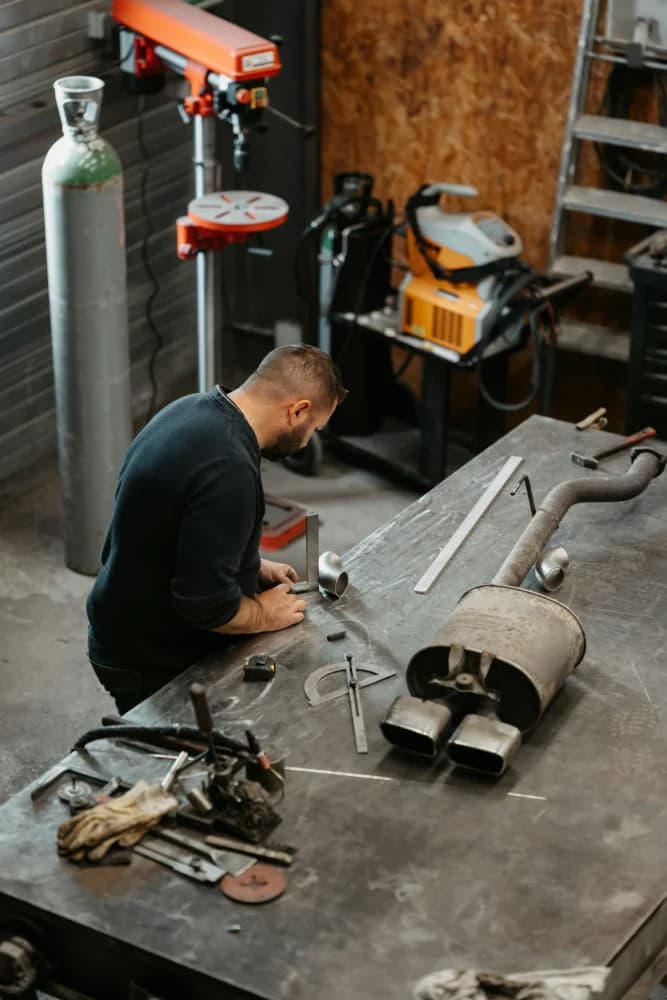
Your vehicle's exhaust system plays a crucial role in reducing noise, directing harmful emissions away from the cabin, and optimizing engine performance. At API Auto Repair, our Exhaust & Muffler Repair services cover everything from minor leaks to complete system replacements. Our technicians are skilled in diagnosing issues like excessive noise, rattling, or a decrease in fuel efficiency, which can indicate problems with your muffler, exhaust pipes, catalytic converter, or manifold. We use high-quality parts to repair or replace damaged components, ensuring your vehicle meets emissions standards, operates quietly, and maintains optimal engine back pressure for efficient performance.
Vehicle exhaust systems serve four critical functions simultaneously: they route harmful combustion gases safely away from the cabin, they reduce noise to acceptable levels through mufflers and resonators, they reduce harmful emissions through catalytic converters and other equipment, and they maintain proper engine back pressure for optimal combustion. When any part of the exhaust system fails, multiple functions may be compromised. Exhaust leaks can introduce dangerous carbon monoxide into the cabin. Muffler failures can produce illegal noise levels. Catalytic converter failures can cause emissions inspection failures and may damage other engine components. Even subtle exhaust problems can affect engine performance, fuel economy, and emissions readiness.
API Auto Repair has been servicing exhaust systems in Elkridge for over thirty years. We service everything from simple muffler replacements on older vehicles to complex modern emissions systems with multiple catalytic converters, oxygen sensors, EGR valves, and EVAP system components. We have welding equipment for custom exhaust work, lift access for major exhaust system repair, and the diagnostic tools to identify exhaust problems through both visual inspection and emissions data analysis. Modern exhaust work goes beyond just replacing rusty mufflers — it requires understanding emissions equipment, electronic controls, and how exhaust system condition affects overall engine performance.
Maryland's road salt and brine treatments during winter accelerate exhaust system corrosion at rates significantly above national averages. Steel exhaust components — pipes, mufflers, hangers, brackets — corrode rapidly when continuously exposed to salt-laden road spray and standing salt water. Stainless steel components last longer but eventually corrode through where they connect to less corrosion-resistant components or where road salt accumulates in protected areas. We see exhaust replacements on Maryland vehicles 30 to 50 percent earlier than the national average for equivalent vehicles, and this acceleration is consistent across all body styles.
Beyond the practical impact, exhaust system condition is part of Maryland State Inspection requirements. Maryland inspectors check for intact exhaust systems with no leaks before the catalytic converter, proper catalytic converter installation, no unauthorized modifications affecting emissions, and proper functioning of exhaust hangers preventing system contact with road or body components. Vehicles with exhaust system failures cannot pass Maryland inspection until repairs are completed. This requirement makes exhaust service particularly important for customers buying or selling vehicles in Maryland.
Features
Muffler Replacement
Replacing damaged mufflers to reduce noise and improve exhaust flow.
Exhaust Pipe Repair
Fixing leaks or damage in exhaust pipes.
Catalytic Converter Service
Inspecting and replacing catalytic converters if necessary.
Exhaust Manifold Repair
Addressing leaks or cracks in the exhaust manifold.
Signs You Need This Service
Loud or Rumbling Exhaust Sound
Sudden increase in exhaust noise typically indicates a leak somewhere in the system — most commonly at the muffler, in connecting pipes, or at flange connections. Some leaks are obvious from outside the vehicle; others require lift inspection to identify. Loud exhaust is often the first sign of progressive deterioration that will worsen if not addressed.
Hissing or Tapping Sounds
Hissing sounds often indicate small exhaust leaks at gaskets or pipe joints. Tapping sounds, particularly during engine warm-up, often indicate exhaust manifold cracks where the joint expands and contracts during heat cycles. These early-stage leaks become major leaks if ignored.
Decreased Fuel Economy
Exhaust system problems can reduce fuel economy through several mechanisms: leaks before the catalytic converter affect oxygen sensor readings causing incorrect fuel mixture, restricted catalytic converters create back pressure that requires more engine work, exhaust leaks change combustion timing and fuel calculations. A 10–20% drop in fuel economy can sometimes trace to exhaust system issues.
Smell of Exhaust Fumes Inside the Cabin
Carbon monoxide and other exhaust gases entering the cabin is dangerous. The smell typically resembles acrid burning or heavy gasoline odor. Causes include exhaust leaks before the catalytic converter, damaged exhaust manifold gaskets, or rusted-through pipes near the firewall. This is a safety priority — get diagnosed immediately.
Check Engine Light With Emissions Codes
P0420, P0430, and other catalyst efficiency codes often indicate catalytic converter problems. P0136, P0156, and similar codes indicate oxygen sensor issues. Diagnosis identifies whether the underlying issue is the catalytic converter itself, the oxygen sensors monitoring it, or upstream issues affecting catalyst function.
Vibration in Floor or Steering Wheel
Exhaust system components that have come loose or broken can vibrate against the vehicle body, causing felt vibration. Broken hangers, cracked pipes, or loose mounting hardware create these symptoms. Sometimes the vibration is intermittent — present only at specific RPMs or speeds where the broken component contacts the body.
Visible Black Soot or Excessive Smoke From Tailpipe
Heavy black smoke from the tailpipe often indicates engine running rich, which is sometimes caused by faulty oxygen sensors in the exhaust system. Blue smoke indicates oil burning. White smoke (especially with sweet smell) indicates coolant burning. Each color points to specific issues, often involving exhaust system components or sensors.
Our Service Process
- 1
Customer Symptom and History Discussion
We ask about the symptoms you've noticed: when did the noise start, what does it sound like, when does it occur, has there been any recent service or impact event. Customer-reported information helps focus diagnosis particularly for intermittent issues that might not be present during inspection.
- 2
Visual Inspection on Lift
On the lift, we visually inspect the entire exhaust system from the manifold to the tailpipe. We look for active leaks (often visible as soot streaks or oily residue), holes from rust-through, cracked welds, broken hangers, and damaged components from impact or contact with road debris. Visual inspection identifies most exhaust system problems definitively.
- 3
Audible Leak Detection
With the engine running, we listen for leaks throughout the exhaust system. Leaks produce distinctive sounds — pulsating ticking from manifold leaks, hissing from gasket leaks, rumbling from pipe and muffler leaks. Audible inspection often identifies leaks in protected locations that visual inspection misses.
- 4
Diagnostic Scan for Emissions Codes
We connect a manufacturer-grade scan tool to read codes from the engine control module and check oxygen sensor data, fuel trim values, and catalyst monitor readings. Many exhaust system problems are documented through diagnostic codes, particularly issues affecting catalytic converters and oxygen sensors.
- 5
Catalytic Converter Function Verification
When catalyst efficiency codes are present or suspected, we verify catalytic converter function through pre- and post-converter oxygen sensor data analysis, exhaust temperature measurements, and back pressure testing when appropriate. These tests distinguish between converter failure and other issues that might trigger similar codes.
- 6
Repair Recommendation and Estimate
Based on findings, we provide a written estimate listing required repairs and any recommended additional work. We explain options when applicable — sometimes a leak can be repaired with welding versus full component replacement; sometimes used components are reasonable alternatives to new; sometimes upgraded performance components are appropriate for performance-oriented customers.
- 7
Repair Performed With Welding or Replacement
Repairs range from welding patches on small leak points (typical for exhaust pipe rust-through in non-critical locations) to complete component replacement (mufflers, catalytic converters, oxygen sensors, exhaust pipes). We use OEM-equivalent or OEM components for emissions-critical applications and quality aftermarket for non-emissions components.
- 8
Post-Repair Verification
After repairs, we run the engine and verify no remaining exhaust leaks, proper sound levels, and proper diagnostic system response. We clear any related diagnostic codes and verify they don't return after a brief drive cycle. Final inspection confirms the repair achieved the intended outcome.
What's Included in This Service
Comprehensive Visual Exhaust Inspection
Entire system from manifold to tailpipe inspected for leaks, damage, and corrosion.
Audible Leak Detection
Running engine inspection identifies leaks not visible during static inspection.
Diagnostic Code Scan
Engine and emissions modules scanned for codes related to exhaust system performance.
Catalytic Converter Function Test
Pre- and post-converter sensor data analyzed to verify catalyst efficiency.
Welding Repair When Appropriate
Small leaks and damaged sections welded for cost-effective repair where applicable.
Component Replacement With OEM-Equivalent Parts
Mufflers, catalytic converters, pipes, and hangers replaced with quality components.
Oxygen Sensor Replacement When Needed
Pre-cat and post-cat oxygen sensors replaced as required for proper emissions function.
Exhaust Hanger and Bracket Replacement
Hangers and brackets replaced to prevent vibration and component contact issues.
Manifold Gasket Service When Required
Exhaust manifold gaskets replaced to address leaks at engine connection points.
Final Performance and Sound Verification
Repaired system tested for proper operation, sound levels, and emissions function.
Why Choose API Auto Repair
On-Site Welding Capability
Many exhaust shops only replace components — they don't perform welding repairs. We have welding equipment and technicians qualified to perform exhaust welding, which means we can repair exhaust pipes, patch holes, and fabricate custom sections at significant cost savings versus full replacement when welding is appropriate.
Maryland State Inspection Compliance Knowledge
We understand Maryland State Inspection requirements for exhaust systems and can advise customers on what's required for inspection compliance versus what's optional. This knowledge is particularly valuable for customers who modify exhaust systems for performance or sound purposes — we can help find the line between what's allowed and what would fail inspection.
Catalytic Converter Diagnosis Expertise
Catalytic converter replacement is one of the most expensive exhaust repairs. We diagnose carefully before recommending replacement because catalyst-related codes often have other causes (faulty sensors, exhaust leaks, engine running rich, oil consumption affecting catalyst). Accurate diagnosis prevents unnecessary $1,500+ catalytic converter replacements.
Cat Shield Installation for Theft Prevention
Maryland has experienced significant catalytic converter theft over the past several years, particularly affecting Toyota Prius, Honda CR-V, Ford F-Series, and similar commonly-targeted vehicles. We install cat shields and security cages designed to prevent theft. These typically cost $200–$500 plus the shield itself and pay for themselves preventing a single theft event.
Performance Exhaust Installation
We install aftermarket performance exhaust systems for customers who want improved sound or performance. We work within Maryland legal requirements for noise levels and emissions equipment, advising customers when proposed modifications would create inspection or legal issues.
Exhaust and Muffler Repair Pricing in Elkridge, MD
Exhaust repair pricing varies enormously based on what specifically needs replacement and access requirements. Muffler replacement typically runs $200–$500 installed for standard mufflers on most vehicles. Performance or stainless mufflers run $400–$900. Exhaust pipe section replacement runs $150–$500 depending on length and complexity. Welding repair on small leaks or rusted-through sections runs $80–$250 depending on access and welding complexity. Hanger and bracket replacement runs $50–$150.
Catalytic converter replacement is typically the most expensive exhaust repair. OEM-equivalent direct-fit catalytic converters for typical passenger vehicles run $700–$1,500 installed. California-emissions-compliant converters (sometimes required even outside California for vehicles originally sold in California-emissions states) run $1,200–$2,500. Some specialty applications (BMW, Mercedes, Audi performance vehicles) can run $2,500–$4,000 for OEM converters. Exhaust manifold replacement (when manifold cracks or studs break) runs $400–$1,500 depending on access — some V6 and V8 engines have manifolds buried under intake systems.
Oxygen sensor replacement runs $150–$400 per sensor installed. Most modern vehicles have at least two oxygen sensors (pre-cat and post-cat) with V6 and V8 engines often having four. We typically recommend replacing oxygen sensors at 80,000 to 100,000 miles even without active failure because their accuracy degrades gradually. Slow oxygen sensor degradation often goes unnoticed but reduces fuel economy and emissions performance.
Tips to Extend the Life of Your Service
Address Small Leaks Promptly
Small exhaust leaks become big leaks. Once corrosion begins eating through pipes or muffler bodies, the rate of failure accelerates. Repairing a small leak with welding while the surrounding metal is still sound costs much less than waiting until the entire component needs replacement.
Don't Modify Catalytic Converters
Removing or bypassing catalytic converters is illegal under federal EPA rules and causes Maryland State Inspection failure. Cheap shops sometimes offer 'cat delete' services to avoid replacing failed converters, but this work creates legal exposure for the customer and emissions inspection failures. Always replace failed converters with proper replacements.
Address Engine Issues That Affect Exhaust System
Engine problems often manifest in the exhaust system: misfires contaminate catalytic converters, oil burning fouls oxygen sensors, rich-running engines damage catalyst materials. Addressing the underlying engine issues prevents cascading damage to expensive exhaust components.
Inspect After Major Impact Events
Hitting curbs, debris, or rough roads can damage exhaust components — bent pipes, cracked welds, broken hangers, damaged catalytic converter shells. Visual inspection after impact events catches damage before it causes operational problems.
Replace Oxygen Sensors at Recommended Intervals
Oxygen sensors degrade gradually. Most manufacturers recommend replacement at 80,000 to 100,000 miles. Slow degradation reduces fuel economy and emissions performance noticeably over time. Periodic replacement maintains optimal engine operation.
Consider Cat Shield for Targeted Vehicles
Toyota Prius, Honda CR-V, Toyota Tacoma, Ford F-Series, and similar vehicles are common targets for catalytic converter theft in Maryland. Cat shield installation prevents most theft attempts and pays for itself by preventing a single theft event. The shields are particularly worthwhile for vehicles parked outdoors overnight.
Have Exhaust Inspected During Annual Service
Annual visual inspection during oil change service catches developing exhaust issues before they become operational problems. We inspect exhaust hangers, pipe condition, muffler integrity, and any visible leakage signs as part of our complimentary multi-point inspection. Early identification of small issues prevents larger problems.
Avoid Driving Through Deep Standing Water
Driving through deep water can damage exhaust components — water entering hot exhaust system causes thermal shock that cracks pipes and welds. Hydraulic damage to catalytic converters can occur if water reaches the substrate. Avoid flooded roads when possible, particularly during Maryland's heavy storm seasons.
Don't Ignore Mild Exhaust Smells
Mild exhaust smell entering the cabin should never be ignored. Carbon monoxide is odorless but accompanies other detectable exhaust gases. If you can smell exhaust, you may be inhaling carbon monoxide. Get the source identified and repaired immediately. CO detectors designed for vehicles are inexpensive insurance.
Replace Exhaust Gaskets at Connection Points
Exhaust gaskets between manifold and catalytic converter, or between sections of the exhaust system, deteriorate over time and develop leaks. Replacement gaskets cost $5–$30 each but addressing leaks at gaskets requires component disassembly. Combining gasket replacement with related service saves on repeated labor charges.
Service Exhaust Manifold Studs During Engine Work
Exhaust manifold studs and bolts corrode and seize over time, particularly in salt-belt climates. When other engine work requires manifold removal, replace the studs and bolts with new components. Avoiding this preventive replacement often results in broken studs during future service, dramatically increasing labor costs.
Use Heat Shield Replacements When Required
Exhaust heat shields protect surrounding components from high exhaust temperatures. Damaged or missing heat shields can cause fires, melt body components, or damage interior insulation. Replacement heat shields are inexpensive but installation can be involved on some vehicles. Address heat shield damage before secondary damage occurs.
Document Custom Exhaust Modifications
If you've installed aftermarket exhaust components, keep documentation of the installation including parts used, installation date, and any tuning adjustments made. This documentation matters for warranty claims, diagnosis if issues develop, and potential resale value. Custom exhaust without documentation creates uncertainty for future shops working on the vehicle.
Choose Stainless Steel Where Salt Exposure Is High
Stainless steel exhaust components last 2 to 4 times longer than mild steel in Maryland's salt-laden environment. The price premium is typically 30 to 60 percent, which the longer service life easily justifies. Quality aftermarket exhaust manufacturers offer stainless options on most components.
Serving Elkridge & Howard County, MD
Maryland's road salt and brine treatments during winter create exceptionally harsh conditions for exhaust systems. We see exhaust system replacements at 60% to 70% of national average mileage levels because of accelerated corrosion. Vehicles parked primarily outdoors during winter accumulate corrosion faster than garaged vehicles. Howard County's combination of frequent winter snow events and aggressive salt application makes exhaust system service one of our most common repair categories during late winter and early spring.
Catalytic converter theft has been a significant problem in the BWI airport area, Fort Meade region, and along major commuter routes. Vehicles parked overnight in commuter lots, MARC train stations, hotel lots, and similar locations are particular targets. We install cat shields routinely for customers in high-risk locations and recommend the protection for any commonly-targeted vehicle that's parked outdoors overnight. Cat replacement costs $1,500–$3,000+ depending on vehicle; cat shield prevention is dramatically cheaper.
Howard County's I-95 corridor traffic creates exhaust system stresses through frequent thermal cycling — repeated heating and cooling as the engine runs and idles. Thermal cycling stresses exhaust manifold studs, gaskets, and joint connections. We see manifold-related exhaust leaks more frequently on heavy commuter vehicles than on highway-cruising vehicles. The cumulative thermal stress over years of stop-and-go driving exceeds what manufacturer specifications anticipate.
Catalytic Converter Function and Failure Modes
Catalytic converters are sophisticated emissions control devices that use precious metal catalysts (platinum, palladium, and rhodium) to convert harmful exhaust gases into less harmful products. Carbon monoxide and unburned hydrocarbons are oxidized to carbon dioxide and water; nitrogen oxides are reduced back to nitrogen and oxygen. The catalytic reactions occur on a ceramic substrate honeycomb that's coated with the precious metals. Properly functioning catalytic converters reduce harmful emissions by 90% or more compared to the raw exhaust output.
Catalytic converters fail through several distinct mechanisms. Thermal damage from sustained extreme exhaust temperatures (often caused by engine misfires sending unburned fuel into the converter where it ignites and superheats the catalyst) can melt the ceramic substrate or damage the precious metal coating. Contamination from oil-burning engines, coolant leaks, or fuel additives can coat the catalyst surfaces and prevent proper reaction. Mechanical damage from impact or excessive vibration can crack the substrate. Normal aging gradually reduces catalyst efficiency over hundreds of thousands of miles.
Diagnosis of catalytic converter problems requires careful analysis. The most common code, P0420 (Catalyst System Efficiency Below Threshold), can be triggered by actual catalyst failure but also by faulty oxygen sensors, exhaust leaks before the catalyst, engine misfires, or other upstream issues. We diagnose the root cause before recommending the expensive replacement. We've saved customers thousands by identifying that a P0420 code traced to a failing oxygen sensor (a $250 repair) rather than a failing catalyst (a $1,500+ repair).
Modern catalytic converters last much longer than older designs. OEM converters from quality manufacturers typically last 100,000 to 200,000 miles when properly used. Premature failure usually traces to underlying issues that need addressing along with the converter — running misfires that contaminate catalysts, oil consumption that fouls them, or coolant leaks that poison them. Replacing only the converter without addressing underlying causes results in the new converter failing within 20,000 to 50,000 miles.
Why Catalytic Converter Theft Is a Maryland Problem
Catalytic converter theft has surged across Maryland and many other states over the past several years, driven by high prices for the precious metals contained in catalytic substrates. Rhodium, palladium, and platinum each cost thousands of dollars per ounce at market peaks. A single catalytic converter contains a few grams of these metals — worth $200 to $1,500 in scrap value depending on the vehicle. Thieves can remove a converter in 30 to 90 seconds with a battery-powered reciprocating saw, then sell to scrap metal dealers for cash. The crime is fast, profitable, and difficult to prosecute.
Specific vehicles are disproportionately targeted because their catalytic converters contain higher precious metal concentrations or are easier to access. Toyota Prius (especially 2004–2009 models) tops the target list nationwide due to high precious metal content. Honda CR-V, Honda Accord, Toyota Tacoma, Ford F-Series, and various Toyota and Honda hybrids round out the most-targeted list. Vehicles parked overnight outside in commuter lots, hotel lots, train station lots, and similar locations are at highest risk.
We've installed cat shields on hundreds of Howard County customer vehicles over the past several years specifically to prevent theft. Cat shields use steel cages or plates that physically block access to the converter. The shields don't make theft impossible but make it slow enough that thieves move to easier targets. Most cat shield installations run $200–$500 for the shield plus $100–$200 for installation. Total cost is dramatically less than a single theft event.
Beyond cat shields, several practices reduce theft risk. Park in well-lit areas when possible. Park in garages overnight when available. If you must park outdoors, park close to building walls or other vehicles to make access difficult. Etch your VIN onto the catalytic converter to make it traceable if stolen. Install motion-activated lights in parking areas. Insurance often covers catalytic converter theft but with significant deductibles — prevention is cheaper than repair.
Maryland State Inspection Exhaust System Requirements
Maryland State Inspection includes specific exhaust system requirements that must be met for inspection pass. The exhaust system from the manifold to the catalytic converter must be intact and free of leaks. The catalytic converter must be original equipment or an OEM-equivalent direct-fit replacement (aftermarket high-flow converters that don't meet OEM emissions specifications are inspection failures). The exhaust system must extend past the rear of the vehicle (no muffler bypasses or shortened systems). All required emissions equipment must be present and functional.
Several specific findings result in inspection failure. Active exhaust leaks before the catalytic converter fail because they affect emissions and oxygen sensor readings. Missing or damaged catalytic converters fail because they're required emissions equipment. Aftermarket exhaust modifications that increase noise above legal levels (typically measured against unmodified vehicle baseline) fail. Exhaust components that aren't securely mounted (broken hangers letting components touch road or body) fail. Exhaust system rust holes that have penetrated the pipe wall fail.
Some exhaust modifications are allowed within specific constraints. Muffler replacement with quality aftermarket equipment (Magnaflow, Borla, similar quality brands) is allowed if the system meets noise specifications and doesn't bypass emissions equipment. Cat-back exhaust systems (replacing only the parts after the catalytic converter) are allowed if they don't increase noise excessively. We can advise customers planning modifications about what's allowed and what would fail inspection.
If your vehicle is approaching inspection and you suspect exhaust issues, get a pre-inspection check before scheduling the official inspection. We can identify likely fail items, quote repairs, and let you decide whether to address them before the inspection fee is paid. This avoids the cost of failed inspection followed by repair and re-inspection, which is more expensive than addressing issues upfront. The same proactive approach applies to any inspection-required repair.
Oxygen Sensors: Critical Components Often Overlooked
Oxygen sensors are among the most important components in modern emissions systems and one of the most frequently overlooked maintenance items. Pre-catalyst (upstream) oxygen sensors monitor exhaust gas oxygen content and provide feedback the engine computer uses to calculate proper fuel mixture. Post-catalyst (downstream) oxygen sensors monitor catalyst efficiency by comparing post-catalyst readings to upstream readings. Modern V6 and V8 engines typically have four oxygen sensors total; inline four-cylinder engines typically have two.
Oxygen sensors don't fail suddenly in most cases — they degrade gradually. Sensor accuracy declines over time due to contamination from fuel additives, oil burning, coolant leaks, age-related material degradation, and accumulated heat exposure. Slow degradation reduces fuel economy and emissions performance noticeably but rarely triggers diagnostic codes until the sensor is significantly degraded. By the time a code appears, the sensor has been performing poorly for extended periods.
Most manufacturers recommend oxygen sensor replacement at 80,000 to 100,000 miles even without active failure. Periodic replacement maintains optimal engine operation, fuel economy, and emissions performance. The cost of preventive replacement is moderate — typically $150 to $400 per sensor including installation. The benefit is consistent fuel economy throughout vehicle life rather than gradual decline that often goes unnoticed.
When oxygen sensors do fail with diagnostic codes, the codes are often misleading. P0420 and P0430 catalyst efficiency codes can be triggered by failing post-catalyst oxygen sensors rather than failing catalytic converters. Replacing the sensor (a few hundred dollars) often resolves codes that would have led to catalyst replacement (over a thousand dollars) if diagnosed incorrectly. Careful diagnosis distinguishes between sensor and catalyst issues.
Performance Exhaust: When Modifications Make Sense
Aftermarket exhaust systems range from cosmetic upgrades to genuine performance enhancements, with corresponding price ranges. Customers asking about performance exhaust typically have one of three goals: improved sound, improved performance, or visual customization. Each goal has different optimal solutions, and understanding which goal matters most helps select appropriate components. Sound-only changes can be achieved with relatively inexpensive muffler swaps. Performance gains require more comprehensive system changes. Cosmetic upgrades often involve specific tip choices and finish materials.
Sound improvements from muffler changes are the most accessible modification. A quality aftermarket muffler from Magnaflow, Borla, Flowmaster, or similar manufacturer typically runs $200–$600 installed and produces noticeable sound character changes — typically deeper, more aggressive sound with usually only modest volume increases. The exact sound depends heavily on muffler design (chambered vs straight-through, packing material, internal flow path). Different vehicles respond very differently to similar mufflers, so sound preferences should be researched for the specific vehicle.
Performance gains from exhaust modifications are typically modest on stock engines — usually 5 to 15 horsepower at peak from a complete cat-back exhaust system on a typical naturally-aspirated engine. The gains can be larger on engines that are heavily exhaust-restricted from the factory (some pickup trucks, some performance vehicles) or in combination with other modifications (cold air intake, ECU tuning). Honest performance discussion requires acknowledging that exhaust-only modifications don't produce dramatic gains on most stock engines.
Maryland legal requirements constrain what modifications are allowed. The state has noise standards that prohibit excessively loud exhaust. Catalytic converters cannot be removed under federal law and Maryland law. Modified exhaust must still pass Maryland State Inspection. We work within these constraints to deliver the modifications customers want while keeping their vehicles legal and inspection-compliant. Sometimes the customer's goals require trade-offs we discuss honestly before any work begins.
Related Services
Check Engine Light Diagnostics in Elkridge, MD
Don’t ignore your check engine light. Get accurate diagnostics at API Auto Repair in Elkridge, MD today.
Engine Tune-Up in Elkridge, MD
Boost performance and fuel efficiency with an engine tune-up at API Auto Repair in Elkridge, MD.
Certified Maryland State Inspections in Elkridge
Need a Maryland state inspection? Visit API Auto Repair in Elkridge for fast, certified service.
Fuel System Services in Elkridge, MD
Rough idle or poor MPG? API Auto Repair in Elkridge, MD offers full fuel system cleaning and repair.
Radiator & Cooling System Service in Elkridge
Avoid overheating. API Auto Repair in Elkridge, MD provides expert radiator and cooling system repair.
Got Questions?