Last updated:
Engine Tune-Up in Elkridge, MD
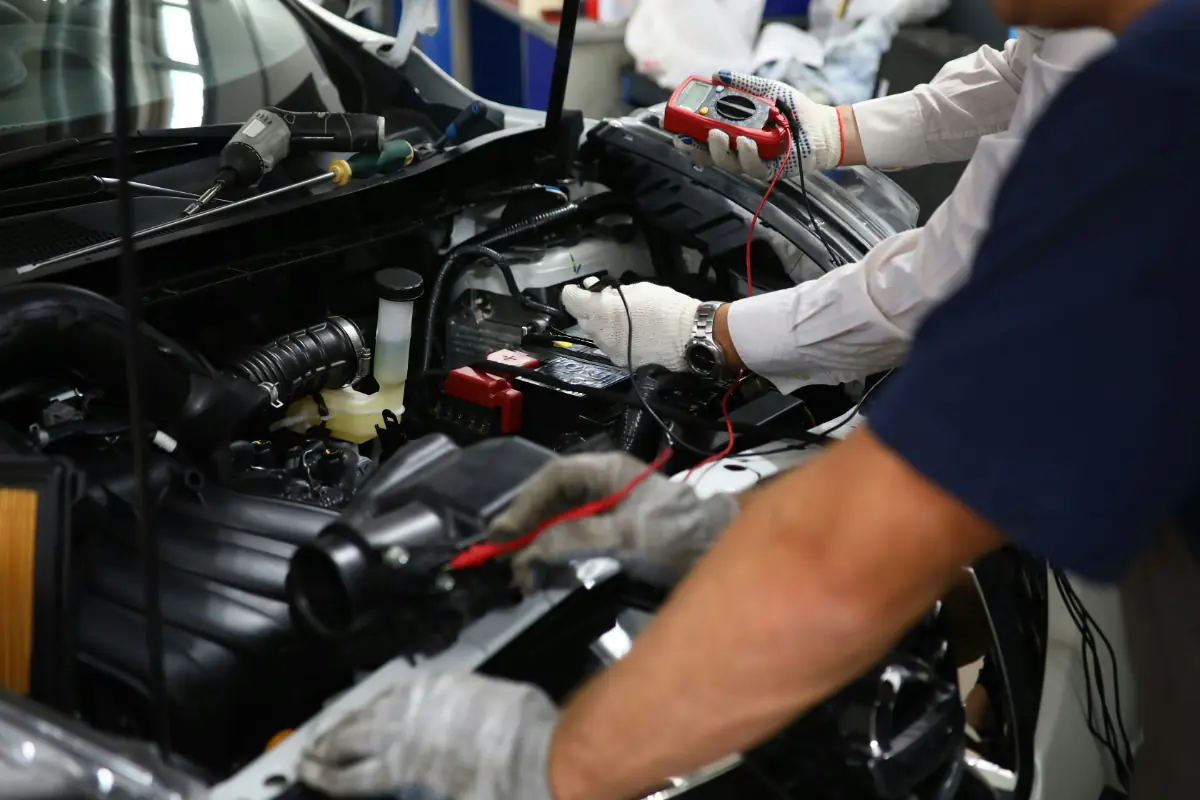
An engine tune-up is vital for maintaining your vehicle's performance, fuel efficiency, and overall longevity. At API Auto Repair, our Engine Tune-Up & Maintenance services involve a comprehensive inspection and replacement of key components that affect engine operation. This typically includes replacing spark plugs, inspecting ignition coils, replacing air and fuel filters, and checking all fluid levels. Our certified technicians use advanced diagnostic equipment to identify any underlying issues that might be impacting your engine's efficiency. A proper tune-up can restore lost horsepower, improve acceleration, reduce emissions, and prevent costly breakdowns, ensuring your vehicle runs at its best.
An engine tune-up is one of the most misunderstood maintenance services in modern automotive care. Decades ago, a tune-up was a frequent maintenance ritual — every 12,000 to 30,000 miles, mechanics would replace points, condensers, distributor caps, spark plugs, and adjust carburetors to keep the engine running properly. Modern vehicles have eliminated most of those components: electronic ignition replaced points and condensers in the 1980s, fuel injection replaced carburetors by the 1990s, and coil-on-plug ignition eliminated distributor caps and spark plug wires in the 2000s. What remains is a much smaller maintenance scope — but that maintenance is still critical to engine longevity, fuel economy, and performance.
At API Auto Repair, our engine tune-up service is built around what your specific vehicle actually needs, not a generic 'tune-up package' that includes services your engine doesn't require. We start by reviewing your maintenance history and your manufacturer's published service schedule. We perform a diagnostic scan to check for any active or pending fault codes that indicate developing problems. We physically inspect the components that matter — spark plugs, ignition coils, air filter, fuel filter when applicable, throttle body, PCV system, and any other items the manufacturer specifies for your mileage interval. The scope of our tune-up reflects the actual condition and needs of your engine, not a one-size-fits-all template.
Modern engines are remarkably durable when properly maintained, with many designs reliably reaching 200,000 to 300,000 miles before major repairs become necessary. The flip side is that they're less tolerant of neglect than older designs. Iridium spark plugs that should last 80,000 to 100,000 miles can fail prematurely if oil burning has fouled them. Ignition coils that should last 100,000 miles can fail at 60,000 if running rich conditions caused by other issues stressed them. Direct-injection engines accumulate carbon on intake valves over time, requiring intake valve cleaning that older port-injection engines never needed. Each of these conditions is addressable through proper tune-up service, but each requires understanding what your specific engine needs.
We service all engine configurations: inline four-cylinders, V6s, V8s, V10s and V12s on specialty vehicles, four-cylinder turbocharged engines, larger turbocharged V6s and V8s, naturally aspirated and supercharged engines, hybrid powertrains where the gasoline engine has unique service considerations, and increasingly the smaller four-cylinder engines used in modern hybrids that work harder per mile than their displacement would suggest. Each configuration has specific access challenges and component requirements. V8 truck spark plugs sometimes take four hours to replace because of access issues; small four-cylinder engines often have spark plugs that take 30 minutes. We quote each job individually based on the specific work involved.
Features
Spark Plug Replacement
Ensuring efficient combustion and engine performance.
Filter Replacement
Replacing air, fuel, and cabin filters for better efficiency.
Fluid Checks
Inspecting and topping off all vital engine fluids.
System Diagnostics
Checking engine sensors and computer systems.
Signs You Need This Service
Rough Idling or Engine Vibration at Stoplights
An engine that idles roughly, surges between RPMs, or vibrates more than usual at stoplights typically has worn spark plugs, fouled ignition coils, a dirty throttle body, or vacuum leaks. The roughness often progresses from subtle to obvious over months — easy to dismiss until it's clearly abnormal.
Hard Starting or Extended Cranking
Engines that take longer to start than they used to, particularly when warm or after sitting overnight, often have worn spark plugs, weak ignition coils, or fuel system issues. Cold-start hesitation, repeated cranking before catching, or cranking-then-stalling all suggest tune-up service is overdue.
Decreased Fuel Economy
If your fuel economy has dropped 10–20% from what your vehicle normally achieves, the cause is usually wear in components addressed by tune-up service: degraded spark plugs causing incomplete combustion, dirty air filter restricting airflow, contaminated mass airflow sensor providing incorrect fuel mixture data, or fouled oxygen sensors causing the computer to over-fuel.
Hesitation or Stumbling During Acceleration
Hesitation when you press the accelerator — particularly during firm acceleration or when passing on highways — usually indicates ignition or fuel delivery problems. Worn spark plugs, weak coils, dirty injectors, restricted air filters, and failing throttle position sensors all create this symptom.
Check Engine Light With Misfire Codes
Persistent or recurring P0300-series misfire codes often indicate worn spark plugs, failing ignition coils, or other tune-up-related issues. Single-cylinder misfire codes (P0301-P0312) point to specific cylinders that may need targeted repair. We diagnose codes before recommending replacement to ensure we're addressing the actual cause.
Decreased Power or Performance
An engine that feels less responsive, takes longer to reach passing speeds, or labors on hills it used to climb easily typically has accumulated wear across multiple tune-up components. Performance loss is gradual and easy to dismiss but often recovers significantly with proper service.
Failed or At-Risk Emissions Inspection
Maryland's emissions inspection program (VEIP) checks for proper engine operation through the OBD-II diagnostic system. Vehicles with degraded ignition or fuel delivery often fail because of misfire codes or out-of-range emissions readings. Tune-up service often resolves these issues and is the right preparation before scheduling VEIP.
Our Service Process
- 1
Vehicle History and Service Record Review
We review your service history (ours and any records you bring) to understand what's been done recently and what's coming due based on your manufacturer's schedule. We look up your specific vehicle's published service intervals for spark plugs, ignition coils, air filter, fuel filter, PCV valve, and any other tune-up items.
- 2
Diagnostic Scan for Codes and Pending Issues
Before any physical work, we connect a manufacturer-grade scan tool to read active codes, pending codes, and freeze-frame data. Codes that point to ignition, fuel, or emissions issues guide which components to focus on. Some codes that show up on the scan haven't yet illuminated the check engine light — addressing them during tune-up prevents future problems.
- 3
Physical Inspection of Engine Components
We visually inspect spark plug condition (when accessible without major disassembly), ignition coil mounting and connector condition, air filter condition, throttle body condition, PCV valve and breather hoses, vacuum lines, and engine bay wiring. Findings are documented and photographed when relevant.
- 4
Spark Plug Replacement
Spark plugs are removed and inspected. The condition of removed plugs reveals engine health: normal grayish-tan color is good; oil deposits indicate burning oil; black sooty deposits indicate rich running; white deposits indicate lean running or coolant intrusion; eroded electrodes indicate overdue replacement. New plugs are installed with anti-seize on threads (where specified) and torqued to manufacturer specification.
- 5
Ignition Coil Service or Replacement
Ignition coils are inspected for cracking, oil contamination from valve cover leaks, and electrical resistance when applicable. Coils that are at risk of imminent failure are replaced — typically as a set if multiple coils are showing wear. Boot replacements (the rubber boots between coils and spark plugs) are included where needed.
- 6
Air Filter and Cabin Air Filter Replacement
Engine air filter is inspected and replaced when dirty. Restricted air filters reduce performance and fuel economy. Cabin air filters (replaced separately on most vehicles) are inspected and replaced if dirty — typically every 15,000–25,000 miles. Maryland's pollen and dust make annual cabin filter replacement worthwhile for most vehicles.
- 7
Throttle Body Cleaning When Indicated
Throttle bodies accumulate carbon deposits over time, particularly on direct-injection engines. Cleaning restores proper idle quality and throttle response. We clean throttle bodies when accumulated carbon is causing rough idle or when the manufacturer specifies cleaning at the current mileage interval. Drive-by-wire systems require careful cleaning technique to avoid sensor damage.
- 8
Post-Service Verification and Reset
After tune-up service, we run the engine to verify smooth operation, check for any new fault codes, clear maintenance reminders, and reset adapt values where applicable so the engine computer relearns optimal parameters with the new components. A brief road test confirms proper operation under driving conditions.
What's Included in This Service
Diagnostic Scan and Code Review
All vehicle modules scanned for active and pending codes that affect engine operation.
Spark Plug Inspection and Replacement
Spark plugs inspected; replacement performed with manufacturer-specified plugs and torque.
Ignition Coil Inspection
Coils inspected for damage, contamination, and resistance; replaced as needed.
Engine Air Filter Inspection and Replacement
Air filter checked; replaced if dirty or due based on mileage interval.
Cabin Air Filter Replacement (Optional)
Cabin filter inspected and replaced when due; recommended annually for most vehicles.
PCV Valve and Breather Hose Inspection
Positive crankcase ventilation system checked for blockages or damaged hoses.
Vacuum Line Inspection
Vacuum lines checked for cracking, dry rot, and improper routing.
Throttle Body Cleaning When Required
Carbon deposits removed when causing performance issues or per manufacturer schedule.
Fluid Level Verification
Coolant, transmission, brake, and power steering fluid levels checked and topped off.
Post-Service Road Test and Reset
Verification drive and reset of maintenance reminders and adapt values.
Why Choose API Auto Repair
Tune-Ups Tailored to Your Specific Vehicle
We don't apply a generic 'tune-up package' to every vehicle. Your engine has specific service requirements based on its design, age, and history. Our tune-up scope reflects what your engine actually needs — sometimes that's a basic spark plug change, sometimes it's comprehensive ignition system service, sometimes it includes throttle body cleaning. We explain why each item is included or excluded.
OEM-Equivalent or OEM Spark Plugs and Coils
Spark plugs and ignition coils are not commodity items. The wrong heat range or coil specification causes performance and longevity problems. We use OEM-equivalent or genuine OEM components from manufacturers like NGK, Denso, Champion, Bosch, and OEM suppliers — matched to your vehicle's specifications, not the cheapest option from generic suppliers.
Honest Diagnosis Saves Money on Unnecessary Work
Some shops sell expensive 'tune-up packages' on every vehicle regardless of actual need. We diagnose first. If your spark plugs are still in good condition at 70,000 miles (common on modern iridium plugs), we don't replace them. If your air filter is clean, we don't replace it. The right tune-up is what your engine needs, not the maximum the shop can charge.
Manufacturer-Grade Diagnostic Tools
Modern tune-up service requires diagnostic tools that read all vehicle modules, not just generic OBD-II scanners. We invest in factory-grade equipment that accesses manufacturer-specific codes, live data, and bidirectional controls. This catches issues that consumer-grade tools miss and ensures the tune-up addresses actual underlying conditions.
30+ Years of Pattern Recognition on Engine Service
We've serviced every major engine design from the past three decades. We know which spark plugs work best in specific applications, which ignition coils are prone to failure, which engines need throttle body cleaning more often. That experience translates to better diagnoses, better parts selection, and better outcomes than shops without the depth of vehicle history.
Engine Tune-Up Pricing in Elkridge, MD
Engine tune-up pricing varies primarily based on engine configuration, accessibility of components, and what's actually needed for your specific vehicle. Basic four-cylinder spark plug replacement (typically four plugs) runs $150–$300 installed when access is straightforward. V6 spark plug replacement runs $200–$450, and V8 spark plugs typically run $250–$600 depending on access — some V8s in trucks have plugs buried under intake manifolds that take significant labor to access. Iridium and platinum plugs cost more than copper but last 3–5 times longer, making them the right long-term value.
Comprehensive tune-up service that includes spark plugs, air filter, cabin air filter, PCV valve, and throttle body cleaning typically runs $300–$700 for most vehicles. Adding ignition coil replacement (when needed) adds $400–$1,200 depending on number of coils and access. Vehicles with coil-on-plug ignition systems have one coil per cylinder; some V8s have eight separate coils that may all need replacement at high mileage, while others have coil packs that fire multiple cylinders.
Specialty service additions vary: walnut blasting (intake valve cleaning for direct-injection engines that have accumulated carbon) typically runs $400–$800 depending on engine. Fuel injector cleaning service runs $100–$200. Mass airflow sensor cleaning (sometimes appropriate when contaminated rather than failed) runs $50–$100. We always provide written estimates before work begins, and we explain when premium parts justify the price difference and when standard quality parts are equivalent.
Tips to Extend the Life of Your Service
Follow Manufacturer Tune-Up Intervals
Modern manufacturers specify tune-up intervals based on engine design and component lifespan — typically 80,000–100,000 miles for iridium spark plugs and longer for some platinum plug applications. Stretching beyond manufacturer recommendation rarely saves money and often costs more through cascading damage to ignition coils.
Use Top-Tier Gasoline When Possible
Top-tier gasoline brands include detergent additives that prevent injector and intake valve carbon buildup. The cost difference per fill-up is minimal compared to repair costs from carbon-related issues. Over the life of a vehicle, top-tier fuel often pays for itself in reduced engine maintenance.
Address Check Engine Lights Promptly
Misfire codes and other tune-up-related codes that go unaddressed often cause cascading damage. A misfire that contaminates the catalytic converter turns a $150 ignition coil repair into a $1,500 catalytic converter replacement. Fix codes when they appear rather than after they've cascaded.
Replace Air Filter When It's Actually Dirty
Don't replace air filters on a fixed schedule alone — replace them when visual inspection shows real dirt accumulation. Some vehicles in clean environments go 30,000+ miles between filter replacements; others in dusty environments need replacement every 15,000 miles. Inspect during oil changes and replace when warranted.
Don't Ignore Subtle Performance Changes
Engines rarely fail suddenly. They degrade gradually through worn ignition components, accumulating carbon deposits, and aging sensors. Subtle changes — slightly rougher idle, slightly worse fuel economy, slightly less responsive throttle — often indicate that tune-up service is due. Catching these signs early often allows simpler, cheaper service than waiting until problems become obvious.
Keep Service Records
Save tune-up service receipts so you have documentation of when components were replaced. This is valuable for warranty claims, for selling the vehicle, and for diagnosing future issues. We maintain customer service histories on file, but having your own records is always useful for resale value and future repair planning.
Combine Tune-Up Service With Other Maintenance
When the engine is being serviced for a tune-up, related maintenance can be done at the same time with reduced labor cost. Cabin air filter, transmission fluid service, brake fluid flush, and other items often share access points or labor time. We discuss bundling options when scheduling so you save on labor versus separate visits.
Serving Elkridge & Howard County, MD
Howard County's mix of stop-and-go traffic and highway commuting creates specific tune-up wear patterns. Stop-and-go traffic on I-95 and US-1 generates more ignition cycles per mile than highway-dominant driving — each engine restart, each idle period, and each acceleration event adds wear to spark plugs and ignition coils. We commonly see Howard County commuters needing tune-up service slightly earlier than the manufacturer's stated interval would suggest, particularly on vehicles used for daily I-95 commutes.
Maryland's seasonal temperature swings affect ignition system performance. Cold winter starts demand strong spark to ignite cold air-fuel mixtures, which stresses worn ignition coils and reveals weak spark plugs. Hot summer running with AC under load also stresses ignition components. We see seasonal patterns in misfire-related visits — late January through February for cold-start ignition failures, July through August for hot-running misfires.
Many of our customers operate fleet vehicles, contractor trucks, and government vehicles in the BWI airport and Fort Meade corridors. These high-mileage commercial vehicles benefit from proactive tune-up service before symptoms appear, because unscheduled downtime is expensive. We work with fleet managers on planned tune-up intervals based on actual usage patterns — often more frequent than passenger vehicle schedules but with predictable cost and no surprise breakdowns.
Direct Injection vs Port Injection: Why Modern Tune-Ups Are Different
Engine fuel injection technology has shifted dramatically over the past 15 years from port injection (PI) to direct injection (GDI), and the change has significant maintenance implications. Port injection sprays fuel into the intake port just before the intake valve, where the fuel washes the back of the valve clean as it enters the cylinder. Direct injection sprays fuel directly into the combustion chamber, bypassing the intake valves entirely. The advantage of direct injection is more precise fuel control, better fuel economy, and better power per liter of displacement. The disadvantage is that the intake valves never get washed by fuel, so they accumulate carbon deposits over time.
Carbon buildup on direct-injection intake valves is a real and predictable problem. Most direct-injection engines accumulate noticeable carbon by 60,000 to 100,000 miles, and severe accumulation by 100,000 to 150,000 miles. Symptoms include rough idling, hesitation during acceleration, decreased fuel economy, and sometimes misfire codes from specific cylinders. Traditional fuel additive cleaners — designed to clean injectors and intake systems on port-injection engines — don't work on direct-injection intake valves because the additives can't reach the affected surfaces.
The standard treatment for direct-injection carbon buildup is walnut blasting (sometimes called walnut shell media blasting). The technician removes the intake manifold to expose the back of the intake valves and uses a specialized vacuum tool to blast crushed walnut shells against the carbon deposits. The walnut shells are abrasive enough to remove carbon but soft enough not to damage the valves themselves. The blasting media is then vacuumed out before reassembly. This service typically takes 4–6 hours and costs $400–$800 depending on engine accessibility.
Some manufacturers have implemented hybrid injection (both port and direct) on newer engines specifically to address this issue. Toyota, Audi, Subaru, and Ford have all introduced engines that use port injection at low loads to keep intake valves clean while using direct injection at high loads for power. If you have a direct-injection-only engine and you're approaching 80,000 to 100,000 miles, intake valve cleaning is a service to consider before symptoms become obvious. We'll inspect intake valves through a borescope when accessible to assess whether cleaning is warranted.
Iridium vs Platinum vs Copper Spark Plugs: Choosing the Right Plug
Spark plug technology has advanced significantly over the past three decades, with three primary materials dominating the market today: copper, platinum, and iridium. Each has distinct performance characteristics and longevity. Copper plugs use a copper-cored center electrode and have been the traditional spark plug material since the early 20th century. They provide good initial performance and are inexpensive, but they wear quickly — typically lasting only 20,000 to 30,000 miles in modern engines. Most modern vehicles do not specify copper plugs from the factory.
Platinum plugs use platinum at the center electrode tip and sometimes the ground electrode. The platinum tip resists erosion much better than copper, extending plug life to 60,000 to 80,000 miles for single-platinum plugs and 80,000 to 100,000 miles for double-platinum (platinum on both center and ground electrodes). Platinum plugs are common factory equipment on vehicles from the 1990s and 2000s. They cost more than copper but the longer life makes them more economical over the long run.
Iridium plugs use iridium at the center electrode tip — typically as a small disc welded to a thin extended-tip electrode. Iridium has the highest melting point of any common metal and resists erosion better than platinum. The thin extended tip also requires less voltage to fire, which reduces stress on the ignition system. Iridium plugs typically last 80,000 to 100,000 miles or more. Most modern vehicles ship with iridium plugs from the factory because they match the longer service intervals manufacturers want to advertise.
When replacing spark plugs, always use the type your manufacturer specifies. Substituting copper for iridium dramatically shortens replacement intervals and may cause performance problems. Substituting iridium for copper might seem like an upgrade but can cause issues in older ignition systems designed for the higher voltage demands of copper plugs. The plug's heat range, gap specification, and thread length must match your engine's design exactly. We always reference your specific vehicle's specifications and use the correct plug for your application.
The True Symptoms of Ignition Coil Failure
Ignition coils are the components that step up the vehicle's 12-volt electrical system to the 30,000+ volts needed to fire spark plugs. Modern coil-on-plug systems use one coil per cylinder, mounted directly on top of each spark plug. When ignition coils fail, the symptoms are often misdiagnosed because they overlap with other problems. The most obvious symptom is a misfire code (P0301 through P0312, indicating which cylinder is misfiring), but many coil failures cause symptoms before they trigger codes.
Subtle ignition coil failure presents as occasional missed firing under specific conditions — typically at high engine load, during sustained acceleration, or when the engine is hot. The driver may feel a brief stumble or hesitation rather than a sustained misfire. The check engine light may not illuminate because the misfire isn't frequent enough to trigger the diagnostic threshold. Fuel economy may decrease slightly because the unburned fuel from missed firings exits through the exhaust unburned. These subtle symptoms often persist for weeks or months before progressing to obvious misfires that trigger codes.
Several factors accelerate ignition coil failure: oil contamination from leaking valve cover gaskets is one of the most common — the oil saturates the rubber boots that connect coils to spark plugs and degrades the insulation. Excessive heat from extended high-load driving or cooling system problems stresses coil internals. Cracked coil bodies from impact damage, mechanic mishandling, or thermal cycling create paths for spark to find ground without firing the spark plug. Worn spark plugs that require higher voltage to fire stress coils unnecessarily — replacing worn plugs often extends remaining coil life.
When one coil fails, replacing all coils as a set is sometimes recommended because the others are likely close behind, particularly on engines where all coils have run the same hours under similar conditions. Whether to replace as a set or individually depends on vehicle age, mileage, and observed condition of remaining coils. We discuss this honestly during diagnosis and let customers choose based on cost preference and risk tolerance — replacing one coil now saves money short-term but may mean two more visits within the next 30,000 miles if the others fail next.
Why Following Manufacturer Service Schedules Matters
Manufacturer service schedules are often dismissed as marketing — a way for dealerships to upsell maintenance the customer doesn't really need. The reality is more nuanced. Service schedules are produced by the engineering team that designed the engine, based on actual durability testing and known failure patterns of specific components. The intervals are typically calibrated with some safety margin built in, but stretching beyond the published intervals consistently does cause measurable damage over time.
The schedules vary by manufacturer and engine for good reasons. Toyota's 4-cylinder engines often have spark plug intervals at 100,000 miles because they use specific iridium plug designs. Ford's EcoBoost turbocharged engines often have shorter intervals because the turbocharger heat stresses ignition components. European luxury vehicles often have longer intervals because they use platinum-tipped plugs and dual-coil systems designed for extended life. Following the schedule for your specific vehicle protects components that the engineering team identified as wear-prone.
We sometimes see vehicles where customers have skipped tune-up service entirely for 150,000+ miles. The visible symptoms — rough running, poor fuel economy, occasional misfires — usually have multiple underlying causes by that point: heavily eroded spark plugs, weakened ignition coils stressed by years of compensating for worn plugs, accumulated carbon in the intake system, contaminated air filters, and degraded sensors. The repair scope at that point is much larger than what regular tune-up service would have prevented. Following the manufacturer's intervals is not extravagance — it's the cheapest path to long-term ownership.
When Tune-Ups Don't Fix the Problem: Diagnosing the Real Issue
Some shops sell tune-up service as the universal answer to drivability problems. The truth is that many drivability issues that look like 'needs a tune-up' actually have other causes that won't be addressed by replacing spark plugs and air filter. Understanding when a tune-up is and isn't the right answer helps customers avoid spending money on the wrong service. The most common 'tune-up won't fix this' scenarios involve fuel system issues, sensor failures, vacuum leaks, and timing-related problems.
Fuel pump weakness causes hesitation, hard starting, and rough running that resembles ignition system problems but doesn't respond to spark plug replacement. Diagnosis through fuel pressure testing identifies these cases before tune-up money is wasted. Mass airflow (MAF) sensor contamination causes incorrect fuel mixture calculations, leading to rough running and misfires that look like spark issues. MAF cleaning or replacement (a $50–$300 repair) addresses these without needing a full tune-up. Oxygen sensor degradation causes the engine computer to deliver incorrect mixtures, mimicking tune-up symptoms — typically a $150–$400 repair per sensor.
Vacuum leaks (cracked PCV hoses, failed intake manifold gaskets, dry-rotted vacuum lines) cause lean running and rough idle that looks like worn spark plugs. Smoke testing the intake system identifies leaks that visual inspection misses. Timing issues — including stretched timing chains, failed timing chain tensioners, and timing belt wear — cause symptoms that resemble ignition problems but require timing component replacement to fix. Some vehicles have specific failure patterns that we recognize because we've seen them many times: certain Toyota engines have timing chain stretch that triggers misfire codes; certain Audi and VW engines have known timing chain tensioner failures; certain Ford and GM engines have specific intake manifold gasket failure points.
Our diagnostic-first approach means we identify the actual cause of drivability problems before recommending repairs. Sometimes the answer is tune-up service. Sometimes it's a sensor replacement or vacuum leak repair that costs less than half what a tune-up would. Sometimes it's a more involved repair that needs to happen regardless. Honest diagnosis matters because the cheapest correct repair is always cheaper than the wrong repair followed by the right repair.
Related Services
Oil Change Services in Elkridge, MD
Fast, reliable oil change service in Elkridge, MD. Visit API Auto Repair for same-day service.
Fuel System Services in Elkridge, MD
Rough idle or poor MPG? API Auto Repair in Elkridge, MD offers full fuel system cleaning and repair.
Check Engine Light Diagnostics in Elkridge, MD
Don’t ignore your check engine light. Get accurate diagnostics at API Auto Repair in Elkridge, MD today.
Electrical Diagnostics & Repair in Elkridge, MD
Electrical issues? API Auto Repair in Elkridge, MD uses advanced diagnostics to find and fix the problem fast.
Certified Maryland State Inspections in Elkridge
Need a Maryland state inspection? Visit API Auto Repair in Elkridge for fast, certified service.
Got Questions?