Last updated:
Certified Maryland State Inspections in Elkridge
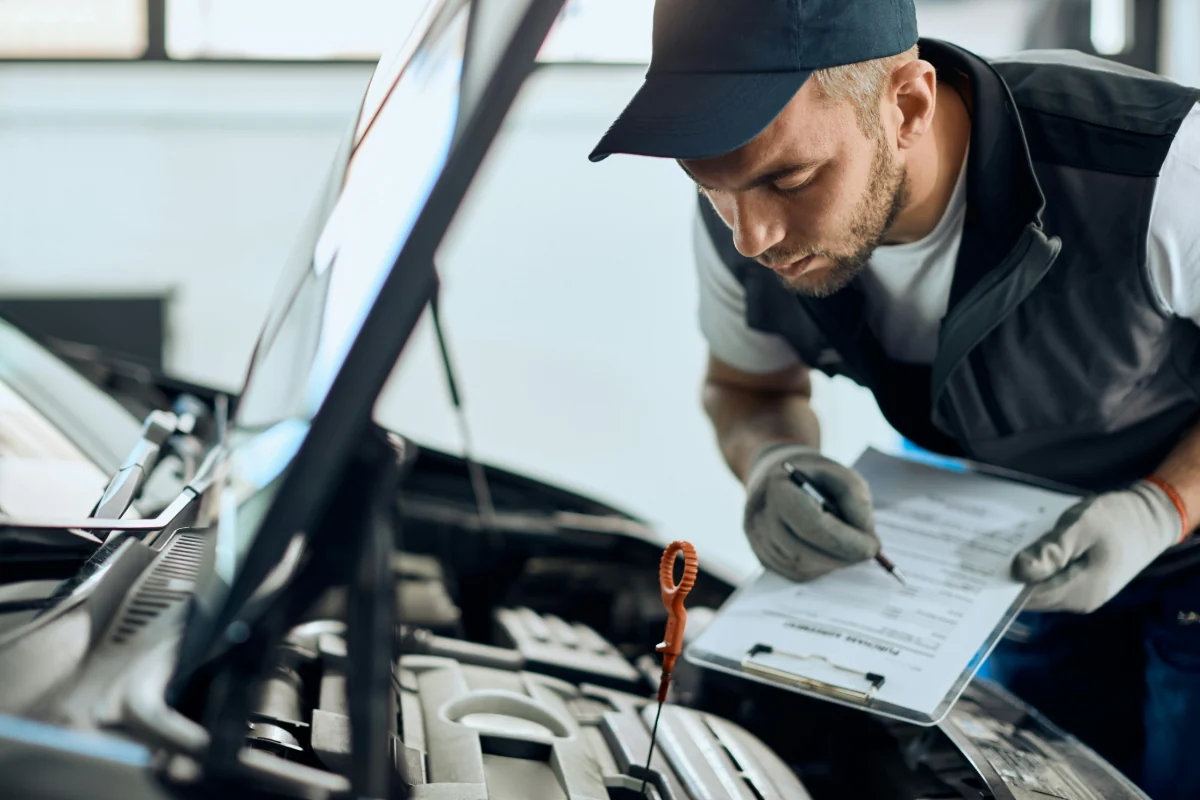
If you're buying a used vehicle, registering an out-of-state car, or transferring a title in Maryland, a Maryland State Safety Inspection is a mandatory legal requirement before your vehicle can be registered. API Auto Repair is a certified Maryland State Inspection station licensed by the Maryland State Police, performing thorough, efficient inspections in 1-hour appointment slots — eight slots per day, Monday through Friday. Our certified inspectors meticulously examine every component required by Maryland Code Title 23, including brakes, steering, suspension, tires, lights, exhaust, fuel system, glass, mirrors, seat belts, and more. If your vehicle requires repairs to pass, we'll provide a clear written explanation and a fair upfront estimate for the necessary work — and we can complete most repairs and re-inspect your vehicle the same day or the next.
Maryland's vehicle safety inspection program is one of the most comprehensive in the country. Unlike states that require annual inspections regardless of ownership changes, Maryland only requires a state inspection at specific trigger points: when you transfer a vehicle title (almost always after a private sale), when you bring an out-of-state vehicle into Maryland for the first time, when you re-register a vehicle that has been off the road for an extended period, and in certain commercial vehicle scenarios. Because the inspection is a single, high-stakes checkpoint between you and a valid registration, it's worth choosing an inspection station that takes the work seriously and explains the results clearly. That's the entire point of how API Auto Repair runs our inspection program.
We've been performing Maryland State Inspections in Elkridge since 1995 — over thirty years of inspecting cars, trucks, SUVs, vans, and light commercial vehicles for Howard County drivers. We're a fully licensed Maryland State Police inspection station, our inspectors are state-certified mechanics, and we've inspected thousands of vehicles for buyers, sellers, dealers, and Maryland transplants. The most common question we hear is simple: ''how strict is the inspection?'' The honest answer is that the inspection is strict — it has to be, because it's a state safety law — but it's also fair. We don't fail vehicles arbitrarily, we don't invent problems, and we don't pressure customers into unnecessary repairs. We follow the official Maryland State Police inspection checklist exactly as written, document every finding, and explain anything that doesn't pass in plain language so you can make an informed decision about repairs.
If your vehicle passes on the first try, you'll receive your Maryland State Safety Inspection Certificate within minutes of finishing the inspection. That certificate is what you'll bring to the MVA to complete your title transfer or registration — it's valid for 90 days from the issue date. If your vehicle fails any item on the inspection checklist, we'll provide a written rejection report listing exactly what failed, give you a written estimate to repair the failed items, and offer to perform the repairs in our shop. After repairs are completed, we re-inspect the vehicle (typically free of charge if all the repairs were done at our shop and within 30 days of the original inspection), and once everything passes, we issue your certificate. The whole process — from initial inspection to repaired-and-passed certificate — can often be completed within a single day for most common failure items.
We schedule inspections in 1-hour appointment slots because that's how long a thorough Maryland State Inspection actually takes. Some shops advertise faster inspections, but a real inspection requires a road test, a detailed visual inspection from underneath the vehicle on a lift, brake performance testing, suspension component checks, an exhaust system review, glass and lighting verification, and full documentation of every checked item. Compressing this into 20 minutes means corners get cut. We've designed our schedule around eight one-hour inspection slots per day so each customer receives the full attention the inspection deserves, and so we have time to walk you through anything that doesn't pass and answer any questions before you leave.
Features
Safety Inspection
Checking all safety-related components as per state regulations.
Emissions Testing
Ensuring your vehicle meets environmental standards.
Documentation Assistance
Helping with all necessary paperwork for certification.
Pre-Inspection Check
Optional pre-check to identify potential issues before the official inspection.
Signs You Need This Service
You just bought a used vehicle from a private seller
Maryland law requires a state inspection any time vehicle ownership transfers between private parties (with very limited exceptions for immediate family). You cannot complete title transfer at the MVA without a current inspection certificate. Schedule your inspection before you head to the MVA — most certificates issued today are valid for 90 days.
You're moving to Maryland from another state
Out-of-state vehicles must pass a Maryland Safety Inspection before they can be registered to a Maryland address. This applies to active-duty military, college students transferring residency, and anyone relocating for work. Maryland's inspection standards are stricter than many states, so vehicles that passed inspection elsewhere sometimes need minor work to pass here.
You're a dealer preparing a vehicle for resale
Maryland dealers are required to provide a passing inspection certificate to buyers at the time of sale. We work with several Howard County dealers to provide reliable, fast inspection turnaround so dealers can move inventory without delay.
Your vehicle has been off the road and you're re-registering it
If you've let a Maryland registration lapse for more than a year — common for vehicles parked during deployment, college, or extended travel — Maryland generally requires a fresh safety inspection before issuing a new registration. This protects against unsafe vehicles being returned to the road after extended storage.
You're transferring a vehicle from a deceased family member
Estate transfers usually trigger an inspection requirement, though limited exceptions exist for immediate family transfers. We can help you understand whether your specific situation requires inspection — call us with the details before you book.
You're bringing a salvage or rebuilt-title vehicle back to road status
Vehicles with salvage titles that have been rebuilt require a Maryland State Inspection plus additional documentation before they can be retitled as ''rebuilt salvage.'' Our inspectors are familiar with the additional documentation requirements for salvage vehicles.
You've imported a vehicle from outside the U.S.
Vehicles imported from outside the United States must pass federal compliance review and a Maryland State Inspection before Maryland registration. We can perform the inspection and direct you to the additional federal compliance steps where applicable.
Our Service Process
- 1
Schedule Your 1-Hour Inspection Appointment Online
Use our online booking calendar to pick from any open 1-hour slot Monday through Friday. We offer eight inspection slots per day, and you'll receive an automatic confirmation. Walk-ins are accepted when slots are available, but appointments are strongly recommended — same-day availability is not guaranteed during busy periods like the start and end of school semesters or after major moving days.
- 2
Arrive 5 Minutes Early With Required Documents
Bring your current vehicle title or registration, proof of insurance, and a valid government-issued photo ID. If you're inspecting a recently purchased vehicle, bring the bill of sale. For out-of-state vehicles being brought into Maryland, bring your prior state's title and registration. These documents allow us to log the inspection correctly into Maryland's state inspection database.
- 3
Comprehensive Visual & Performance Inspection
Your vehicle goes onto our lift while a certified inspector works through the official Maryland State Police inspection checklist. This includes a thorough underbody review (frame, suspension, exhaust, fuel system), a full braking system performance check, lighting and signal verification, glass and mirror inspection, seat belt and airbag system check, tire condition and tread measurement, steering component evaluation, and a brief road test for proper operation under driving conditions.
- 4
Real-Time Documentation & Walk-Through
We document every inspected item digitally as we work. If we find an issue that's borderline or unclear, we'll bring you out to the bay to look at it directly so you can see what we're seeing. There are no surprises in our reports — by the time the inspection is complete, you already know exactly what passed and what (if anything) needs attention.
- 5
Pass: Receive Your Inspection Certificate Immediately
If your vehicle passes every checklist item, we issue your Maryland State Safety Inspection Certificate on the spot. The certificate is valid for 90 days from the date of issue and is what you'll bring to the MVA to complete your title transfer or vehicle registration. We also email you a digital copy for your records.
- 6
Fail: Receive a Detailed Rejection Report and Repair Estimate
If your vehicle fails any item, we provide a written rejection report listing exactly what failed and why. Along with the report, we include a transparent written estimate to repair the failed items. You're never obligated to do the repairs at our shop — you can take the vehicle anywhere — but if you'd like us to handle the work, we can typically begin same-day for most common failure items.
- 7
Repair & Re-Inspection
After repairs are complete, we re-inspect the failed items only (not the entire vehicle again). Re-inspections completed within 30 days of the original inspection at our shop are typically free of charge if all repairs were done by us. Re-inspections after 30 days, or for vehicles repaired elsewhere, are subject to a small re-inspection fee.
- 8
Take Your Certificate to the MVA
Bring your inspection certificate to the Maryland MVA along with your title, bill of sale (if applicable), and other registration documents. The MVA will record the certificate against your VIN and issue your registration. Most title transfers can be completed online or by mail with a scanned copy of the inspection certificate.
What's Included in This Service
Brake System Inspection
Pad and shoe thickness measured, rotors checked for warping and minimum thickness, calipers and wheel cylinders checked for leaks, brake lines and hoses inspected, parking brake operation tested, fluid level and condition verified.
Suspension & Steering Components
Ball joints, tie rods, control arms, sway bar links, struts, shocks, and bushings all checked for wear or damage. Steering linkage and rack tested for excessive play. Power steering system checked for leaks and proper assist.
Tire Condition & Tread Depth
All four tires measured for tread depth (must exceed 2/32 of an inch), checked for sidewall damage, bulges, exposed cord or steel belts, and proper inflation. Mismatched tires (different sizes left/right) are flagged.
Lighting & Electrical Signaling
Headlights (low and high beam), tail lights, brake lights, turn signals (front, rear, side markers), reverse lights, license plate lights, hazard flashers, and dashboard warning lights all verified. Headlight aim tested when applicable.
Exhaust System & Emissions Equipment
Full exhaust system checked from manifold to tailpipe for leaks, holes, missing components, or modifications. Catalytic converter presence and condition verified. EVAP system components inspected. Active check engine light is an automatic fail.
Glass, Mirrors & Visibility
Windshield checked for cracks in the driver's primary view, all glass checked for damage. Side mirrors and rearview mirror tested for proper attachment and adjustment. Wiper blades inspected for proper sweep and blade condition.
Seat Belts & Restraint Systems
All seat belts tested for proper retraction, latching, and anchor security. Airbag warning lights checked for active faults. SRS (Supplemental Restraint System) module scanned for stored fault codes when applicable.
Frame, Body & Underbody Inspection
Frame rails, subframe, mounting points, and structural body components checked for rust-through, cracking, or unsafe damage. Floor pan, rocker panels, and core support inspected. Undercarriage rust common to Maryland's salt-treated winter roads is evaluated against state standards.
Fuel System & Fluid Leaks
Fuel tank, lines, filler neck, and vapor recovery system inspected for leaks or damage. Engine, transmission, differential, brake, and power steering systems checked for active fluid leaks that exceed state-allowed limits.
Road Test & Drivability
Brief road test confirms proper acceleration, braking, steering response, transmission shifting, suspension behavior over bumps, alignment (no excessive pull), and that no warning lights illuminate during driving conditions.
Why Choose API Auto Repair
Certified Maryland State Police Inspection Station Since 1995
Three decades of Maryland State Inspection experience. Our certifications are current, our inspectors are state-certified, and we've inspected thousands of vehicles for Howard County drivers. The Maryland State Police periodically audits inspection stations — we've operated continuously without sanction since opening.
1-Hour Slots Mean a Real Inspection, Not a Rubber Stamp
Some shops promise inspections in 20-30 minutes. A complete Maryland inspection — with road test, full underbody review, brake testing, and lighting verification — actually takes about an hour. Booking 1-hour slots ensures you get a thorough, properly documented inspection rather than a rushed one that might miss safety issues.
Pass-or-Fail With No Surprises
We walk you through every finding before issuing the certificate or rejection report. If something is borderline, you see it on the lift before any decision is made. Our inspectors document with photos when relevant. You leave with a clear understanding of your vehicle's safety condition — not just a paper certificate.
Same-Day Repair & Re-Inspection
If your vehicle fails, we can typically begin repairs the same day for most common items (brake pads, light bulbs, wiper blades, exhaust patches, ball joints, tires). Re-inspection of the corrected items is free within 30 days for repairs performed at our shop. You drive home with a passing certificate the same day instead of scheduling multiple visits.
Honest Pricing With No Upsells
The inspection fee is the inspection fee. If you fail, we give you a transparent written estimate for the failed items only — we don't tack on unrelated maintenance recommendations to inflate the repair bill. If you'd rather take the vehicle elsewhere for repairs, we hand you the rejection report without pressure.
Maryland State Inspection Pricing in Elkridge
A standard Maryland State Safety Inspection at API Auto Repair is priced consistent with Howard County market rates — typically $80–$110 depending on vehicle type. Trucks, large SUVs, vehicles with diesel engines, and vehicles with significant aftermarket modifications may be priced slightly higher because they take more time to inspect (more lighting circuits, additional underbody components, and emissions equipment that requires more thorough review). We provide the exact inspection fee at the time you book — no surprises.
If your vehicle fails any item on the inspection checklist, you'll receive a written estimate for the specific failed items. Common repair-and-pass items range widely: a single burned-out license plate bulb might cost $15 to fix, a worn brake pad set runs $150–$300 per axle, a leaking exhaust patch is typically $100–$300 depending on where the leak is, and a torn CV boot or worn ball joint might run $200–$500 each. We always provide written estimates before performing any work, and you're never obligated to repair at our shop — you can take the rejection report anywhere.
Re-inspections after repairs are typically $20–$40 if performed at a different shop or after 30 days. Re-inspections within 30 days for vehicles repaired entirely at API Auto Repair are usually included at no additional charge as part of the repair work. If you have specific cost questions before scheduling, give us a call at (410) 579-8422 — we're happy to walk through pricing scenarios for your specific vehicle and situation.
Tips to Extend the Life of Your Service
Pre-Check Your Lights Before the Appointment
Walk around your vehicle and verify all exterior lights work: headlights (low and high beam), tail lights, brake lights (have someone watch while you press the pedal), all four turn signals, side markers, license plate lights, reverse lights, and hazard flashers. Burnt-out bulbs are the #1 reason vehicles fail inspection. Replacing a $5 bulb yourself before the inspection saves you a re-inspection trip.
Check Tire Tread With a Quarter
Maryland requires at least 2/32 inch of tread depth. A simple test: insert a quarter into your tread groove with George Washington's head pointing down. If the top of his head is visible, your tread is below 4/32 — getting close to the limit. If you can see the top of his head clearly, you'll likely fail. Replacing tires before the inspection is usually cheaper than a rejection-then-replacement-then-reinspection trip.
Address Active Check Engine Lights First
An illuminated check engine light is an automatic inspection fail in Maryland. Before scheduling your inspection, get the codes diagnosed and address whatever's causing the light. Some codes can be cleared after a repair but require a full drive cycle (highway and city driving) before they fully reset — leave several days between fixing the issue and your inspection.
Don't Skip Windshield Repair
Cracks in the driver's primary line of sight are an automatic fail. Cracks elsewhere on the windshield may be borderline depending on size and location. If you have any windshield damage, get a repair quote before inspection — most chip repairs are $50–$100 and can prevent an inspection failure.
Wash and Clean the Underbody if Possible
Maryland's road salt creates significant underbody rust that can cause inspection issues. While you can't fix rust the day before, having the underbody cleaned (a quality undercarriage wash) makes it easier for our inspectors to see what's structural rust versus surface rust, which can reduce ambiguity in borderline cases.
Don't Stop Driving Just Before the Inspection
Some customers think driving the vehicle minimally before inspection means fewer items will fail. Actually, vehicles that haven't been driven recently may have stuck brake calipers, dry seals that suddenly leak, dead batteries that prevent diagnostic scans, and other issues that wouldn't show up if the vehicle were driven normally. Drive the vehicle 50–100 miles in the week before inspection to surface anything that needs attention.
Serving Elkridge & Howard County, MD
Howard County drivers face inspection requirements primarily through used vehicle purchases. The 21075 zip code (Elkridge), 21044 (Columbia), 21042 (Ellicott City), 21076 (Hanover), and 21075 ALL see significant private-party vehicle sales because the area's strong job market and proximity to BWI airport bring constant population turnover. We see customers nearly every week who recently purchased from a Facebook Marketplace, Craigslist, or Carfax-listed seller and need an inspection before they can complete the title transfer at the MVA office on Old Annapolis Road.
Maryland's harsh winter conditions — particularly the heavy use of road salt and brine on I-95, I-895, US-1, and Route 100 throughout Howard County — create unique inspection challenges. Vehicles that lived in the Mid-Atlantic for several winters often show underbody rust on brake lines, fuel lines, exhaust components, and frame mounting points. Our inspectors are experienced at distinguishing surface rust (cosmetic, doesn't fail) from structural rust (requires repair). If your vehicle has been Maryland-owned for more than 5 years, expect that some salt-related findings may need attention before the inspection passes.
We work with several local Elkridge and Columbia used-vehicle dealers, BWI-area rental fleets, and Fort Meade military families relocating to and from the region. If you're an active-duty service member with a tight relocation timeline, mention it when you book — we'll prioritize your inspection slot to fit around PCS-related deadlines, and our team is familiar with the specific paperwork military families need to handle out-of-state title and registration transitions.
After Your Vehicle Passes: Completing Your MVA Registration
After your vehicle passes the safety inspection, the next step is completing your title transfer or new vehicle registration at the Maryland Motor Vehicle Administration. Most customers handle this in person at one of the MVA branch offices serving Howard County, but several scenarios qualify for online or mail-in processing. The MVA's processing requirements depend on whether you're handling a private-party purchase, an out-of-state import, an estate transfer, a salvage rebuild, or a standard registration renewal.
For in-person service, the closest MVA full-service branches to Elkridge are the Glen Burnie branch (located at 6601 Ritchie Highway in Glen Burnie, about twenty minutes from our shop on I-695) and the Columbia branch (located at 6420 Freetown Road in Columbia, about ten minutes away via Route 100). Both branches handle title transfers, new registrations, and out-of-state vehicle imports, though Columbia tends to have shorter wait times during weekday afternoons. The MVA accepts both walk-ins and appointments — for time-sensitive registrations, we recommend booking an appointment through the MVA website to skip the walk-in queue.
When you visit the MVA, you'll need your inspection certificate (valid for ninety days from issue date), your vehicle title or out-of-state title, your bill of sale or transfer documentation if applicable, proof of Maryland insurance, and identification. The MVA also requires the inspection certificate to be processed within the certificate's ninety-day validity window — if your certificate expires before you make it to the MVA, you'll need a new inspection. We strongly recommend completing the MVA visit within thirty to sixty days of your inspection rather than waiting until the last minute.
For straightforward title transfers on used vehicles purchased from a Maryland dealer or private party, online or mail-in processing is sometimes available and faster than visiting a branch. The Maryland MVA's online services include vehicle registration renewal, title transfers under specific conditions, and address changes. Out-of-state vehicle imports and vehicles requiring physical document verification typically require an in-person branch visit. After your registration is processed, you'll receive your new Maryland registration card and license plates either in person at the branch or by mail within seven to ten business days. If you're transferring an existing Maryland registration to a new vehicle, you may be able to keep your existing license plates depending on the type of transfer and whether the plates are personalized.
Documentation Required: Common Inspection Scenarios
The documents required for your inspection depend on your specific situation. The most common scenario is a used vehicle purchase from a private seller — for this, bring the vehicle title (signed over to you by the seller), the bill of sale showing purchase price and transaction date, your driver's license, and proof of insurance for the vehicle. If the seller hasn't signed over the title yet because the inspection is required first, bring whatever documentation you have. We can still perform the inspection, and the certificate is issued in the vehicle's name (by VIN), not the buyer's name, so the title can be signed afterward.
For an out-of-state vehicle being brought into Maryland, bring the title from your previous state of residence, your current registration card, proof of Maryland insurance, your driver's license, and any odometer disclosure documentation if applicable. If the vehicle has been registered to you for less than a year in another state, additional documentation about the vehicle's purchase may be required at the MVA. Active-duty military service members on PCS moves should bring their military ID, PCS orders, the vehicle title or registration, and proof of insurance — Maryland offers specific provisions for active-duty military registration, including the ability to maintain your home-of-record state registration while stationed in Maryland.
Salvage or rebuilt-title vehicles require additional documentation. Bring the salvage title (or rebuilt salvage title if the conversion has already been processed), all repair receipts and parts documentation showing what was repaired, photos from before and after major repairs if available, and proof of insurance. Salvage vehicles require additional MVA documentation beyond the standard inspection certificate, including a Maryland Salvage Certification Application and detailed repair documentation that may need to be reviewed by an MVA inspector before the vehicle can be retitled as a rebuilt salvage.
Estate transfers — common when inheriting a vehicle from a deceased family member — require the vehicle title from the deceased owner, the death certificate, executor or administrator paperwork from probate court, your driver's license, and proof of insurance. Specific MVA forms (typically Form VR-019 for surviving spouse transfers or Form VR-278 for executor transfers) need to be completed at the MVA along with the inspection certificate. Dealer-sold vehicles usually include a current inspection certificate as part of the sale, but if your dealer is asking you to obtain inspection separately, bring your purchase agreement or bill of sale, the assigned title or temporary documentation, proof of insurance, and your driver's license.
Maryland Inspection Compared to Other States
Maryland's vehicle inspection program is more comprehensive than many states, which sometimes surprises customers transferring from less-strict states. Understanding what makes Maryland's inspection different helps explain why some out-of-state vehicles need work to pass even though they passed inspection elsewhere. Maryland is one of approximately twenty states that require a vehicle safety inspection at a one-time-trigger event (title transfer or initial registration), as opposed to states with annual inspections like Massachusetts, New York, Texas, and Pennsylvania, or states with no inspection requirement at all like Florida, Arizona, and Georgia. The trade-off is that Maryland's single inspection is more thorough than the typical annual inspection in states with annual programs, because it has to capture everything in one comprehensive check.
Specific differences customers most often notice: Maryland evaluates structural rust on frame and body more strictly than rust-belt states with annual inspections, because Maryland inspectors have to certify safety based on a single inspection rather than incremental yearly reviews. Maryland inspects all four wheels' tire condition, not just the front axle. Maryland's lighting and signaling check is more thorough — including license plate bulbs, side markers, and cargo lights on trucks. Maryland requires functioning emergency flashers, working horn, and proper seat belt operation as pass/fail items. Vehicles modified beyond original equipment — lifted suspensions, custom exhaust, aftermarket lighting — face stricter scrutiny in Maryland than in many states, particularly if modifications affect emissions, lighting, or structural integrity.
It's important to understand that Maryland safety inspection is separate from emissions testing. The Maryland Vehicle Emissions Inspection Program (VEIP) is a different requirement that applies to most Maryland-registered vehicles every two years, regardless of ownership changes. VEIP tests are performed at state-operated emissions testing stations, not at certified inspection stations like ours. If you're a new Maryland resident, you'll need both the safety inspection (one-time at registration) and VEIP testing (every two years thereafter, with the first VEIP test typically due within ninety days of new vehicle registration). Our team can answer questions about VEIP timing and direct you to the nearest VEIP station, but VEIP itself is performed only at state facilities.
Common Mistakes to Avoid Before Your Inspection
Walking into an inspection unprepared is the single biggest cause of inspection failures we see at our shop. The most common mistake is ignoring an active check engine light. Customers sometimes assume that because the car ''drives fine,'' the warning light won't matter. Maryland inspection rules treat any illuminated check engine light as an automatic fail, regardless of what's causing it. If your light is on, get the codes diagnosed and the underlying issue addressed at least three to five days before your inspection. Some emissions-related repairs require the vehicle to complete a full drive cycle (highway and city driving combined) before the readiness monitors reset and the inspection can pass.
The second most common mistake is failing to check exterior lights. Burnt-out license plate bulbs, marker lights, and brake lights are responsible for a surprising percentage of failures because customers don't think to verify them. Walk around the vehicle yourself before the appointment: turn on the headlights and verify both low and high beams; have someone press the brake pedal while you watch for both brake lights working; verify all four turn signals (front and rear) and side marker lights; check both reverse lights with the transmission in reverse; verify the license plate light. A burnt-out license plate bulb is a five-dollar fix that we'd much rather you handle yourself than have to fail you for.
Other frequent issues include arriving without required documents (always bring title, registration, insurance, and identification), not addressing known fluid leaks (active leaks trigger fails), and arriving with bald tires expecting to ''just barely'' pass on tread depth. Tires below 2/32 inch fail automatically — checking with a quarter test before the appointment can save you a re-inspection trip. Customers sometimes also forget to clean out personal items from the vehicle that block our inspector's view of dashboards, pedals, or seatbelts. Try to drive the car normally for at least a week before the inspection so any latent issues (sticking calipers, slow leaks, intermittent warning lights) have a chance to surface and be addressed before the inspection rather than failing the test.
Related Services
Brake Repair & Replacement in Elkridge, MD
Get expert brake repair in Elkridge, MD. API Auto Repair offers fast, safe brake service at competitive prices.
Tire Services in Elkridge, MD
Need new tires or a rotation? API Auto Repair offers fast, affordable tire service in Elkridge, MD. Schedule your visit today.
Wheel Alignment in Elkridge, MD
Improve handling and tire life with precision wheel alignment at API Auto Repair in Elkridge, MD.
Exhaust & Muffler Repair in Elkridge, MD
Noisy exhaust? API Auto Repair in Elkridge, MD fixes mufflers, pipes, and emissions systems.
Check Engine Light Diagnostics in Elkridge, MD
Don’t ignore your check engine light. Get accurate diagnostics at API Auto Repair in Elkridge, MD today.
Wiper Blade & Light Replacement in Elkridge, MD
Drive safely in all conditions. API Auto Repair in Elkridge, MD replaces windshield wipers and car lights fast.
Got Questions?