Last updated:
Car Battery Testing & Replacement in Elkridge
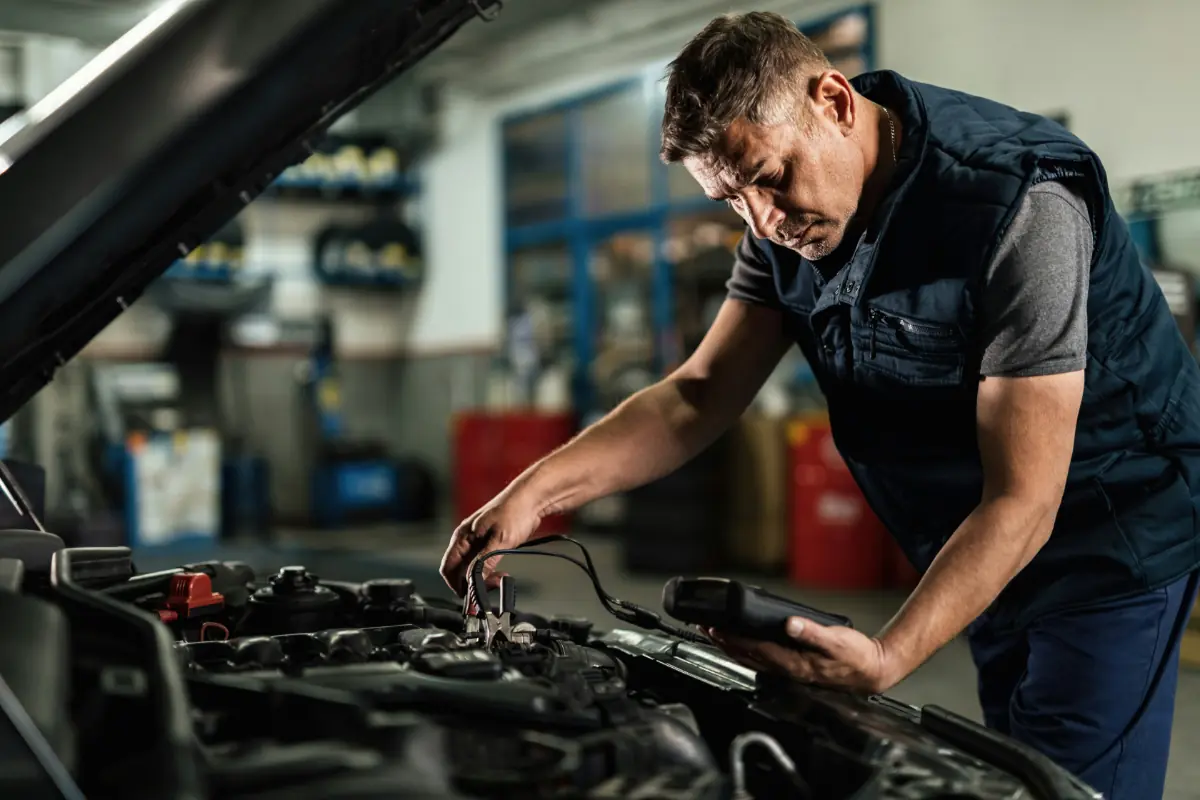
Your vehicle's battery is the heart of its electrical system, essential for starting your engine and powering all electronic components. At API Auto Repair, we offer comprehensive Battery Testing & Replacement services to ensure reliable vehicle starting and optimal electrical system performance. Our technicians use specialized diagnostic tools to test your battery's voltage, cold cranking amps, and overall health, as well as checking your alternator and starter. If a replacement is needed, we offer a wide selection of high-quality batteries from trusted brands, ensuring a perfect fit for your vehicle. We also handle proper disposal and recycling of your old battery, providing a complete and environmentally responsible service.
Your vehicle's battery is the foundation of every electrical system in the vehicle. It provides the energy needed to start the engine, powers accessories when the engine isn't running, stabilizes voltage during operation, and absorbs surges from the alternator that would otherwise damage sensitive electronics. Modern vehicles are far more electrically demanding than vehicles from previous generations — typical 2020-or-newer vehicles draw substantial power even when parked to keep modules awake, maintain security systems, and support keyless entry features. The battery's role has expanded significantly even though the basic function — storing and delivering electrical energy — has stayed the same.
API Auto Repair has been testing and replacing batteries in Elkridge for over thirty years. Battery technology has evolved dramatically during that time. Lead-acid batteries from the 1990s have largely been replaced by enhanced flooded batteries, AGM (Absorbed Glass Mat) batteries, and EFB (Enhanced Flooded Battery) variants designed for start-stop and electrical-load-heavy applications. Modern luxury vehicles, hybrids, and most start-stop equipped vehicles require AGM batteries that handle the additional charge-discharge cycles. Using the wrong battery type — particularly using standard flooded batteries in vehicles requiring AGM — leads to premature failure and possible damage to charging systems.
Battery problems are among the most disruptive maintenance issues because failure typically happens at the worst possible time. A weak battery may start the engine fine on a warm day after recent driving but fail to start on a cold morning after sitting overnight. Battery failures often happen at workplace parking lots, shopping centers, and other inconvenient locations. Proactive battery replacement based on age and testing prevents the inconvenience and potential safety implications of unexpected failure. Most batteries give early warning signs through reduced performance — slow cranking, dim lights, electrical accessories operating sluggishly — that we can identify during routine testing before total failure occurs.
Modern vehicle electrical systems are sensitive to voltage levels in ways that older vehicles weren't. Low battery voltage causes cascading symptoms across systems: rough running, transmission shift quality issues, traction control faults, dashboard warning lights, infotainment system glitches, and many others. Customers often arrive thinking they have multiple electrical problems when the actual underlying cause is a single weak battery. Replacing the battery resolves the cascading symptoms simultaneously. This is why battery testing is the first step in our electrical diagnosis — verifying battery health prevents misdiagnosis of secondary symptoms.
Features
Battery Health Check
Testing battery voltage, cold cranking amps, and overall condition.
Charging System Test
Verifying alternator and starter functionality.
Battery Replacement
Installing a new, high-quality battery if needed.
Terminal Cleaning
Cleaning battery terminals to ensure good connection.
Signs You Need This Service
Slow Cranking When Starting
If your engine cranks slowly compared to how it used to start, your battery is likely weakening. Slow cranking is most noticeable on cold mornings or after the vehicle has sat for several days. The reduced cranking speed reflects reduced battery capacity to deliver high current.
Battery Warning Light on Dashboard
The dashboard battery icon (typically resembling a battery shape) indicates an issue with battery charging or electrical system voltage. The light may stay on continuously or appear intermittently, particularly after starting. Don't ignore — diagnosis identifies whether it's the battery, alternator, or wiring causing the problem.
Lights Dim When Engine Is Idling
Headlights or dashboard lights that dim noticeably at idle but brighten when you rev the engine indicate the alternator can't maintain full charging voltage at low engine speeds. This often coexists with weak battery condition. The combination of weak battery and weak alternator output accelerates the failure of both.
Electrical Accessories Operating Sluggishly
Power windows that move slowly, slow-responding power locks, sluggish power seats, and dim interior lights all suggest insufficient voltage. While each of these can have individual causes, sluggish operation across multiple accessories simultaneously points to battery or charging system problems.
Battery Older Than 4 Years
Most batteries last 3 to 5 years in Maryland's climate. Heat is harder on batteries than cold despite the conventional wisdom — Maryland summers stress batteries significantly. Batteries past 4 years should be tested annually; batteries past 5 years should be considered for replacement even if testing seems adequate.
Vehicle Has Been Jump-Started Multiple Times
If you've had to jump-start your vehicle more than once or twice in the past year, the battery is likely beyond its useful life. Each deep discharge damages battery capacity progressively. Vehicles requiring frequent jumps need either battery replacement or diagnosis of the underlying cause (parasitic drain, alternator failure).
Visible Corrosion at Battery Terminals
White, blue, or green crystalline buildup on battery terminals indicates active corrosion. Corrosion creates electrical resistance that prevents the battery from delivering full current. While cleaning sometimes resolves the issue, corrosion is also a sign of battery age or charging system issues that warrant deeper testing.
Our Service Process
- 1
Battery Visual Inspection
We start by visually inspecting the battery itself: physical condition (cracks, swelling, leakage), terminal condition (corrosion, looseness), case integrity, and proper hold-down. Some battery problems are visible — bulging cases indicate internal damage from heat or overcharging; leaking cases require replacement regardless of test results.
- 2
State of Charge Test
Using a digital battery tester, we measure the battery's state of charge. Voltage alone doesn't tell the full story — a battery can read 12.6 volts (fully charged) while having significantly reduced capacity. Modern testers use conductance testing that measures the battery's ability to deliver current, which correlates better with actual usable capacity.
- 3
Cold Cranking Amps Test
We measure the battery's cold cranking amps (CCA) capacity under simulated load. The reading compares to the battery's rated CCA value (typically printed on the battery). Batteries that deliver less than 80% of rated CCA are approaching end of life; less than 60% indicates immediate replacement. CCA testing is the most informative single battery test.
- 4
Charging System Test
We test alternator output at idle and at higher RPM. Modern charging systems use computer control to vary output based on demand — proper testing requires equipment that recognizes these patterns. Voltage outside the acceptable range indicates alternator problems, regulator issues, or wiring problems separate from the battery itself.
- 5
Starter Current Draw Test
We measure the current draw when starting the engine. Excessive draw indicates a starter motor with worn brushes, dragging armature, or other mechanical issues. The starter testing differentiates between weak battery (reduced delivery) and excessive starter draw (excessive demand) — both can produce similar symptoms.
- 6
Parasitic Drain Test When Indicated
If the customer reports overnight battery drain or repeated discharge, we measure parasitic current draw — the current consumed by the vehicle when fully shut down. Excessive parasitic draw indicates a circuit drawing power that shouldn't be active. Identifying which circuit requires methodical isolation, but the testing itself takes 30 to 60 minutes.
- 7
Battery Replacement With Proper Specifications
When replacement is needed, we install a battery matching your vehicle's specifications — group size, terminal configuration, cold cranking amps rating, and battery technology (flooded, AGM, EFB). Using the correct specifications ensures proper fit, full charging system compatibility, and warranty coverage.
- 8
Battery Registration and System Reset
Many BMW, Audi, Mercedes, VW, Volvo, and some other vehicles require battery registration with the vehicle's computer after replacement. Without registration, the charging system continues using parameters from the old battery, potentially overcharging or undercharging the new one. We have the dealer-grade tools required for battery registration on most vehicles.
What's Included in This Service
Free Battery Test
State of charge, cold cranking amps, and overall battery condition tested with digital equipment.
Free Charging System Test
Alternator output and voltage regulation verified at idle and operating RPM.
Free Starter Current Draw Test
Starter motor current draw measured to identify excessive draw indicating wear.
Battery Terminal Cleaning
Terminals cleaned of corrosion and treated with terminal protectant to prevent recurrence.
Battery Hold-Down Inspection and Repair
Battery securely mounted to prevent vibration damage; hold-down hardware replaced if missing.
Major Brand Battery Selection
Interstate, DieHard, ACDelco, AGM specialty batteries, and OEM-equivalent options available.
Quick Installation
Most battery replacements completed in 20 to 30 minutes; some European vehicles take longer for registration.
Battery Registration Where Required
Battery management system reset and registered on BMW, Audi, Mercedes, VW, and other applicable vehicles.
Old Battery Recycling
Used battery recycled through certified Maryland facilities at no charge to customer.
Battery Warranty
Manufacturer warranty (typically 24 to 60 months depending on battery selected) plus our installation labor warranty.
Why Choose API Auto Repair
Free Battery and Charging System Testing
We offer free battery, charging system, and starter testing for any vehicle that comes through our shop. No appointment needed — drop in during business hours and we'll test your electrical system. The testing takes about 15 minutes and gives you a clear picture of battery condition.
Quality Batteries From Trusted Brands
We stock and order major brand batteries — Interstate, DieHard, ACDelco, OEM-equivalents from quality suppliers. We don't sell house-brand batteries from unknown manufacturers. Quality batteries last longer, deliver consistent performance, and carry warranties you can trust.
AGM and Specialty Battery Expertise
Modern vehicles increasingly require AGM (Absorbed Glass Mat) batteries for start-stop systems, premium audio, and electrical-load-heavy applications. Many shops install standard flooded batteries in AGM-required applications, leading to premature failure. We use the correct battery technology for each vehicle.
Battery Registration Capability
European luxury vehicles and many newer domestic vehicles require battery registration after replacement. Without registration, the charging system continues using old parameters and may overcharge or undercharge the new battery. We have the manufacturer-grade tools to perform registration correctly.
Honest Replacement Recommendations
Some shops recommend battery replacement on every vehicle visit to maximize sales. We recommend replacement based on actual testing — batteries that test within specification stay; batteries failing testing get replaced. We don't push unnecessary replacements on functional batteries.
Battery Replacement Pricing in Elkridge, MD
Battery replacement pricing at API Auto Repair varies based on battery type and vehicle requirements. Standard flooded batteries for typical passenger vehicles run $130–$220 installed depending on group size and CCA rating. Premium flooded and enhanced flooded batteries (EFB) for start-stop equipped vehicles run $200–$300. AGM batteries for luxury vehicles, performance vehicles, and high-electrical-load applications run $250–$400. Heavy-duty truck batteries run $200–$400 depending on capacity.
Specialty applications carry additional considerations. European luxury vehicles requiring AGM batteries plus battery registration typically run $300–$450 total installed including registration service. Hybrid vehicles have small 12V batteries (typically $150–$300) plus high-voltage hybrid battery considerations that we coordinate when needed. Vehicles with batteries in unusual locations — under the rear seat, in the trunk, under the hood in tight quarters — may have slightly higher labor charges due to access requirements.
Battery testing is free regardless of whether you proceed with replacement. We test your battery, charging system, and starter, then provide honest recommendations. If your battery is fine, we'll tell you. If replacement is needed, we'll explain why and quote pricing for several battery options matched to your vehicle. The testing is genuinely free with no obligation, and we recycle your old battery at no additional charge regardless of where you bought the replacement.
Tips to Extend the Life of Your Service
Test Your Battery Annually After Year 3
Battery condition deteriorates gradually after about 3 years in service. Annual testing after year 3 catches developing weakness before total failure. Free testing at our shop takes 15 minutes — combine it with oil changes or other routine service.
Keep Battery Terminals Clean
Visible corrosion at battery terminals creates resistance that mimics weak battery symptoms. Annual terminal cleaning prevents corrosion buildup. White or green crystalline deposits indicate active corrosion that should be cleaned and treated with terminal protectant.
Don't Let the Battery Sit Discharged
Sulfation — chemical changes within the battery from prolonged discharge — permanently reduces capacity. If you have to jump start the vehicle, drive it long enough to fully recharge or use a battery charger. Repeated short trips after jump starts often result in batteries that never fully recharge.
Use a Battery Maintainer for Stored Vehicles
Vehicles that sit for weeks or months should use a battery maintainer (trickle charger) that maintains charge without overcharging. Modern vehicles' parasitic loads can drain a fully charged battery in 2 to 4 weeks. Battery maintainers cost $30–$60 and pay for themselves quickly compared to replacing dead batteries.
Address Parasitic Drains Promptly
If your battery dies overnight or after a few days of disuse, you have a parasitic drain. The drain damages the battery progressively each time it discharges. Diagnosis identifies the source — often a stuck switch, faulty module, or aftermarket accessory — and the fix is usually inexpensive compared to repeated battery replacements.
Replace Batteries Proactively at Year 4 or 5
Rather than waiting for failure, plan battery replacement at year 4 or 5 of service life. Proactive replacement avoids the inconvenience of unexpected failure at inopportune times. The cost is the same; the difference is who chooses when the replacement happens.
Match Battery Specifications Exactly to Vehicle Requirements
When replacing the battery, match group size, terminal configuration, cold cranking amps rating, and battery technology to manufacturer specifications. Substituting cheaper specifications — using a smaller battery, lower CCA rating, or wrong technology — produces problems that range from slow cranking to charging system damage. Specifications matter.
Drive Long Enough to Fully Recharge After Starting
Cranking the starter draws significant current that the alternator must replenish. Trips under 15 to 20 minutes often don't allow full recharge. If most of your driving is short trips, periodically take the vehicle on a 30+ minute drive to ensure the battery is fully topped off. Better yet, use a battery maintainer if you can plug in at home.
Inspect Battery Vent Tubes on Sealed Batteries
AGM and some sealed batteries have vent tubes that should be properly routed. Disconnected or pinched vent tubes can cause venting gases to accumulate or batteries to overheat in unusual conditions. Annual visual inspection during service catches these issues before they cause problems.
Update Vehicle Software at Service Visits
Manufacturer software updates sometimes adjust charging parameters, fix battery management bugs, or improve start-stop logic. Periodic software updates during regular service visits can extend battery life by ensuring the vehicle's electrical management is operating with current calibrations.
Don't Buy Used or Reconditioned Batteries
Used and reconditioned batteries are tempting cost savings but rarely worth the risk. Their actual remaining capacity is unknowable without comprehensive testing, warranty coverage is minimal, and they're already partway through their useful life. The savings versus a new quality battery are usually small enough that the risk doesn't justify the trade-off.
Serving Elkridge & Howard County, MD
Howard County's climate is harder on batteries than many drivers realize. While conventional wisdom blames cold weather for battery failures, heat actually does more damage. Maryland summers regularly exceed 95°F with high humidity, and underhood temperatures frequently reach 140°F or higher. These elevated temperatures accelerate the chemical reactions inside batteries that cause aging — water loss in flooded batteries, plate corrosion in all battery types, and electrolyte breakdown. The damage from summer heat often manifests as winter starting failures, when reduced capacity meets cold-weather cranking demands.
Stop-and-go traffic on I-95, I-695, and US-1 stresses batteries through frequent partial discharges that aren't always fully replenished by the alternator before the next start. Vehicles that primarily make short trips (under 20 minutes) often experience progressive battery discharge over time as the alternator can't fully recharge between trips. We see Howard County commuter vehicles needing battery replacement somewhat earlier than vehicles primarily used for highway driving, where extended alternator output keeps batteries fully charged.
We work with several Howard County customers who own vehicles that sit for extended periods — second cars, project vehicles, RVs, and seasonal-use vehicles. These applications particularly benefit from battery maintainers and proactive battery management. We routinely recommend battery maintainers and battery isolators (which prevent parasitic drains during storage) for customers with low-mileage vehicles. Sometimes the right answer is a small AGM deep-cycle battery designed for occasional use rather than a starting battery designed for daily duty.
Understanding Battery Types: Flooded, EFB, AGM, and Lithium
Modern vehicles use several distinct battery technologies, each with characteristics suited to different applications. Standard flooded lead-acid batteries — the traditional design that's been around for over a century — use liquid sulfuric acid electrolyte between lead plates. They're inexpensive, well-understood, and adequate for vehicles with basic electrical demands. Their disadvantages: they don't tolerate deep discharges well, they vent during charging (requiring ventilation), and their capacity drops significantly when not regularly recharged.
Enhanced Flooded Batteries (EFB) are an evolution of flooded designs with thicker plates, denser active material, and reinforced grids designed to handle the additional charge-discharge cycles imposed by start-stop systems. EFB batteries cost slightly more than standard flooded but last meaningfully longer in start-stop applications. Many midrange new vehicles ship from the factory with EFB batteries; using a standard flooded replacement in EFB applications shortens battery life significantly.
Absorbed Glass Mat (AGM) batteries use fiberglass mats that absorb and immobilize the electrolyte. AGM batteries are sealed (no venting), can be mounted in any orientation, tolerate deeper discharges than flooded batteries, deliver more current per unit weight, and last longer in cyclic applications. They cost meaningfully more than flooded batteries but are required in most modern luxury vehicles, hybrids, premium audio applications, and start-stop systems with high cycle demands.
Lithium-ion batteries (lithium iron phosphate, LiFePO4) are emerging in some specialty applications, particularly for performance vehicles where weight matters and for some recreational vehicles. They're significantly more expensive than lead-acid alternatives but offer dramatic weight savings, longer cycle life, and excellent cold-weather performance. They're not yet mainstream for typical passenger vehicles but are worth considering for specialty applications. Compatibility with vehicle charging systems must be verified before installation.
Why Modern Vehicles Need Battery Registration After Replacement
Battery registration — the process of telling the vehicle's computer that the battery has been replaced and providing the new battery's specifications — has become standard practice on most modern luxury vehicles and is increasingly common on mainstream vehicles. The process is straightforward but requires proper diagnostic tools and procedure. Without registration, the vehicle's charging system continues operating based on parameters calibrated for the old battery, which leads to several problems.
Modern vehicles use intelligent charging systems that vary alternator output based on battery state of charge, vehicle operating conditions, and battery age. The system tracks battery age and gradually increases charging voltage to compensate for aging batteries' reduced ability to accept charge. When you install a new battery without registration, the system continues using the elevated voltage calibrated for the old battery, potentially overcharging the new one. Overcharging damages new batteries quickly, reducing their useful life by months or years.
Battery registration informs the system that the battery has been replaced and provides the new battery's specifications (capacity in amp-hours, technology type, manufacturer specifications). The system then resets its tracking, calibrates charging parameters for a fresh battery, and operates correctly throughout the new battery's life. The process takes 5–15 minutes with appropriate diagnostic equipment.
Vehicles requiring battery registration include most BMW models from 2002 onward, most Mercedes models from 2002 onward, most Audi and VW Group vehicles from 2005 onward, most Volvo models from 2008 onward, some Ford models with start-stop systems from 2014 onward, and various other modern vehicles. The list expands annually as more manufacturers adopt intelligent charging systems. We have the registration tools for most mainstream vehicles and we'll let you know upfront if your vehicle requires registration we can't perform (rare but possible for some specialty applications).
Diagnosing Parasitic Drains: Why Your Battery Keeps Dying
A parasitic drain — current draw on the battery when the vehicle is fully shut down and parked — is a frustrating problem that often requires methodical diagnosis to resolve. Modern vehicles draw small amounts of current even when parked: keeping security systems active, maintaining keyless entry receivers, preserving radio presets, and keeping module memory active. Normal parasitic draw is typically 25 to 80 milliamps. Excessive draw — anything over 100 milliamps for extended periods — drains the battery progressively.
Identifying the specific circuit causing excessive drain requires methodical isolation. We connect a high-precision ammeter between the battery and the vehicle's electrical system, then systematically remove fuses one at a time while watching the current reading. When pulling a fuse drops the current to normal levels, we've identified the circuit causing the drain. Further investigation traces the specific component on that circuit causing the issue. The process can take 30 minutes to several hours depending on how the drain manifests.
Common causes of parasitic drains include: stuck switches in glove boxes, trunks, or doors that keep accessory lights on; faulty modules that don't properly enter sleep mode; aftermarket accessories (alarms, remote starts, dash cameras, GPS trackers) that draw more current than designed; corrupted firmware in modules that prevents proper shutdown; failing relays that don't fully open; and worn ignition switches that don't fully turn off circuits.
Some parasitic drains are intermittent — they occur only under specific conditions like temperature, time of day, or after specific operating sequences. Intermittent drains require data logging over extended periods or specific test sequences to reproduce. We have the equipment to handle these complex cases, but the diagnosis time is correspondingly longer. The reward is identifying the root cause permanently rather than just replacing batteries that keep dying.
Why Some Vehicles Eat Batteries Faster Than Others
Some vehicles are notorious for premature battery failure even with proper maintenance. Understanding why helps customers make informed decisions about battery replacement frequency and battery selection. Vehicles with high accessory loads — premium audio systems, large infotainment screens, multiple charging ports for devices, heated seats, heated steering wheels, electric power steering — draw substantial current and stress batteries through frequent partial discharges and intensive charge cycles.
Start-stop systems are particularly hard on batteries. A start-stop equipped vehicle in heavy traffic may cycle the engine on and off dozens of times during a single commute. Each restart requires significant cranking current. Standard flooded batteries simply weren't designed for this duty cycle and fail prematurely if installed in start-stop applications. Even the correct EFB or AGM batteries last shorter in start-stop applications than in conventional applications — typically 4 to 6 years instead of 5 to 7 in conventional vehicles.
Hybrid and plug-in hybrid vehicles have unique 12V battery considerations. The 12V battery in these vehicles handles the same accessory loads as conventional vehicles but doesn't perform engine starting (the high-voltage hybrid system handles that). The reduced cranking demand might suggest longer battery life, but the duty cycle is different — long periods of operating accessories on battery power alone, frequent transitions between battery and engine power, and often relatively short periods of charging. We've seen hybrid 12V batteries fail at year 4 to 6 in patterns different from conventional vehicles.
Vehicles primarily used for short trips also stress batteries. The alternator generates current to recharge the battery after starting and to support running accessories, but it takes time to fully replenish the energy used during cranking. Trips under 20 minutes often don't allow full recharge, leaving the battery progressively discharged over time. We see this pattern especially in customers using vehicles primarily for school runs, errands around town, and short commutes — sometimes their batteries fail at year 2 to 3 instead of year 4 to 5.
How Cold and Heat Affect Battery Performance Differently
Battery performance varies significantly with temperature, and the effects of cold and heat are quite different. Cold temperatures reduce a battery's instantaneous output capacity. At 0°F, a typical lead-acid battery delivers only about 30–40% of its rated capacity. The chemical reactions that produce electricity slow down at low temperatures, so the battery can't deliver high cranking current as effectively. Cold-temperature performance is why batteries are rated by Cold Cranking Amps (CCA) — the amount of current the battery can deliver at 0°F for 30 seconds while maintaining usable voltage.
Heat affects batteries differently — it doesn't immediately reduce performance but accelerates the chemical aging that ultimately ends the battery's life. Heat causes water in flooded batteries to evaporate (lowering electrolyte level and exposing plates), accelerates plate corrosion (increasing internal resistance), and increases self-discharge rates (causing batteries to lose charge faster when not in use). The damage from heat is gradual and cumulative, often invisible until it manifests as reduced cold-weather performance months later.
Maryland's climate exposes batteries to both extremes annually. Summer underhood temperatures regularly exceed 140°F, accelerating heat-related aging. Winter cold snaps reach single digits, demanding peak cranking output. Batteries that arrive at winter with summer heat damage often fail their first cold morning. The pattern of summer-heat-damage manifesting as winter-failure is so common that we explain it to customers when recommending battery testing — winter failures often trace back to summer damage that wasn't yet symptomatic.
Practical implications: protect batteries from extreme heat where possible (some vehicles benefit from heat shields if the battery is in unusually hot locations); test batteries before winter arrives so weak batteries can be replaced proactively; keep batteries fully charged through winter (don't let them sit discharged in cold weather); and replace batteries based on age and testing rather than waiting for failure. Maryland customers who follow these practices typically get the full expected service life from batteries; customers who don't often see batteries fail at year 3 instead of year 5.
Related Services
Electrical Diagnostics & Repair in Elkridge, MD
Electrical issues? API Auto Repair in Elkridge, MD uses advanced diagnostics to find and fix the problem fast.
Engine Tune-Up in Elkridge, MD
Boost performance and fuel efficiency with an engine tune-up at API Auto Repair in Elkridge, MD.
Check Engine Light Diagnostics in Elkridge, MD
Don’t ignore your check engine light. Get accurate diagnostics at API Auto Repair in Elkridge, MD today.
Certified Maryland State Inspections in Elkridge
Need a Maryland state inspection? Visit API Auto Repair in Elkridge for fast, certified service.
Oil Change Services in Elkridge, MD
Fast, reliable oil change service in Elkridge, MD. Visit API Auto Repair for same-day service.
Got Questions?