Last updated:
Oil Change Services in Elkridge, MD
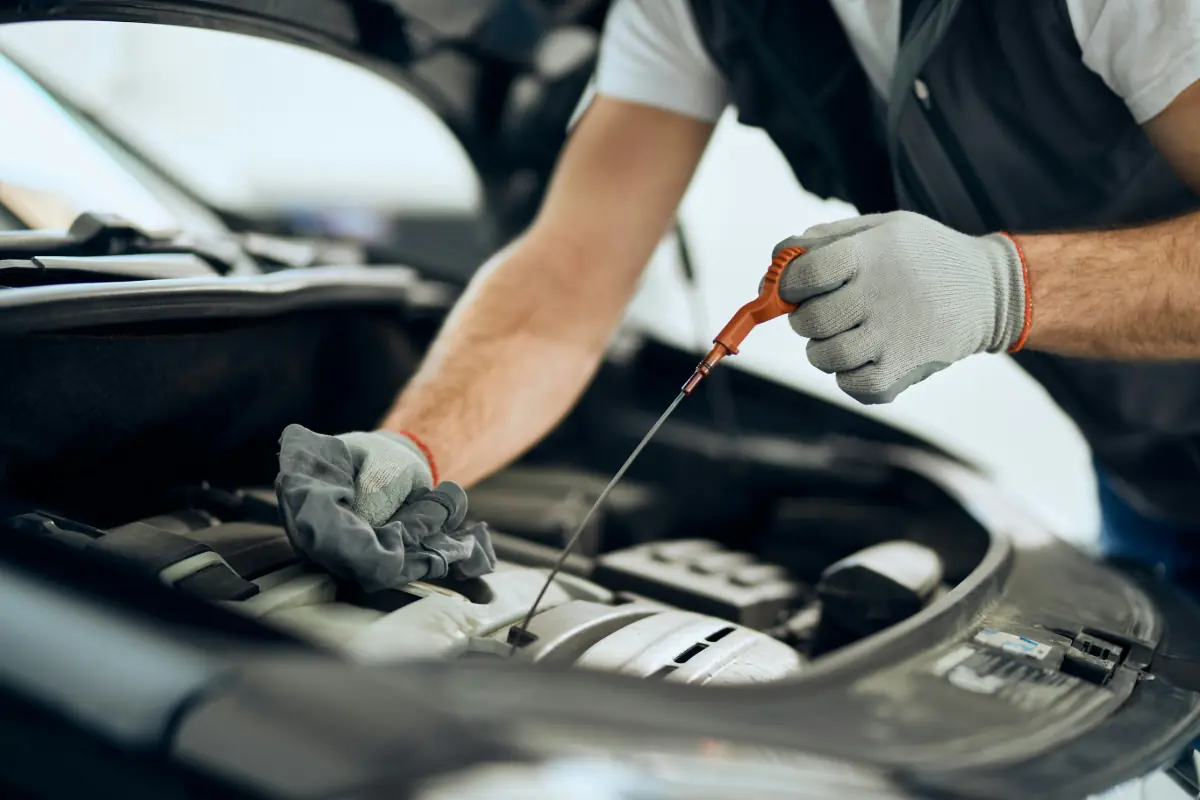
Regular oil changes are the cornerstone of engine health and longevity. At API Auto Repair, our Oil Change & Filter Replacement services are designed to keep your engine running smoothly and efficiently. We use premium quality conventional, synthetic blend, or full synthetic oils, along with high-quality oil filters, tailored to your vehicle's manufacturer specifications. Our service includes draining old, contaminated oil, replacing the oil filter, and refilling with fresh lubricant. We also perform a complimentary multi-point inspection, checking other vital fluids, belts, hoses, and tire pressure, to ensure your vehicle is in optimal condition. This routine maintenance helps prevent premature wear, improves fuel economy, and extends the life of your engine.
An oil change is the simplest and most overlooked maintenance service on a vehicle, and yet it is the single most important factor in long-term engine longevity. Engine oil performs four critical functions simultaneously: it lubricates moving parts to reduce friction, it cools internal components by carrying heat away from combustion zones, it cleans the engine by suspending contaminants and carrying them to the filter, and it seals microscopic gaps between piston rings and cylinder walls to maintain compression. When oil degrades — through heat, oxidation, contamination, or simple aging — all four of those functions begin to fail simultaneously. The engine doesn't immediately seize or fail catastrophically; instead it wears at an accelerated rate, accumulating microscopic damage every mile until something fails years later that traces back to oil neglect.
API Auto Repair has been performing oil changes in Elkridge for over thirty years. We see vehicles that have been religiously serviced reaching 250,000 to 350,000 miles still running smoothly, and we see vehicles with neglected oil schedules requiring engine rebuilds at 80,000 to 120,000 miles. The difference isn't usually one missed oil change — it's the cumulative effect of stretching intervals beyond manufacturer recommendations year after year. Modern engines have tighter tolerances, lower-viscosity oils, and more sophisticated emissions controls than engines from twenty years ago, which means they're more sensitive to oil quality and timing than older vehicles were.
Our standard oil change service includes substantially more than just draining oil and refilling. Every oil change at our shop includes a complimentary multi-point inspection — checking tire pressure and tread depth, fluid levels (transmission, coolant, brake, power steering, washer), belts and hoses for cracks or glazing, battery condition and terminal corrosion, brake pad thickness through the wheels, suspension components for visible wear, lighting operation, and any active dashboard warning lights. This multi-point check has caught countless small problems early — bad coolant hoses, cracked serpentine belts, low brake fluid, dragging brakes — that would have become major repairs if left unaddressed. The oil change pays for itself many times over through preventive catches like these.
Vehicle manufacturers now specify a wide range of oil specifications and intervals. Many modern engines require specific synthetic oil grades — 0W-20, 5W-20, 0W-30, 5W-30, 0W-40 — to meet warranty requirements, satisfy emissions equipment, and protect specialized components like turbochargers and direct-injection systems. We follow your manufacturer's specifications exactly. We don't substitute the wrong viscosity to save money, and we don't pour conventional oil into engines that require synthetic. Manufacturers' specifications are the result of engineering analysis on each engine design, and ignoring them is one of the most common ways customers shorten engine life without realizing it.
Features
Oil Change
Replacing old engine oil with new, high-quality oil.
Filter Replacement
Installing a new oil filter for optimal engine protection.
Fluid Top-Offs
Checking and topping off other essential fluids.
Multi-Point Inspection
A quick check of key vehicle components.
Signs You Need This Service
Oil Change Reminder Light or Dashboard Warning
Modern vehicles use complex algorithms to track oil life based on driving conditions, engine load, and time. When the reminder appears, you typically have 500–1,500 miles of buffer before oil quality becomes problematic. Don't ignore it past the next 500 miles — modern oil-life monitors are conservative and the actual oil condition usually warrants service when they activate.
Oil Looks Dark and Thick on the Dipstick
New oil is amber to honey-colored. Used oil darkens as it picks up combustion byproducts and contaminants — that's normal and expected. But if the oil looks black, gritty, or like sludge on the dipstick, the change is overdue. Sludge in particular indicates extended neglect and should be addressed before it clogs oil passages.
Engine Oil Level Reading Low
All engines consume some oil over time — modern engines burn small amounts during normal operation. If you have to add a quart between changes, that's typical. If you have to add multiple quarts or top off frequently, that signals either an extended interval, a leak, or excessive consumption that warrants investigation.
Engine Sounds Louder, Knocking, or Ticking
Insufficient oil or degraded oil reduces the cushioning film between metal parts, which makes valves and lifters click or tick more loudly than usual. Rod knock is a deeper rhythmic knocking that indicates serious bearing damage. Knock is rarely fixable with an oil change alone — it usually means damage has already occurred — but addressing oil quality immediately stops further damage.
Increased Engine Temperature or Overheating
Oil contributes significantly to engine cooling, particularly in the cylinder heads and around the pistons. Degraded oil dissipates heat poorly, which can push engine temperature higher than normal. If your temperature gauge runs hotter than usual or the cooling fan runs more frequently, oil quality may be a contributing factor alongside coolant condition.
Burnt Oil Smell or Smoke from Exhaust
Blue or grayish smoke from the tailpipe, particularly at startup or under acceleration, can indicate the engine is burning oil. Sometimes this is a stuck PCV valve, sometimes worn valve seals, sometimes piston rings. An oil change won't fix the underlying issue, but using high-mileage formulated oil can sometimes slow the consumption rate while you plan repairs.
It's Been Over 12 Months Since Your Last Oil Change
Even if your mileage is low, oil degrades over time through oxidation. A vehicle driven 3,000 miles a year still needs oil service approximately annually because the additive package depletes regardless of mileage. Don't stretch intervals beyond a year just because the mileage is low.
Our Service Process
- 1
Vehicle Check-In and Initial Inspection
We confirm vehicle make, model, year, mileage, and your service history with us when applicable. We verify the manufacturer's oil specification (viscosity and synthetic/conventional) on file. If we don't have history, we look up your vehicle's specs to confirm the correct oil and filter for your engine.
- 2
Engine Warm-Up and Lift
We briefly warm up the engine if it's been sitting (cold oil drains slowly and incompletely). The vehicle goes onto our lift for safe access to the drain plug, oil filter, and underbody. We never service oil from a partial-lift position — full lift access is required to drain completely and inspect surrounding components.
- 3
Drain Old Oil Completely
We remove the drain plug and let oil drain fully into a recovery container. Quick drains lose 10–20% of the old oil, which mixes with the new oil and degrades it from day one. We let it drain for several minutes, including loosening the oil filler cap to break the vacuum and ensure complete drainage. Old oil goes to certified recycling.
- 4
Replace Oil Filter and Drain Plug Gasket
The oil filter is replaced every oil change — never reused. We use OEM-equivalent or OEM filters from quality manufacturers (Bosch, Mobil 1, K&N, FRAM Tough Guard, OEM) matched to your vehicle. The drain plug crush gasket or seal is replaced if applicable to prevent leaks. The plug is torqued to manufacturer specification, not over-tightened.
- 5
Refill with Correct Oil Type and Quantity
We refill with the manufacturer-specified oil viscosity and quantity. For modern vehicles, that's usually a full synthetic 0W-20, 5W-20, 5W-30, or similar. Quantities range from 4 quarts on small four-cylinder engines to 8+ quarts on V8 trucks. We use major brand oils (Mobil 1, Pennzoil, Valvoline, Castrol, OEM) that meet or exceed manufacturer specifications.
- 6
Verify Oil Level and Check for Leaks
After refilling, we run the engine briefly to circulate the new oil and let any air bubbles work their way out. We check the dipstick reading against the upper mark, top off if needed, and inspect for leaks at the drain plug, filter, and oil pan. If leaks appear, we identify and address them before you leave.
- 7
Reset Oil-Life Monitor and Service Indicator
Modern vehicles use an oil-life algorithm that tracks engine hours, RPM, temperature, and other variables to estimate remaining oil life. After service, we reset the monitor through your vehicle's menu system or scan tool. We also reset any maintenance reminder messages on the dashboard.
- 8
Multi-Point Inspection and Service Stamp
While the oil drains, we perform our complimentary multi-point inspection: tires (pressure, tread, wear pattern), lights, wipers, belts, hoses, fluid levels, battery, brakes through the wheel openings, and visible suspension components. Findings are documented on a written report. We stamp your service record with mileage, date, and oil type used.
What's Included in This Service
Up to 5–6 Quarts of Premium Engine Oil
Full synthetic, synthetic blend, or conventional matched to your manufacturer spec.
OEM-Equivalent Oil Filter
Quality filter from Bosch, Mobil 1, FRAM Tough Guard, or OEM matching your vehicle.
Drain Plug Gasket Replacement
Crush washer or O-ring replaced as required to prevent leaks at the drain plug.
Tire Pressure Check and Adjustment
All four tires inflated to manufacturer-specified PSI from the door jamb placard.
Tire Tread Depth Measurement
Each tire measured for remaining tread; flagged if approaching Maryland's 2/32 inch minimum.
Fluid Level Inspection
Coolant, transmission, brake, power steering, and washer fluids all checked and topped off if low.
Belt and Hose Visual Inspection
Serpentine belt, accessory belts, and visible hoses checked for cracks, glazing, or swelling.
Battery Health Check
Voltage tested, terminals inspected for corrosion; full load test available on request.
Brake Pad Thickness Estimate
Front pads visually inspected through the wheel; estimated remaining life noted on report.
Oil-Life Monitor Reset and Service Reminder
Vehicle's reminder system reset; printed service record with date and mileage provided.
Why Choose API Auto Repair
We Use the Oil Your Manufacturer Specifies
Cheap shops use a single oil grade for every vehicle to keep costs down. We stock the specific viscosities and synthetic specifications that modern engines require — 0W-20, 5W-20, 5W-30, 0W-40, and so on. Using the wrong viscosity wastes fuel, can void warranty coverage, and accelerates wear on engines designed for tighter clearances.
30+ Years Servicing Howard County Vehicles
Some of our oil change customers have been with us since 1995. We track their vehicles, their driving patterns, and their service history. That continuity lets us catch problems early and recommend maintenance before failure rather than after. Your service history travels with you across vehicles when you stay with us.
Free Multi-Point Inspection That Actually Catches Things
Every oil change includes a real inspection performed by an ASE-certified technician — not a sticker check by a lube tech. We've caught failing belts that would have stranded customers on I-95, dragging calipers that were destroying brake pads, leaking coolant hoses about to fail, and dozens of similar issues. The inspection is free with the oil change.
Quality Filters, Not Bottom-Bid Components
Oil filters vary widely in quality. The cheapest filters use minimal media and inferior bypass designs, which means contaminants sometimes get pumped through your engine instead of being captured. We use mid-tier or premium filters from reputable manufacturers, which usually adds only a couple of dollars to the service but extends the protection meaningfully.
Same-Day Service With Real Appointments
Most oil changes are completed in 30–45 minutes. We honor scheduled appointments to keep wait times short and accept walk-ins as schedule allows. We don't run the bait-and-switch model where the cheap advertised price covers nothing — our prices include the full inspection, the right oil, the new filter, and a real technician's time.
Oil Change Pricing in Elkridge, MD
Oil change pricing at API Auto Repair depends primarily on your vehicle's oil type and capacity. Conventional oil changes are typically $40–$60 for vehicles requiring 4–5 quarts. Synthetic blend oil changes range from $55–$80. Full synthetic oil changes — required by most modern vehicles built since approximately 2012 — typically run $70–$120 depending on viscosity and capacity. Specialty oils for European vehicles (BMW, Mercedes, Audi, VW), high-performance engines, and some diesels can run higher.
Larger vehicles cost more because they hold more oil. A typical compact car uses 4 quarts and falls at the low end of the price range. A V6 sedan or crossover SUV uses 5–6 quarts. A V8 truck or large SUV uses 6–8 quarts. Some performance and luxury vehicles require 7–9 quarts of premium synthetic. We always quote the exact price for your specific vehicle when you book or arrive.
Every oil change at our shop includes the multi-point inspection, fluid top-offs, tire pressure adjustment, and an oil-life monitor reset — there are no add-on fees for the standard maintenance items. If our inspection identifies issues you'd like addressed (low coolant, worn wipers, weak battery, brake service due, etc.), we'll provide a separate written estimate for those items. You're never obligated to do additional work, but you'll know your vehicle's condition before leaving.
Tips to Extend the Life of Your Service
Don't Stretch Intervals Beyond Manufacturer Specifications
Manufacturer intervals already include a safety buffer. Stretching from 7,500 miles to 10,000 miles regularly compounds over years of vehicle ownership and is one of the most common causes of premature engine wear we see. Use the manufacturer's interval as a maximum, not a target.
Check Oil Level Monthly Between Changes
Pull the dipstick on a level surface, wipe it clean, reinsert fully, and check the level. Top off with the same viscosity oil if it's near or below the lower mark. Adding a quart between changes is normal; needing more than that warrants investigation for leaks or excessive consumption.
Use Manufacturer-Specified Oil Viscosity Only
Modern engines have tight clearances designed for specific oil viscosities. Using thicker oil increases pumping resistance, reduces fuel economy, and can interfere with VVT (variable valve timing) systems. Using thinner oil reduces protection at high temperatures. Stick with what your owner's manual specifies.
Address Oil Leaks Promptly
Small leaks become big leaks. A leaking valve cover gasket might drip a few drops a week initially but progress to losing a quart a month. Fix leaks when they're small — typically a $150–$400 repair — rather than waiting until you're adding oil constantly and the leak is dripping onto exhaust components creating a fire risk.
Don't Overfill the Crankcase
Adding oil above the upper dipstick mark causes the crankshaft to whip the oil into foam, which doesn't lubricate properly. It also forces oil through breather systems and can damage seals. If oil level is high, drain some out — don't drive with overfilled oil.
Combine Oil Changes With Other Routine Service
Use oil changes as a checkpoint for other maintenance: cabin air filter (every 15,000–25,000 miles), engine air filter (every 30,000 miles), tire rotation (every 5,000–7,500 miles), and brake fluid flush (every 24 months). Bundling reduces shop visits and ensures preventive items don't slip through the cracks.
Serving Elkridge & Howard County, MD
Howard County's traffic patterns put unusual strain on engine oil. Stop-and-go congestion on I-95, I-695, and US-1, particularly during morning and evening rush hours, generates more heat cycles per mile than highway-dominant driving. Modern engines actually warm up and cool down repeatedly during stop-and-go traffic, which accelerates oil oxidation and shortens additive package life. We commonly see vehicles with primarily I-95 commuter mileage that need oil changes 1,000–2,000 miles before the manufacturer's stated interval would suggest.
Maryland's seasonal temperature swings — from 95°F humid summer days to single-digit January cold snaps — also stress engine oil. Oil that performs well at hot summer temperatures may pour sluggishly during winter cold starts, and oil that works well in winter may break down faster in summer. Modern multi-grade synthetic oils (5W-30, 0W-20, etc.) handle both extremes far better than older single-grade oils, which is why most modern vehicles ship from the factory with synthetic. If you're driving an older vehicle that hasn't switched to synthetic yet, the seasonal temperature swings are a strong reason to make the change.
Many of our customers commute to BWI airport, Fort Meade, downtown Baltimore, the NSA campus, or government facilities in the Washington area. Those daily commutes — often 25–60 miles round trip in heavy traffic — accumulate mileage quickly, sometimes hitting 18,000–25,000 miles a year. At that mileage rate, an annual oil change isn't enough; we recommend service every 5,000–7,500 miles for synthetic and every 3,500–5,000 miles for conventional. We can set up a service reminder schedule based on your typical mileage so you don't have to think about it.
Conventional, Synthetic Blend, or Full Synthetic: Which Should You Use?
The fundamental difference between oil types is how the base stock is processed. Conventional oil is refined directly from crude petroleum with limited additional processing. Synthetic oil is either chemically modified petroleum (Group III) or laboratory-engineered base stock (Group IV PAO and Group V esters). Synthetic blend mixes both. The differences in performance are significant. Synthetic oils have more uniform molecular structure, which improves flow at cold temperatures, resistance to thermal breakdown at high temperatures, and stability of the additive package over time.
If your vehicle was manufactured before approximately 2010 and doesn't specifically require synthetic, conventional oil is acceptable for typical use, with change intervals of 3,000 to 5,000 miles. Synthetic blend (a partial-synthetic mix) is a middle-ground option that costs slightly more but provides better cold-start protection and somewhat longer change intervals — typically 5,000 to 7,500 miles. Full synthetic oil is recommended for most vehicles 2012 and newer, vehicles with turbochargers or superchargers, vehicles that tow or haul heavy loads, vehicles driven in extreme temperatures, and any vehicle where the manufacturer specifies synthetic. Full synthetic intervals are typically 7,500 to 10,000 miles, with some specialty oils rated for 15,000 miles or more.
The cost difference between oil types is smaller than most people realize. A full synthetic oil change might cost $40–$60 more than a conventional oil change for the same vehicle, but the synthetic interval is often twice as long, which means equal or lower annual maintenance cost with substantially better engine protection. Over the life of a vehicle — typically 200,000 to 300,000 miles for a well-maintained car — switching to full synthetic saves money while extending engine life.
Two myths worth debunking: First, the old idea that switching from conventional to synthetic causes leaks in older engines is no longer true. Modern synthetics use the same seal-friendly additive packages as conventional oils. You can safely switch in either direction at any mileage. Second, the idea that synthetic oil ''doesn't work as well after a certain mileage'' is false. Synthetic continues to provide better protection than conventional throughout an engine's life. High-mileage formulated oils (designed for 75,000+ mile vehicles) include conditioners that swell aged seals slightly to reduce minor leaks — these are a useful product for older vehicles regardless of synthetic versus conventional choice.
Why Modern Vehicles Have Such Specific Oil Requirements
If you've owned a vehicle from the 1990s and a vehicle from the 2020s, you've probably noticed that the oil specifications have gotten dramatically more specific. A 1995 V6 sedan might run 10W-30 conventional with little fuss. A 2023 V6 sedan might require 0W-20 full synthetic meeting GM dexos1 Gen 3, Ford WSS-M2C952-A1, or similar manufacturer-specific certification. The change reflects fundamental shifts in engine design driven by fuel economy regulations, emissions controls, and performance demands.
Modern engines have substantially tighter manufacturing tolerances than older engines. Bearings, piston rings, valve guides, and oil pump clearances are all much tighter than they were 25 years ago. Tight tolerances reduce friction (which improves fuel economy) and improve combustion efficiency, but they also require thinner oil to flow through the gaps. That's why 0W-20 has become so common — it flows quickly through tight clearances, especially during cold starts. Putting thicker oil into a modern engine designed for thin oil increases pumping losses, slows oil delivery on cold starts, and can prevent variable valve timing systems from operating correctly.
Direct injection engines, common since approximately 2010, present another oil challenge. Direct injection sprays fuel directly into the combustion chamber rather than into the intake port, which means fuel never washes the back of the intake valves. Combustion byproducts and PCV-system oil vapor accumulate on the intake valves over time, forming carbon deposits that reduce performance. Modern oils are formulated with low-volatility base stocks that produce less vapor, helping to slow this process. Using oil that doesn't meet your manufacturer's specification can accelerate carbon buildup significantly.
Turbocharged engines — increasingly common across all vehicle segments — also require synthetic oil. Turbochargers spin at over 100,000 RPM with bearing temperatures often exceeding 400°F. Conventional oil chars and breaks down at these temperatures, leaving deposits that destroy turbo bearings. Synthetic oil's superior thermal stability is essential for turbocharger longevity. If you have a turbocharged vehicle and it specifies synthetic, do not substitute conventional — the turbo will fail prematurely, and replacement is typically a $1,500–$3,500 repair.
Diesel and Hybrid Oil Changes: What's Different
Diesel engines and hybrid powertrains both have unique oil change requirements that differ from standard gasoline engines. We service both regularly at our Elkridge shop, and customers often have questions about why these vehicles need specialized service. Diesel engines accumulate soot in the oil during normal combustion. Modern diesel oils are formulated specifically to suspend this soot and prevent it from causing wear or sludge. Using gasoline-engine oil in a diesel will lead to premature wear and turbocharger problems on modern light-duty diesels (Volkswagen TDI, RAM EcoDiesel, Ford Power Stroke, Chevrolet Duramax). Diesel oil typically meets API CK-4 or earlier API CJ-4 specifications, and many manufacturers require specific brand certifications.
Hybrid vehicles present a different set of considerations. The gasoline engine in a hybrid runs intermittently — sometimes for just a few minutes at a time when the battery is low or when high power is needed. This duty cycle is harder on oil than continuous running because the engine repeatedly heats up and cools down without reaching full operating temperature on short cycles. Modern hybrids typically specify low-viscosity full synthetic oils (0W-20 or thinner) and may have shorter time-based change intervals than mileage-based intervals would suggest. Many Toyota Prius and similar hybrids should have oil changed every 12 months even if mileage hasn't reached the specified mileage interval.
Plug-in hybrids and extended-range EVs that have small gasoline engines for backup power are an even more extreme version of the intermittent-use problem. Some plug-in owners report driving for months on battery power alone, with the engine running only briefly. We've seen plug-in hybrids with engine oil that had been in place for two or three years because the owner thought low engine usage meant low oil aging. That's incorrect — oil oxidizes over time even when not being heated. We recommend annual oil changes regardless of mileage for plug-in hybrids and extended-range hybrids.
Common Oil Change Mistakes to Avoid
The biggest oil change mistake we see is using the wrong oil viscosity. Customers sometimes buy oil based on price rather than specification, ending up with 10W-30 conventional in an engine that requires 0W-20 full synthetic. The oil cap usually has the correct viscosity printed on it, and your owner's manual specifies what to use. Using thicker oil reduces fuel economy, can interfere with variable valve timing, and may void powertrain warranty coverage. Using thinner oil reduces protection at high temperatures and can accelerate wear. Always match what the manufacturer specifies.
The second most common mistake is overfilling the crankcase. We see this when customers add oil between changes without checking the dipstick first, or when DIY oil changers pour the full bottle in without measuring. Excessive oil gets whipped into foam by the crankshaft, which doesn't lubricate properly and can damage seals from increased crankcase pressure. If your dipstick reads above the upper mark, drain some out. Don't drive with overfilled oil for more than a few miles.
Reusing crush washers on the drain plug is another frequent mistake that causes slow leaks. The aluminum or copper crush washer is designed to deform once when tightened to seal the drain plug. Reusing it almost always results in a small leak that progressively worsens. New crush washers cost less than a dollar and should be replaced every oil change. We include this automatically.
Skipping the multi-point inspection is a missed opportunity. Many shops offer cheap oil changes that explicitly exclude inspections to keep prices low. A real inspection takes only a few extra minutes and routinely catches problems worth thousands of dollars in prevented damage. We've found cracked serpentine belts about to break, dragging brake calipers destroying pads, low coolant signaling cooling system failure, and similar issues during oil changes. The inspection is one of the most cost-effective preventive measures available.
Finally, going to the cheapest possible quick-lube shop and walking away with whatever oil they pour in is a mistake we see customers regret later. The lowest-bid lube shops use the cheapest oils available, often a single bulk-grade conventional oil for every vehicle regardless of specification. Engines designed for premium synthetic with a manufacturer-specific certification do not perform well on whatever bulk oil happens to be in the shop's tank. The savings of $20–$30 per oil change can become an engine repair costing $5,000+ later.
How Often Should You Really Change Your Oil? The Definitive Answer
The honest answer is: follow your owner's manual, with judgment about your driving conditions. The old ''every 3,000 miles'' rule applied to vehicles built before approximately 2005, when engines tolerated dirty oil better than modern engines do. Modern manufacturer recommendations span a wide range — 5,000 miles for some, 7,500 for many, 10,000 for some Toyota and Honda models, and up to 15,000 for some European luxury vehicles using extended-life synthetics. Manufacturers calibrate these intervals based on engine design, oil quality required, and typical driving patterns.
Two factors should make you adjust intervals shorter than the manufacturer's standard recommendation. First, ''severe service'' driving conditions: short trips under 5 miles where the engine doesn't fully warm up, extensive idling, frequent stop-and-go traffic, towing, hauling heavy loads, dusty or sandy environments, or extreme temperatures. Most owner's manuals include a separate ''severe service'' interval that's typically half the standard interval. Many Howard County commuters technically qualify for severe service intervals because of I-95 stop-and-go traffic. Second, oil-life monitor readings: most modern vehicles include an algorithm that adjusts the oil interval based on actual driving patterns. If the monitor reaches 0% before the standard mileage interval, trust the monitor.
Adjusting intervals longer than the manufacturer's recommendation is rarely advisable, but it's possible with extended-life synthetic oils and oil sample analysis. If you commute primarily on highways at consistent speeds with minimal short-trip driving, your oil might genuinely last 10,000–12,000 miles even if the manual says 7,500. The way to verify is oil sample analysis from a service like Blackstone Labs — they analyze your oil at the recommended interval and tell you whether it had useful life remaining. For most customers, this is over-engineering; just follow the manual. For high-mileage commuters or fleet operators trying to optimize maintenance costs, oil analysis is genuinely useful.
If you're not sure what interval applies to your vehicle, bring your owner's manual or your VIN to your appointment and we'll look up the manufacturer's exact recommendation, including severe-service modifications. Don't rely on the windshield sticker from your last oil change — those are often standardized to 3,000 miles regardless of vehicle, which is too short for many modern engines and represents wasted money over the life of the vehicle.
Related Services
Engine Tune-Up in Elkridge, MD
Boost performance and fuel efficiency with an engine tune-up at API Auto Repair in Elkridge, MD.
Fuel System Services in Elkridge, MD
Rough idle or poor MPG? API Auto Repair in Elkridge, MD offers full fuel system cleaning and repair.
Transmission Repair in Elkridge, MD
Transmission issues? API Auto Repair in Elkridge, MD provides diagnostics, repairs, and rebuilds. Book now.
Tire Services in Elkridge, MD
Need new tires or a rotation? API Auto Repair offers fast, affordable tire service in Elkridge, MD. Schedule your visit today.
Car Battery Testing & Replacement in Elkridge
Dead battery? Visit API Auto Repair in Elkridge, MD for fast testing and high-quality battery replacements.
Got Questions?