Last updated:
Radiator & Cooling System Service in Elkridge
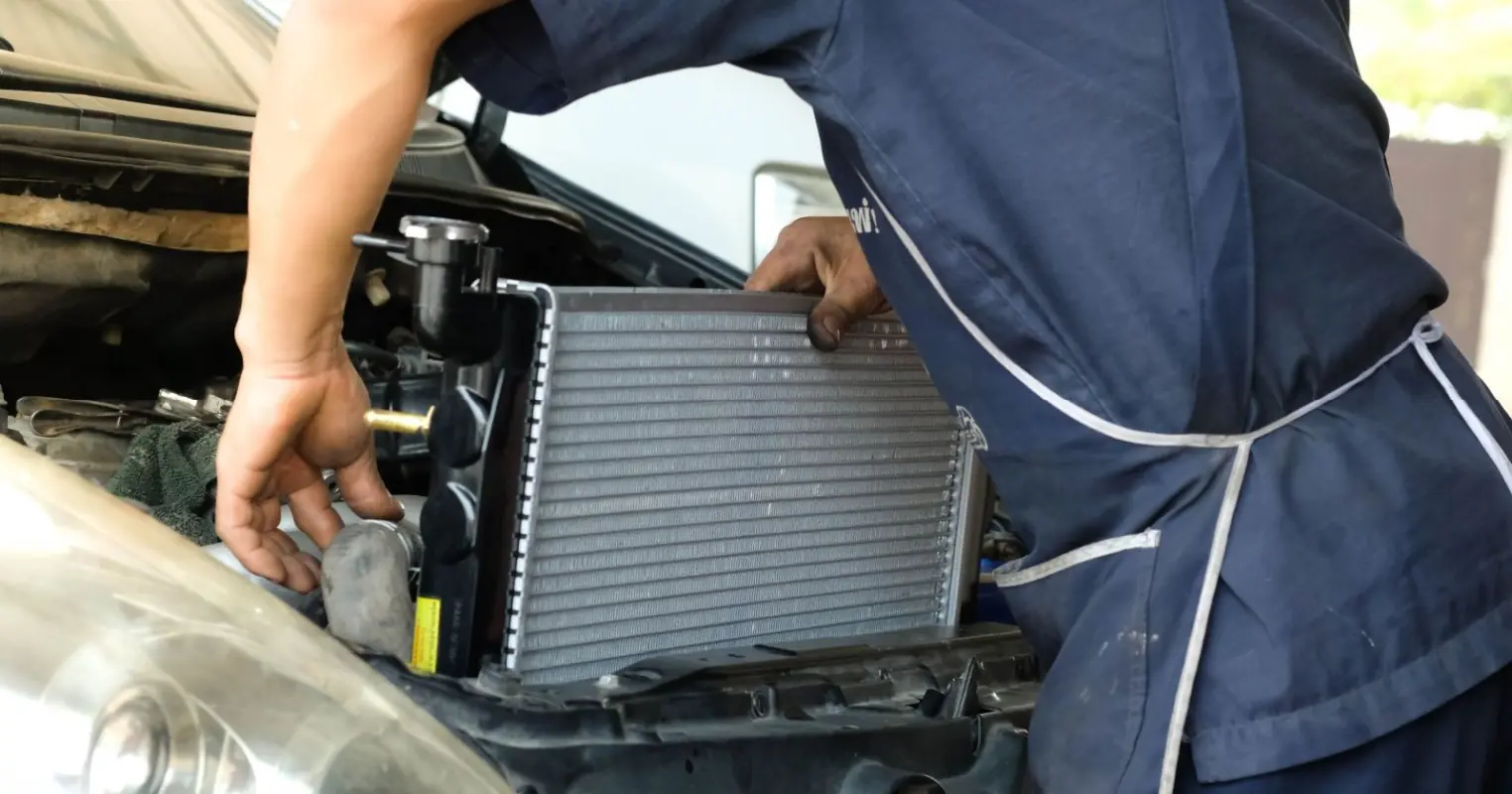
An efficient cooling system is vital for preventing your engine from overheating and ensuring its long-term health. At API Auto Repair, our Radiator & Cooling System Services provide comprehensive maintenance and repair solutions. We address issues like coolant leaks, overheating, or unusual temperature fluctuations. Our services include coolant flushes, radiator repair or replacement, thermostat replacement, and inspection of hoses and belts. We use high-quality coolants and parts to ensure your cooling system operates effectively, dissipating heat efficiently and protecting your engine from costly damage caused by excessive temperatures.
The cooling system is one of the most critical and most underappreciated systems in your vehicle. Internal combustion engines convert only about 25 to 30 percent of fuel energy into mechanical motion. The remaining 70 to 75 percent becomes heat that must be removed from the engine to prevent damage. The cooling system manages this enormous heat load through a network of components: water pump, thermostat, radiator, cooling fan, hoses, heater core, and the coolant fluid that circulates through everything. When any component fails, the consequences can be catastrophic — overheated engines warp cylinder heads, blow head gaskets, and can crack engine blocks. The repair cost from cooling system neglect often exceeds the value of older vehicles, making cooling system maintenance some of the highest-leverage preventive work you can do.
API Auto Repair has been servicing cooling systems in Elkridge for over thirty years. Cooling system technology has evolved significantly during that period — coolant chemistry has progressed from traditional inorganic acid technology (IAT) green coolant through organic acid technology (OAT) and hybrid OAT (HOAT) coolants used in different colors by different manufacturers. Modern engines often specify particular coolant chemistries that aren't interchangeable; using the wrong coolant causes precipitation, gasket failures, and accelerated corrosion. We use the correct coolant for each vehicle and maintain proper procedures for service.
Maryland's climate creates predictable cooling system stress patterns. Hot, humid summers with sustained 90+ degree days push cooling systems to their limits, particularly in stop-and-go traffic where airflow through the radiator depends entirely on cooling fans. Cold winters require cooling systems to work in the opposite direction — keeping the engine warm enough for efficient operation through proper thermostat function. The seasonal extremes stress different components: water pumps and radiators in summer, thermostats and heater cores in winter. We see seasonal patterns in cooling system service requests that align with these stress factors.
Cooling system problems often manifest gradually before becoming obvious. Slow coolant leaks may go unnoticed for months until coolant levels drop low enough to trigger temperature warnings. Marginal water pumps may produce subtle whining noises long before complete failure. Thermostats stuck partially open cause poor heater performance and slightly reduced fuel economy without triggering warnings. Catching these developing issues during routine inspection prevents the catastrophic failures that result from waiting until obvious symptoms appear.
Features
Coolant Flush
Flushing old coolant and replacing with fresh fluid.
Radiator Repair/Replacement
Fixing leaks or replacing damaged radiators.
Thermostat Replacement
Ensuring proper engine operating temperature.
Hose & Belt Inspection
Checking and replacing worn cooling system hoses and belts.
Signs You Need This Service
Engine Temperature Gauge Reading Higher Than Normal
Temperature creeping above the normal operating zone — even without reaching the red zone — indicates cooling system stress. Causes include low coolant, restricted radiator, failing water pump, stuck thermostat, or cooling fan problems. Don't dismiss elevated temperatures; they're early warnings of problems that progress.
Visible Coolant Leaks Under Vehicle
Green, orange, pink, or red colored coolant spots under the vehicle indicate active leaks. Common leak points include radiator (typically at top or bottom tanks), water pump, hose connections, heater core, and intake manifold gaskets. Address leaks promptly — running low on coolant accelerates damage to all cooling components.
Sweet Smell From Engine or Cabin
Coolant has a distinctive sweet smell. Sweet smell from the engine bay indicates external coolant leaks; sweet smell from cabin vents typically indicates heater core leaks. Sweet smell with white smoke from the tailpipe often indicates head gasket failure allowing coolant into combustion chambers.
Coolant Reservoir Empty or Frequently Low
Coolant reservoirs that need frequent topping off indicate either external leaks or internal leaks (head gasket failure allowing coolant into combustion chambers). Both require diagnosis before significant engine damage occurs. Don't simply keep adding coolant without identifying the source of loss.
Heater Blows Cold Air or Lukewarm Air
Heaters that don't reach normal heat output often indicate cooling system issues — low coolant, stuck thermostat, clogged heater core, or failed water pump. Heating problems typically appear before AC problems because heating depends on coolant flow that AC doesn't share, making cooling system issues affect heating first.
White Smoke From Exhaust
White exhaust smoke that's heavy, persistent, and sweet-smelling typically indicates coolant entering the combustion chamber through head gasket failure. Continued operation causes catastrophic engine damage. Stop driving and have the vehicle diagnosed before head gasket repair becomes engine replacement.
Whining or Grinding Noise From Engine Bay
Water pumps develop whining noises as bearings wear. The noise typically increases gradually over weeks or months before complete failure. Catching pump wear during the noise phase allows planned replacement; ignoring the noise leads to catastrophic failure that damages timing belts, accessory drives, or other components.
Our Service Process
- 1
Customer Symptom Documentation
We discuss the symptoms you've experienced: when did temperature first run high, when did the leak start, when does the heater fail to produce heat. Customer-reported information helps identify whether the problem is intermittent, environmental (only in hot weather, only at idle), or progressive.
- 2
Visual Inspection of Cooling System Components
We visually inspect the radiator, hoses, water pump (when accessible), heater core access points, coolant reservoir, and any visible coolant traces or oil contamination. We document leak points, hose condition (cracking, swelling, soft spots), and any signs of overheating damage.
- 3
Coolant Level and Condition Check
We check coolant level when the engine is cold, examine coolant color and clarity (rust-colored coolant indicates corrosion; oily coolant indicates internal contamination), and verify coolant chemistry matches what your vehicle requires. Some shops use bulk coolant regardless of vehicle specifications; we use the correct coolant chemistry.
- 4
Pressure Test for Leaks
We use a pressure tester that pressurizes the cooling system to verify integrity. The tester maintains pressure at typical operating pressure (12 to 16 PSI) while we inspect for leaks. Pressure testing reveals slow leaks that aren't visible during static inspection and identifies internal leaks like head gaskets.
- 5
Combustion Gas Test When Indicated
If we suspect head gasket failure (white exhaust smoke, sweet smell, coolant loss without external leaks), we perform a combustion gas test on the cooling system. The test detects combustion gases dissolved in coolant — a definitive indicator of head gasket failure. The test is non-invasive and provides clear diagnostic information.
- 6
Thermostat Operation Verification
We test thermostat operation through engine warmup cycle, monitoring coolant temperature and cooling fan operation. Stuck-open thermostats prevent the engine from reaching normal operating temperature; stuck-closed thermostats cause overheating. Testing identifies which condition is present.
- 7
Water Pump Function Test
We verify water pump function through coolant flow checks, weep hole inspection (small holes that drip coolant when the pump seal fails), and noise testing. Failed water pumps require prompt replacement to prevent engine damage from coolant flow loss.
- 8
Repair and Verification
After repairs, we refill the cooling system with the correct coolant type and quantity, bleed air from the system per manufacturer procedure, run the vehicle through warm-up cycles to verify proper operation, and recheck for leaks. Final inspection confirms the repair achieved the intended outcome.
What's Included in This Service
Visual Cooling System Inspection
Radiator, hoses, water pump, reservoir, and accessible components inspected for damage and leaks.
Coolant Level and Condition Verification
Level checked cold; condition assessed for color, clarity, and chemistry compatibility.
Pressure Test for Internal and External Leaks
Cooling system pressurized to operating pressure to identify slow leaks not visible statically.
Combustion Gas Test When Head Gasket Suspected
Non-invasive test that detects combustion gases in coolant indicating head gasket failure.
Thermostat Operation Test
Thermostat tested through warm-up cycle for proper opening and closing.
Water Pump Inspection and Function Test
Pump tested for noise, weep hole leakage, and proper coolant flow.
Cooling Fan Operation Test
Fan tested for proper engagement and full speed operation under high temperature conditions.
Coolant Flush and Refill With Correct Chemistry
Old coolant drained; system flushed if contaminated; refilled with manufacturer-specified coolant.
Air Bleeding Per Manufacturer Procedure
Proper air bleeding procedure followed to prevent air pockets that cause overheating.
Final Pressure Test and Operation Verification
System pressure-tested after repair and verified through warm-up cycle.
Why Choose API Auto Repair
Use of Correct Coolant Chemistry for Each Vehicle
Modern coolants are not interchangeable. Using the wrong chemistry causes precipitation, gasket failures, and corrosion. We stock and use the correct coolant for each vehicle — green IAT for older domestic vehicles, OAT formulations for GM and Ford, HOAT formulations for many imports, specific Asian formulations for Toyota and Honda, and various others. The correct coolant matters.
Comprehensive Diagnostic Approach to Cooling Problems
Cooling system symptoms often have multiple possible causes. We diagnose systematically rather than replacing components hoping one of them is the issue. This approach saves customers thousands by avoiding unnecessary parts replacement and getting the right repair the first time.
30+ Years of Maryland Cooling System Experience
Maryland's seasonal extremes stress cooling systems differently than milder climates. We've seen the failure patterns of summer heat and winter cold across thousands of vehicles. That pattern recognition speeds diagnosis and helps anticipate which components need attention based on vehicle age, mileage, and use pattern.
Equipment for Pressure Testing and Combustion Gas Detection
Proper cooling system diagnosis requires specific equipment. We have manifold pressure testers, combustion gas testers, infrared thermometers for component temperature analysis, and the experience to use all of them appropriately. Some shops attempt cooling diagnosis without these tools and miss issues that proper diagnostic equipment identifies clearly.
Complete System Service Including Bleeding and Verification
Cooling system service is more than draining and refilling. Modern engines often have complex bleeding procedures to remove air pockets, specific coolant fill procedures to ensure proper levels, and verification testing under operating conditions. We follow proper procedures rather than shortcuts that lead to repeated overheating or premature component failure.
Cooling System Service Pricing in Elkridge, MD
Cooling system service pricing varies based on the specific service required. Coolant flush and refill (drain old coolant, flush system, refill with proper coolant) typically runs $120–$200 depending on coolant type and capacity. Premium coolants for European vehicles or specialty formulations cost more than standard coolants. Thermostat replacement runs $150–$300 depending on access — some vehicles have easily accessible thermostats; others require significant disassembly to reach.
Major cooling system repairs include radiator replacement ($400–$1,000+ installed depending on vehicle), water pump replacement ($400–$1,200 with significant variation based on whether the pump is timing belt-driven or accessory-driven), heater core replacement ($700–$1,800 due to dashboard disassembly), and head gasket replacement ($1,500–$3,500+ depending on engine complexity). Hose replacement is moderate — $150–$400 for individual hoses, $300–$700 for complete hose service.
Pressure tests and diagnostic work for intermittent issues run $80–$150. Combustion gas testing for suspected head gasket issues runs $50–$100. We provide written estimates before any work begins and explain when repair options exist beyond replacement (radiator repair vs replacement, thermostat alone vs combined service, water pump alone vs combined timing belt service for belt-driven applications).
Tips to Extend the Life of Your Service
Service Coolant at Manufacturer-Specified Intervals
Coolant chemistry degrades over time. IAT coolants typically need replacement every 24 to 36 months. OAT and HOAT coolants typically last 60,000 to 100,000 miles. Long-life coolants in some manufacturers can last 150,000 miles. Follow your manufacturer's specification — overdue coolant causes corrosion, scale buildup, and gasket failures.
Use Only Manufacturer-Specified Coolant
Mixing incompatible coolants causes immediate precipitation that blocks heater cores, radiators, and small passages. Topping off with the wrong color coolant produces the same problems gradually. Always use exactly the coolant your manufacturer specifies, and don't mix even small amounts of incompatible types.
Don't Drive an Overheating Vehicle
Continuing to drive an overheating engine causes head gasket failure, warped heads, and cracked blocks. The repair from continuing to drive is often $3,000 to $8,000 in repairs. The cost of a tow when overheating starts is $50 to $200. The math heavily favors the tow.
Address Small Leaks Promptly
Small coolant leaks become big leaks. The same factors that caused the small leak (corrosion, age, vibration, pressure cycling) continue working on the rest of the system. Addressing the small leak now is cheaper than addressing the catastrophic failure that follows. Many small radiator leaks can be repaired with cooling system sealant or component replacement at moderate cost.
Inspect Hoses Annually After Year 5
Coolant hoses deteriorate from inside (chemical attack from coolant) and outside (heat, ozone, oil exposure). After 5 years, annual hose inspection catches developing issues — soft spots, cracking, swelling, hardening. Hoses cost $30–$80 each but burst hoses can leave you stranded and damage other components.
Run the Engine Long Enough to Reach Operating Temperature
Short trips that don't allow the engine to reach full operating temperature don't fully circulate coolant or develop proper system pressures. Cumulative short-trip operation causes accelerated wear in cooling components. When possible, take longer trips periodically to ensure full warm-up cycles.
Replace the Radiator Cap When Servicing Coolant
Radiator caps maintain proper system pressure and contain pressure relief valves. Caps weaken with age and lose ability to maintain proper pressure. New caps cost $10–$30 and should be replaced every 5 years or whenever cooling system service is done. A failing cap causes overheating that's easily prevented.
Inspect Cooling Fan Operation Annually
Cooling fans engage when coolant temperature rises beyond the thermostat setpoint. Failed cooling fans cause overheating particularly at idle and slow speeds. Annual fan operation testing during regular service catches developing issues before they cause overheating events.
Address Coolant Smell in Cabin Immediately
Sweet coolant smell from cabin vents indicates heater core leakage. Heater core failures often progress from intermittent smell to active dripping inside the cabin. The earlier the diagnosis, the simpler the repair — sometimes coolant chemistry adjustment can address minor seepage; severe leaks require heater core replacement.
Keep Front of Radiator Clear of Debris
The radiator depends on airflow through its fins for proper heat dissipation. Leaves, debris, and bug accumulation reduce airflow and cooling efficiency. Annual cleaning of the radiator face — typically a quick task during regular service — maintains proper cooling performance.
Plan Water Pump Replacement With Timing Belt Service
On engines with timing-belt-driven water pumps, replacement of the water pump during timing belt service costs little additional labor and prevents the same labor from being required again when the pump fails between intervals. Skipping this preventive replacement often means dropping the timing belt cover again before the next belt service.
Don't Open the Cooling System When Hot
Hot pressurized cooling systems can spray scalding coolant when opened, causing serious burns. Always allow the engine to cool fully (typically 30+ minutes after operation) before opening radiator caps or coolant reservoir caps. The pressure release on a hot system can spray coolant several feet.
Serving Elkridge & Howard County, MD
Maryland's hot, humid summers with sustained 90+ degree days are particularly hard on cooling systems. Stop-and-go traffic on I-95, I-695, and US-1 during summer commutes pushes cooling systems to their limits — air flow through the radiator depends entirely on the cooling fan during slow traffic, and high ambient temperatures plus high heat loads from AC operation combine to maximize cooling demand. We see significantly higher rates of cooling system failures in late August and September compared to other times of year.
Howard County's freeze-thaw winter conditions create different cooling system stresses. Vehicles parked outside through winter cold snaps can develop cracked radiators or split hoses from coolant freezing if coolant concentration is low. Properly maintained cooling systems with correct coolant ratios handle Maryland winters well; vehicles with deferred maintenance often fail during the first significant cold snap when freeze protection is inadequate.
We work with several Howard County customers who own classic vehicles, project cars, and older fleet vehicles. Older cooling systems often have unique service requirements — original radiator copper construction may be repairable rather than requiring replacement, traditional green coolant may still be appropriate for vehicles that have always used it, and certain restoration vehicles benefit from specific aftermarket cooling components designed for performance applications. We approach older vehicle cooling system service with appropriate care.
Coolant Chemistry: Why Color and Type Matter
Engine coolant has evolved significantly over the past several decades from a single 'green' formulation used in nearly every vehicle to a complex landscape of proprietary chemistries varying by manufacturer. Understanding the basic types helps explain why proper coolant selection matters and why mixing types causes serious problems. Inorganic Acid Technology (IAT) coolants are the traditional green coolants used in older vehicles. They contain silicates and phosphates that protect older copper, brass, and iron components in cooling systems. IAT coolants typically need replacement every 24 to 36 months because the protective additives deplete relatively quickly.
Organic Acid Technology (OAT) coolants emerged in the 1990s for vehicles with aluminum components that didn't tolerate the silicates in green coolant well. OAT coolants are typically orange, pink, or red depending on manufacturer dye choice. They use organic acid corrosion inhibitors that last much longer than IAT additives — typically 5 years or 100,000 miles. GM Dex-Cool, Ford Motorcraft Orange, Toyota Pink, and Honda Blue are all OAT formulations with different specific chemistries.
Hybrid OAT (HOAT) coolants combine IAT and OAT features for vehicles requiring some silicate protection along with extended service life. HOAT coolants are common in BMW, Mercedes, Audi, VW, Volvo, and other European applications. The colors vary — yellow, amber, or various others. HOAT formulations are typically G-numbered (G05, G11, G12, G12+, G13) reflecting the specific chemistry standard. Using the wrong G-number formulation causes problems specific to that engine design.
Mixing incompatible coolants causes immediate problems: precipitation of dissolved solids that block small passages, gasket failures from chemical incompatibility, accelerated corrosion from disrupted protection chemistry. The damage typically isn't reversible by flushing — affected components often need replacement. We use the manufacturer-specified coolant for each vehicle and verify chemistry compatibility before any service. Customers who DIY coolant service should pay particular attention to type selection — the savings from cheap generic coolant are quickly erased by repair costs from incompatibility.
Head Gasket Failure: Diagnosis and Decision-Making
Head gasket failure is one of the most consequential cooling system problems because it allows coolant and combustion gases to interact in ways that damage engines progressively. The head gasket seals between the cylinder head and engine block, separating coolant passages, oil passages, and combustion chambers. When the gasket fails, depending on where, you can get coolant in the combustion chamber (causing white exhaust smoke and coolant loss), combustion gases in the cooling system (causing pressurization and overheating), oil in the cooling system or vice versa (causing fluid contamination), or external leaks (causing visible coolant loss).
Diagnosis of head gasket failure relies on multiple indicators. Combustion gas testing of coolant — pulling a sample of gas from above the coolant and checking for combustion byproducts using chemical detection — is highly diagnostic. Compression testing and leakdown testing on individual cylinders can identify which cylinder has failed sealing. Visual inspection of the oil and coolant for cross-contamination is another indicator. White exhaust smoke (especially with sweet smell), persistent coolant loss without visible external leaks, and overheating despite adequate coolant levels are all symptoms.
Repair vs replace decisions for head gasket failure depend on vehicle value, repair cost, and underlying engine condition. Head gasket replacement on most modern vehicles runs $1,500 to $3,500 depending on engine complexity. The repair involves removing the cylinder head, inspecting both the head and block for warpage or damage, machining surfaces if needed, replacing the gasket with a new one, and reassembling with proper torque procedure. The repair is involved but typically successful when underlying engine condition is good.
When head gasket failure happens on aging vehicles where the underlying engine has accumulated significant wear, the math sometimes favors engine replacement or vehicle replacement instead of head gasket repair. We discuss honestly when head gasket failure is a legitimate repair on an otherwise solid engine versus when the failure is symptomatic of broader engine deterioration. We've helped customers avoid spending $2,500 on head gaskets only to have other engine issues appear within months of the repair.
Why Proper Bleeding Matters for Cooling System Service
When cooling systems are opened for any service — coolant flush, hose replacement, water pump replacement, thermostat replacement, head gasket repair — air enters the system. The air must be removed before normal operation can begin. Air pockets in the cooling system create localized hot spots that the coolant can't reach. These hot spots cause overheating despite adequate coolant level, and can damage components even when the temperature gauge reads normally.
Modern cooling systems often have complex bleeding procedures. Some vehicles have dedicated bleeder valves at high points that need to be opened during refilling. Others require specific filling procedures that minimize air introduction. Some require running the vehicle through specific warm-up cycles with the heater on full to circulate coolant through the heater core and remove air. A few luxury and performance vehicles require vacuum-fill equipment that pulls air out of the system before adding coolant.
Proper bleeding takes time and follows manufacturer-specific procedures. Cheap shops sometimes skip proper bleeding to save labor, leading to vehicles that overheat after service or have heater performance problems even though everything else is correct. We follow manufacturer procedures for each vehicle, even when it adds 15 to 30 minutes to the service. The additional time prevents the cascade of problems that improperly bled cooling systems develop.
If your vehicle has had recent cooling system service and is showing temperature issues or heater problems, bleeding may be inadequate. The fix is often simple — proper bleeding procedure can typically be performed without disassembly, just by following the right warm-up sequence and monitoring coolant level during the process. We can perform bleeding service on vehicles serviced elsewhere if customers come to us with post-service cooling complaints.
Recognizing the Difference Between Internal and External Coolant Loss
Coolant can leave the cooling system in two fundamentally different ways: external leaks (coolant escapes to the outside of the engine, visible as drips or stains under the vehicle) and internal leaks (coolant escapes into other engine systems like the combustion chamber or oil passages, invisible from outside). Distinguishing between these is the first step in proper diagnosis because the repair scope and cost differ enormously between the two.
External leaks are usually identifiable through visual inspection. Coolant has distinctive colors (green, orange, pink, blue, red) and a sweet smell that helps identify it versus other fluids. Common external leak points include radiator tank seams, water pump weep holes, hose connections, heater core hose connections at the firewall, intake manifold gasket areas, and freeze plugs in the engine block. Most external leaks are repairable through component replacement at moderate cost.
Internal leaks are much more concerning because they often involve head gasket failure or cracked engine components. Internal leaks symptoms include coolant loss without visible external leaks, white exhaust smoke (especially with sweet smell), oil that looks milky or shows water content, coolant that shows oil contamination, persistent overheating despite proper coolant level, and rough running or misfires when cylinders fill with coolant during engine-off periods.
Diagnosing internal versus external leaks requires methodical investigation. We pressure-test the cooling system to identify whether the system holds pressure (suggesting internal leak) or loses pressure (allowing external leak identification). We check for combustion gases in the coolant using specialized testing equipment. We inspect engine oil for water content. We perform compression testing or leakdown testing to identify failed cylinder seals. The diagnostic effort distinguishes between repairs costing a few hundred dollars and repairs costing several thousand.
Cooling System Maintenance for Different Engine Types
Different engine designs have different cooling system service requirements that reflect their specific designs. Traditional naturally-aspirated engines have predictable cooling needs — adequate radiator capacity, simple thermostat function, standard water pump operation. These engines tolerate minor cooling system issues better than turbocharged engines and are more forgiving of slightly extended service intervals. Cooling system service for traditional engines focuses on maintaining proper coolant chemistry and addressing wear items as they develop.
Turbocharged engines place significantly higher demands on cooling systems. The turbocharger generates substantial heat that must be dissipated through the cooling system, and turbo bearings depend on coolant flow even after engine shutdown for proper cooling. Turbocharged engines particularly benefit from prompt cooling system service because component failures can cascade into turbocharger damage costing $1,500 to $3,000 to repair. We service turbocharged engines with appropriate attention to coolant flow paths around the turbocharger.
Hybrid and electric vehicles have unique cooling system considerations. Hybrids have separate cooling circuits — one for the gasoline engine, one for the high-voltage battery system, sometimes separate circuits for power electronics and motors. Each circuit may use different coolant chemistry. Service requires identifying each circuit and using the correct coolant for each. EVs have only the high-voltage cooling circuits but those require sophisticated coolant management because battery thermal management directly affects vehicle range and battery longevity.
Diesel engines have heavy-duty cooling systems with larger radiators, more aggressive thermostats, and different coolant chemistry requirements. Diesel coolants typically include additional protection for cylinder liners against cavitation damage. Using gasoline-engine coolants in diesel applications can cause cavitation pitting that destroys engine block sealing. Service intervals on diesel cooling systems are typically more frequent than gasoline equivalents because the higher heat loads stress the system more.
Related Services
Engine Tune-Up in Elkridge, MD
Boost performance and fuel efficiency with an engine tune-up at API Auto Repair in Elkridge, MD.
Timing Belt & Chain Replacement in Elkridge, MD
Avoid costly engine damage. API Auto Repair in Elkridge, MD replaces timing belts and chains quickly and safely.
Auto A/C & Heating Repair in Elkridge, MD
Stay comfortable year-round. API Auto Repair in Elkridge, MD offers expert heating and A/C service.
Check Engine Light Diagnostics in Elkridge, MD
Don’t ignore your check engine light. Get accurate diagnostics at API Auto Repair in Elkridge, MD today.
Oil Change Services in Elkridge, MD
Fast, reliable oil change service in Elkridge, MD. Visit API Auto Repair for same-day service.
Got Questions?