Last updated:
Tire Services in Elkridge, MD
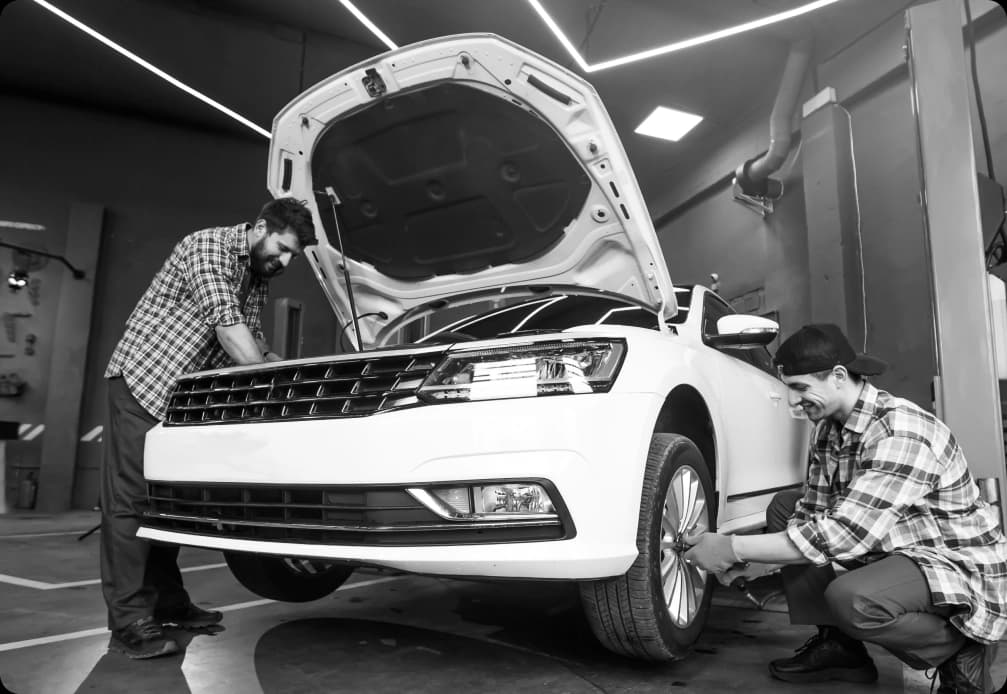
At API Auto Repair, our comprehensive Tire Service is designed to ensure your vehicle's tires are always in optimal condition for safety, performance, and longevity. We understand that tires are your vehicle's only contact with the road, making their maintenance crucial. Our experienced and certified technicians provide a full range of tire solutions, from routine rotations and balancing to expert repairs and new tire installations. We use state-of-the-art equipment to accurately diagnose tire wear patterns and ensure proper alignment, maximizing your tire life and improving fuel efficiency. Whether you're looking for all-season, performance, or specialized tires, we offer a wide selection from leading brands to fit your vehicle and driving needs. Trust us to keep you rolling safely and smoothly on the road.
Tires are your vehicle's only contact with the road. Every aspect of how your car drives — acceleration, braking, cornering, ride comfort, fuel economy, and stability in rain or snow — depends on four small contact patches between rubber and pavement. When tires are worn, mismatched, underinflated, or improperly aligned, every other safety system on your vehicle is operating below its design capability. ABS, traction control, stability control, and modern collision avoidance systems all assume your tires can transmit force to the road within specific parameters. Worn tires break those assumptions, and the consequences range from longer stopping distances and reduced cornering grip to outright loss of control in emergency situations.
API Auto Repair provides comprehensive tire service for all makes and models — passenger cars, SUVs, light trucks, vans, and many commercial vehicles. We handle tire rotations, balancing, repairs (when safe), pressure monitoring system service, valve stem replacement, tire dismounting and remounting for new installations, runflat tire service, and full new-tire sales and installation. We carry and order tires from major brands including Michelin, Goodyear, Bridgestone, Continental, Pirelli, Yokohama, Hankook, and many others, in passenger, performance, all-season, summer, winter, and all-terrain configurations. We also service less common needs like staggered fitments (different tire sizes front and rear), runflat replacements, and TPMS sensor programming.
Maryland's varied driving conditions place specific demands on tires. Stop-and-go traffic on I-95, I-695, and US-1 generates significant heat in the contact patch, accelerating tread wear and potentially causing internal tire damage on heavily loaded vehicles. Winter road salt and brine treatments accelerate corrosion on alloy wheels and steel components, including TPMS sensor batteries. Summer humidity and temperature swings cause tire pressure to fluctuate by 1–3 PSI for every 10°F temperature change, which means winter pressure settings often become summer overinflation if not adjusted. Our tire recommendations factor in these regional conditions — we don't push the same tire on every customer regardless of how they drive.
Most tire decisions involve trade-offs between price, performance, longevity, and specific driving conditions. A long-life all-season tire might wear 70,000+ miles but compromise wet-weather grip. A high-performance summer tire grips superbly in the warm months but isn't safe below 45°F. A dedicated winter tire dramatically improves snow and ice performance but wears quickly on warm pavement. We help customers think through these trade-offs and select tires that match their actual driving — not just the cheapest or most expensive option. Many customers find that mid-tier all-season tires from quality brands provide the best overall value, while customers with specific needs (long highway commutes, occasional towing, performance driving, dedicated winter use) benefit from more specialized choices.
Features
Tire Rotation
Evenly distributes wear and tear on your tires to prolong their lifespan and improve handling.
Tire Balancing
Ensures that your tires are balanced for optimal performance and reduces vibrations while driving.
Tire Replacement
Evenly distributes wear and tear on your tires to prolong their lifespan and improve handling.
Alignment Services
Our alignment services ensure that your tires are properly aligned for optimal handling and performance.
Signs You Need This Service
Tread Depth Below 4/32 Inch
Maryland's legal minimum is 2/32 inch, but tires lose significant wet-traction below 4/32 inch — and stopping distances on wet pavement can grow by 30–50% versus a fresh tire. The penny test (Lincoln's head visible above the tread) means you're below 2/32. The quarter test (Washington's head visible above the tread) means you're below 4/32 and getting close to replacement.
Visible Sidewall Damage, Bulges, or Cracks
Sidewall damage compromises tire structural integrity. A bulge in the sidewall indicates internal cord or belt damage and can cause sudden tire failure at highway speeds. Sidewall cracks (from age, ozone exposure, or curb damage) similarly weaken the tire. Sidewall damage cannot be repaired — these tires must be replaced, often immediately.
Vibration at Highway Speeds
Steady vibration through the steering wheel above 50 mph usually indicates an out-of-balance front tire or wheel. Vibration through the seat or floor often points to a rear tire imbalance. Vibration that varies with speed in unusual ways may indicate a tire with internal damage (broken belt) that needs replacement rather than rebalancing.
Uneven Tread Wear Patterns
Wear that's heavier on one edge of the tire indicates alignment issues. Center wear suggests overinflation. Edge wear on both sides suggests underinflation. Cupping or scalloping patterns indicate suspension problems. Each pattern points to a different underlying issue that needs addressing along with replacement.
Tire Pressure Warning Light
Modern vehicles display a warning when one or more tires are significantly underinflated. Low pressure causes accelerated wear, increased rolling resistance (worse fuel economy), reduced handling, and risk of overheating-induced failure. Check pressures monthly and after significant temperature changes.
Vehicle Pulls to One Side
Pulling can indicate a tire pressure imbalance, an out-of-round tire, alignment problems, or a damaged tire. Sometimes swapping front tires side-to-side identifies whether the pulling follows the tire (suggesting a tire problem) or stays with the vehicle (suggesting alignment or brake issues).
Age Over 6 Years Regardless of Tread
Tires age chemically over time, even if they're not used much. The rubber compounds harden, lose elasticity, and develop micro-cracks. Most tire manufacturers recommend replacement at 6 years regardless of tread remaining; manufacturers like Toyota and Mercedes recommend 6 years specifically for safety. The DOT date code on the sidewall shows when the tire was made.
Our Service Process
- 1
Vehicle Check-In and Tire Inspection
We start by inspecting all four tires for tread depth (measured with a depth gauge at multiple points), wear pattern, sidewall condition, age (DOT date code), and current inflation pressure. We document findings and discuss your goals — replacement, rotation, repair, balance correction, or full new-tire installation.
- 2
Tire Selection (For New Tire Sales)
If you're buying new tires, we discuss your driving conditions, vehicle, mileage expectations, and budget. We present 2–4 options at different price points and explain the trade-offs. Once selected, we order tires (most are available same-day or next-day from regional warehouses) and schedule the installation.
- 3
Wheel Removal and Tire Dismount
Wheels are removed using torque-controlled equipment to prevent damage. The vehicle is supported on a lift while the wheel/tire assemblies are taken to our tire machine. The old tire is dismounted from the wheel using the proper bead-breaking technique to protect both the tire (if it's being kept for recycling) and the wheel finish.
- 4
Wheel Inspection and TPMS Service
With the tire off, we inspect the wheel for damage (bent rim, cracks, corrosion on the bead seat). We service or replace TPMS sensors as needed — sensors over 5–7 years old should be replaced during tire installation since their batteries are at end of life. We replace valve cores and rubber valve stems as part of standard service.
- 5
New Tire Mount and Initial Inflation
New tires are mounted using the proper rotation direction (for directional tires) and outboard side (for asymmetric tires). The bead is seated against the wheel using controlled inflation, and the tire is initially inflated to vehicle specification (read from the door jamb placard, not the tire sidewall). We use Tire Mounting Lubricant to prevent damage to bead and wheel.
- 6
Wheel Balance
Each wheel/tire assembly is mounted on a computer balancer that detects imbalance with high precision. We add stick-on or clip-on balance weights as needed to bring imbalance below acceptable thresholds. Modern balancers also detect runout (out-of-round) issues and can flag tires that should be rotated to the rear axle if needed.
- 7
Wheel Reinstallation and Torque to Specification
Wheels are reinstalled using anti-seize compound on the hub mating surface (preventing future corrosion-induced sticking). Lug nuts or bolts are torqued to manufacturer specification using a calibrated torque wrench, in the proper sequence. We also recommend re-torquing after 50–100 miles of driving — bring the vehicle back briefly for this free service.
- 8
Test Drive and Final Inspection
We perform a brief road test to verify smooth operation, no vibration, proper steering response, and TPMS system function. The TPMS warning light should clear within a few miles of driving. We check that pressure readings are accurate and document the service.
What's Included in This Service
Pre-Service Tire Inspection
Tread depth, wear pattern, sidewall, age, and pressure check on all four tires.
Tire Mounting and Dismounting
Old tires removed and new tires mounted using proper technique to protect wheel and tire.
Computer Wheel Balancing
Each wheel balanced to manufacturer specification with appropriate weights.
New Valve Cores and Stems
Rubber valve stems and valve cores replaced with new components for leak prevention.
TPMS Sensor Service
Sensors checked, programmed, or replaced as needed for proper system function.
Lug Nut Torque to Specification
Calibrated torque wrench used in proper sequence to manufacturer specification.
Tire Disposal and Recycling
Old tires recycled through certified Maryland facilities; small disposal fee disclosed upfront.
Road Test
Brief drive to verify smooth operation, no vibration, and proper TPMS function.
Service Documentation
Written record with installation date, mileage, and tire model for warranty tracking.
Free Re-Torque After 50–100 Miles
Quick free re-torque appointment after initial settling — drop in any time.
Wheel Hub Cleaning and Anti-Seize
Hub mating surfaces cleaned of corrosion and treated with anti-seize compound to prevent future stuck wheels.
Tire Wear Pattern Analysis
Wear patterns documented with photos when relevant, helping identify alignment or suspension issues.
Why Choose API Auto Repair
Major Brand Tires at Competitive Prices
We carry and order from Michelin, Goodyear, Bridgestone, Continental, Pirelli, Yokohama, Hankook, and many others. We're competitively priced versus tire-only retailers and online sellers, with the added benefit of professional installation, balancing, and TPMS service all bundled into one visit.
Honest Recommendations Based on Driving Patterns
We don't push the most expensive tire on every customer. We ask about your typical driving — mostly highway commute, mixed city driving, occasional snow trips, performance driving, towing — and recommend tires that match. Sometimes the right answer is a mid-tier all-season; sometimes it's a premium touring tire; sometimes it's a dedicated winter set.
Proper Mounting Equipment That Doesn't Damage Wheels
We use modern tire mounting equipment with rim-protector clamps and lever guards. Cheap tire shops still use older machines that can scratch or gouge alloy wheels during mounting. The damage is usually minor but cumulative over multiple tire changes — a wheel can become noticeably worn after 2–3 sets of tires installed at low-quality shops.
Computer Balancing and Road-Force Capability
Standard computer balancing handles most vehicles well. For luxury cars, performance vehicles, and customers with persistent balance complaints, we offer road-force balancing — a process that simulates road load to identify both balance and runout issues. Road-force is overkill for most cars but invaluable for the 5% of cases where standard balancing doesn't fully resolve vibration.
Local, Family-Owned, and Easy to Reach
We've been doing tire work in Elkridge for over thirty years. We know what wears on Maryland roads, what holds up to I-95 commuting, and what's worth the premium for specific driving patterns. Plus, when you have a flat or need a re-torque, we're a phone call and short drive away — not a corporate chain store with a 30-minute hold time.
Tire Service and New Tire Pricing in Elkridge, MD
New tire installation costs at API Auto Repair vary primarily by tire choice. Budget all-season tires for compact and midsize vehicles typically run $400–$700 installed for a full set of four. Quality mid-tier all-seasons (Michelin Defender, Continental TrueContact, Goodyear Assurance) for the same vehicles run $700–$1,200 installed. Performance summer or all-season tires for sports cars and luxury vehicles run $1,000–$2,000 installed. Truck and SUV tires (larger sizes, heavier load ratings) run $800–$1,800 for a typical set of four. Specialty tires — runflat, all-terrain, dedicated winter — vary by application.
Individual tire services have transparent pricing. Tire rotations are $30–$50 (often free with other service). Wheel balancing is $20–$30 per wheel. Flat tire repair runs $25–$50 if the tire can be safely repaired (puncture in tread area, not in sidewall, smaller than 1/4 inch). TPMS sensor replacement is $80–$150 per sensor including programming. Valve stem replacement is typically $5–$15 per stem with tire service. Mounting and balancing for tires you supply (purchased elsewhere) typically runs $30–$50 per wheel.
Several factors can adjust the price upward. Vehicles with specialty wheels (oversized, polished, low-profile fitments) may require additional time or specialty equipment. TPMS sensors that have failed need replacement during tire installation since the wheels are off anyway — sensor replacement at this time is much cheaper than coming back to replace later. Vehicles with stuck or corroded lug bolts may require additional labor to remove safely. We always quote complete pricing upfront so you know the total before authorizing service.
Tips to Extend the Life of Your Service
Check Tire Pressure Monthly
Tires lose 1–2 PSI per month from natural permeation. Maryland's seasonal temperature swings cause additional pressure changes — drop pressure in winter months and check again in spring. Use the pressure listed on the door jamb placard (NOT the maximum on the tire sidewall) and check pressures cold (before driving more than a mile or two).
Rotate Tires Every 5,000–7,500 Miles
Tire rotation distributes wear evenly across all four tires, extending overall set life by 20–50%. Most all-wheel-drive and front-wheel-drive vehicles benefit significantly from rotation. We typically rotate tires for free during oil changes, so the timing aligns with regular service.
Get an Alignment When You Buy New Tires
New tires installed on a misaligned vehicle wear unevenly within just a few thousand miles. An alignment done at tire installation prevents this. If your current tires showed uneven wear, the alignment is essential — without it, your new tires will follow the same wear pattern.
Watch for Vibration and Address Promptly
Vibration that develops gradually usually means a wheel weight has fallen off or a tire has slightly shifted on the wheel. A quick rebalance fixes this. Sudden vibration may indicate a tire with internal damage (a broken belt) that requires replacement, not rebalancing.
Drive Around Potholes When Possible
Maryland's pothole season (late winter and early spring) wreaks havoc on tires and wheels. Hitting a deep pothole at speed can pinch the tire's sidewall against the wheel rim, causing internal cord damage that may not be visible from outside. If you hit a major pothole, have the tire inspected — internal damage can lead to sudden failure weeks later.
Replace Tires in Pairs Minimum, Sets When Possible
Mismatched tire wear creates handling imbalances and can damage all-wheel-drive systems on AWD vehicles. Replace at minimum in pairs across the same axle, ideally as a full set. Mixing brands across an axle is generally fine if the tire models are similar; mixing tread depths significantly is not.
Inspect After Any Major Impact or Curb Strike
Hitting potholes, curbs, or large debris can cause internal tire damage that's not visible from outside. If you've had a significant impact, get the tire inspected — sometimes the damage develops into a sidewall bulge or sudden failure days or weeks later. A quick visual and pressure check at our shop is free.
Serving Elkridge & Howard County, MD
Howard County's mix of highway commuting and suburban driving creates specific tire wear patterns. Customers who commute on I-95 or I-695 typically see faster front tire wear because of the constant slight steering corrections required at highway speeds. Stop-and-go traffic on US-1 and Route 100 generates more heat in the contact patch than uniform highway driving, accelerating tread wear. We commonly see tire sets last 35,000 to 55,000 miles for typical Howard County commuters when properly rotated and aligned, versus published mileage ratings that often assume more uniform driving.
Maryland's pothole season is hard on tires and wheels. The freeze-thaw cycles from December through April create new potholes weekly, particularly on aging surfaces of I-95, US-1, and arterial routes through Elkridge, Columbia, and Ellicott City. We see significantly more bent wheels, internal tire damage, and TPMS sensor failures during the pothole season than other times of year. If you hit a major pothole and notice anything different about how the vehicle drives, get the tire and wheel inspected — internal damage often doesn't cause immediate failure but can cause sudden failure weeks later.
Winter tire considerations vary among our customers. Some Howard County drivers swear by dedicated winter tires for snow performance during occasional Maryland snow events. Others find that quality all-season tires from premium brands (Michelin Defender, Continental TrueContact, Pirelli Cinturato) provide adequate winter traction without requiring tire swaps. We help customers think through this honestly — for drivers who must commute regardless of conditions and live in hilly areas (parts of Ellicott City, the Patapsco corridor), dedicated winter tires significantly improve safety. For city commuters who can adjust schedules around major storms, premium all-seasons usually suffice.
How to Read a Tire Sidewall: Decoding the Numbers
Every tire has a series of letters and numbers molded into the sidewall that fully describe what the tire is, what loads and speeds it's rated for, when it was made, and where. Understanding these markings helps you verify you're getting what you paid for and choose replacement tires correctly. The most prominent marking is the size — typically formatted as P225/65R17 or 225/65R17. The first number is section width in millimeters (225mm wide). The second number is aspect ratio — sidewall height as a percentage of width (65% of 225mm = 146mm sidewall). The R indicates radial construction (almost universal on modern tires). The final number is wheel diameter in inches (17 inch wheel). Understanding this code helps you spot mismatches quickly.
After the size, you'll see the load index and speed rating — typically formatted as 102H or similar. Load index is a numeric code that maps to a maximum weight rating (102 = 1,874 pounds per tire). The letter is the speed rating, with each letter corresponding to a maximum sustained speed (T = 118 mph, H = 130 mph, V = 149 mph, W = 168 mph, Y = 186 mph). Replacement tires must meet or exceed both the original load index and the speed rating to maintain safety margins. Lower-rated replacement tires can compromise handling and may void some warranty coverage.
The DOT date code is one of the most important markings and one that customers rarely check. It's a four-digit number embedded in a longer DOT code on the sidewall — the last four digits indicate the week and year of manufacture. A code ending in 1924 means the tire was made in week 19 of 2024. Tire age matters because rubber compounds degrade over time even if the tire isn't used. We frequently see customers buying ''new'' tires from low-volume retailers that are 2–3 years old when sold. Always check the date code before accepting installation. Tires more than 12 months old at point of sale are warranty risks; we don't install tires older than that without explicit customer awareness.
Other markings include UTQG ratings (treadwear, traction, temperature) that compare durability and grip relative to a baseline tire. Treadwear ratings are relative — a 500 rating tire should last roughly twice as long as a 250 rating tire of the same brand, but ratings aren't directly comparable across manufacturers. Traction ratings (AA, A, B, C) measure wet stopping performance. Temperature ratings (A, B, C) measure heat dissipation capability. M+S (Mud and Snow) marks all-season tires; the three-peak mountain snowflake symbol indicates dedicated winter capability. Run-flat tires are marked with brand-specific designations (ZP for Michelin, ROF for many others).
All-Season vs Winter vs Summer Tires: Which Is Right for Maryland?
Maryland's climate sits in a middle ground that complicates tire selection. We have real winters with occasional significant snowfall, real summers with hot pavement, and many in-between days that don't favor any specific tire compound. The traditional answer for most drivers is all-season tires, which are designed as a compromise that performs adequately in all conditions but excels at none. Quality all-season tires (Michelin Defender, Continental TrueContact, Pirelli Cinturato P7, Goodyear Assurance) work well for most Howard County driving, providing acceptable winter traction during typical Maryland snow events while wearing predictably during warm months.
Dedicated winter tires offer dramatically better snow and ice performance than all-seasons. The rubber compound stays flexible at low temperatures (below 45°F), and the tread pattern is optimized to grip snow and slush. If you commute regardless of weather conditions, drive in hilly terrain (parts of Ellicott City, areas near Patapsco State Park), or simply prioritize winter safety, dedicated winter tires are worth considering. The trade-off is that you need a separate set, which means swapping twice a year or carrying both sets through seasons. Some customers store their winter tires on dedicated wheels to make swaps faster and cheaper.
Summer tires (also called performance tires) provide excellent dry and wet traction in warm weather but are dangerous below 45°F. The rubber compound hardens and grip drops dramatically in cold conditions. If you drive a sports car or performance vehicle that came with summer tires from the factory, you have two options for Maryland winters: switch to all-seasons during winter months or store the vehicle. We don't recommend driving on summer tires below 45°F regardless of how skilled the driver is — the performance drop in winter conditions is not something skill compensates for.
All-weather tires are a newer category that's worth understanding. These are all-season tires that carry the three-peak mountain snowflake symbol, indicating they meet specific winter performance standards. Examples include Michelin CrossClimate2, Nokian WR series, and Goodyear WeatherReady. They sit between traditional all-seasons and dedicated winter tires — better winter performance than all-seasons, but more long-life durability than dedicated winters. For Maryland drivers who don't want to swap tires seasonally but want better-than-typical winter traction, all-weather tires are increasingly our recommendation.
Common Tire Damage and What's Repairable
Not every damaged tire needs replacement — but not every damaged tire is repairable, either. Knowing the difference matters because shops sometimes refuse to repair tires that could be safely repaired (defaulting to selling new tires), and other shops will repair tires that should be replaced (taking a shortcut that puts customers at risk). At API Auto Repair, we follow the Tire Industry Association's published repair guidelines, which are the industry standard for safe tire repair. Punctures in the tread area, smaller than 1/4 inch in diameter, on tires with adequate remaining tread depth and no internal damage from running underinflated, are repairable. We use a plug-and-patch combination repair (sometimes called a ''mushroom plug'') that seals the puncture from the inside while filling the puncture channel.
Punctures larger than 1/4 inch are not safely repairable. The damage compromises the tire's structural integrity beyond what a plug-and-patch can restore. We've seen attempts to repair larger punctures fail at highway speeds with serious consequences. Sidewall damage of any kind is also not repairable. The sidewall flexes constantly during driving, and any patch or plug applied to a sidewall will eventually fail under that flexing. Bulges in the sidewall (indicating internal cord damage), sidewall cracks, sidewall punctures, and damage near the bead area all require tire replacement.
Run-flat tires present a different repair calculus. Most tire manufacturers do not warrant run-flat tires after they've been driven flat (or after a repair has been performed). The internal reinforced sidewall structure is designed to be a one-time use — it gets you safely to a tire shop after a puncture, but it's not designed to be repaired and continue. Some run-flat owners choose to repair anyway and accept the warranty risk; we discuss this option honestly. Most opt for replacement.
Tire damage from underinflated driving is often invisible from outside but compromises the tire's structural integrity. If a tire has been driven significantly underinflated (below 50% of recommended pressure) for any meaningful distance, the internal cords and belts may have been damaged from excessive flexing and heat buildup. We can't always detect this damage visually — sometimes the only sign is a slight bulge that develops weeks after the underinflation event. If you've driven on a low tire for any meaningful distance, get the tire professionally inspected. Sometimes damaged tires fail unexpectedly months later because of cumulative internal damage.
Curb damage is common in Maryland's tight parking situations. Light scuffing of the sidewall (cosmetic) doesn't usually compromise the tire. Deep curb damage that exposes internal cords or causes immediate sidewall bulging requires replacement. Curb damage to the wheel itself can sometimes be repaired (cosmetic refinishing) or may require wheel replacement if structural damage to the rim affects bead seal. Our inspection covers both tire and wheel damage from curb impacts.
Tire Pressure: Why It Matters More Than You Think
Tire pressure is the single most important and most frequently neglected aspect of tire maintenance. Underinflation is the leading cause of tire failure and accelerated wear, and it's incredibly common — surveys regularly find that 25–40% of vehicles on the road have at least one significantly underinflated tire. Underinflation causes excessive flexing of the sidewall, which generates heat that breaks down the rubber and steel belts. Severe underinflation at highway speeds can cause sudden tire failure (blowout). Even moderate underinflation accelerates wear by 20–40% and reduces fuel economy by 1–3%.
The correct pressure for your vehicle is listed on the door jamb placard, not on the tire sidewall. The number on the tire sidewall is the maximum pressure the tire can handle, not the recommended pressure for your vehicle. Recommended pressure varies based on vehicle weight, suspension design, tire size, and load. Most modern passenger vehicles run 30–35 PSI, but trucks, vans, and heavy SUVs may run higher (35–45 PSI), especially when carrying loads. Always use the door jamb placard reading.
TPMS (Tire Pressure Monitoring Systems) became federally mandated on light vehicles starting in 2008 (with phased implementation starting earlier). The system uses sensors mounted in each wheel to monitor pressure and report low pressure warnings to the dashboard. TPMS sensors run on battery power and last approximately 5–10 years before the battery dies. When sensors fail, the warning light stays on. We can replace TPMS sensors during tire service for $80–$150 per sensor including programming. Newer vehicles use direct TPMS (sensors in each wheel), while some older vehicles use indirect TPMS (estimating pressure from wheel speed differences via ABS sensors).
Pressure changes with temperature — roughly 1–3 PSI for every 10°F change in ambient temperature. A tire set to 32 PSI in summer (85°F) will read approximately 27 PSI in winter (35°F) without any actual leak. This is why pressure warnings often appear on cold winter mornings. Adjust pressures seasonally and check monthly during stable weather. Always check pressures cold (before driving more than a mile or two), since heat from driving raises pressure 2–4 PSI temporarily.
Properly inflated tires last longer, handle better, stop shorter, ride better, and use less fuel. The total benefit of consistent pressure maintenance over a vehicle's life is significant — extended tire life can save $200–$500 per replacement cycle, and improved fuel economy saves another $50–$200 per year. We provide free pressure checks anytime you stop in, and we adjust pressures on every service appointment.
Related Services
Wheel Alignment in Elkridge, MD
Improve handling and tire life with precision wheel alignment at API Auto Repair in Elkridge, MD.
Brake Repair & Replacement in Elkridge, MD
Get expert brake repair in Elkridge, MD. API Auto Repair offers fast, safe brake service at competitive prices.
Suspension & Steering Repair in Elkridge, MD
Bumpy ride or poor handling? Get suspension and steering repair at API Auto Repair in Elkridge, MD.
Certified Maryland State Inspections in Elkridge
Need a Maryland state inspection? Visit API Auto Repair in Elkridge for fast, certified service.
Car Battery Testing & Replacement in Elkridge
Dead battery? Visit API Auto Repair in Elkridge, MD for fast testing and high-quality battery replacements.
Got Questions?