Last updated:
Transmission Repair in Elkridge, MD
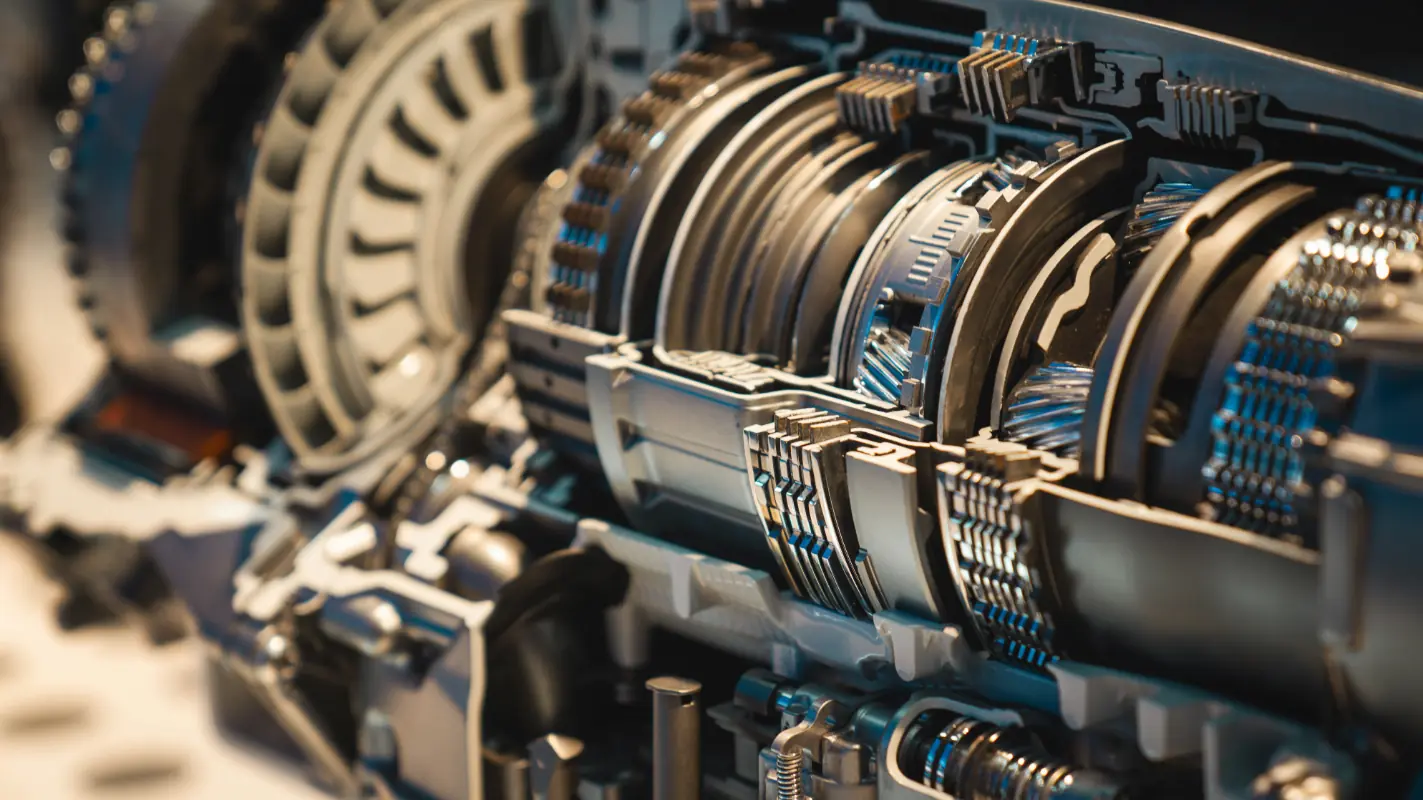
The transmission is a complex and vital component of your vehicle, responsible for transferring power from the engine to the wheels. At API Auto Repair, our Transmission Repair & Service includes comprehensive diagnostics, fluid and filter replacement, and expert repair or replacement of transmission components as needed. We handle both automatic and manual transmissions, addressing issues like slipping gears, delayed engagement, or unusual noises. Our technicians are highly trained in advanced transmission diagnostics, allowing us to accurately pinpoint problems and recommend the most effective solutions. Regular transmission maintenance can prevent costly repairs down the line, and our team is dedicated to keeping your vehicle shifting smoothly and efficiently.
Your transmission is one of the most complex mechanical and electronic assemblies in your vehicle, and one of the most expensive components to replace if it fails catastrophically. Modern transmissions — whether traditional automatic, CVT (continuously variable transmission), DCT (dual-clutch transmission), or manual — combine precision-machined gears, hydraulic circuits, friction clutches, electronic solenoids, sensors, and increasingly sophisticated computer controls. When something goes wrong, accurate diagnosis matters enormously because the difference between a $300 fluid service and a $5,000 rebuild often comes down to identifying the underlying cause early.
API Auto Repair has been servicing transmissions in Elkridge for over thirty years. We've seen the technology evolve from simple 3-speed automatics to today's 8-speed, 9-speed, and 10-speed transmissions with adaptive learning algorithms and electronic shift control. We service all transmission types — automatic, manual, CVT, dual-clutch — for domestic, Asian, and European vehicles. Our transmission services range from preventive fluid changes to advanced diagnostic work to mechanical repair and complete rebuilds. We refer specialty work that's beyond our facility's scope (some heavy-duty commercial transmissions, certain exotic specialty transmissions) to trusted partners rather than attempting work we're not equipped for.
Transmission problems show up in many forms: rough or delayed shifts, slipping under load, harsh engagement, sudden gear changes, fluid leaks, burnt smells, whining or grinding noises, check engine lights with transmission codes, and complete failure to shift or move. Each symptom can have multiple causes, and similar symptoms can come from very different underlying problems. Sometimes a transmission that feels like it's failing actually has a simple fix — wrong fluid type, sensor failure, low fluid level, or a stuck solenoid. Sometimes a transmission that seems to be working has internal damage that's about to become catastrophic. Diagnostic skill and proper equipment are what distinguish accurate transmission service from guesswork.
Our diagnostic-first approach prevents the most expensive transmission mistake: throwing parts at a problem without verifying the cause. We start with a transmission-specific scan to read all stored codes (transmissions store codes in their own control module, separate from the engine), then verify fluid level and condition, perform pressure tests where applicable, and road-test under various driving conditions to characterize the symptom. Only then do we recommend a repair path — fluid service, sensor or solenoid replacement, valve body work, or full rebuild. Some shops will quote a rebuild based on symptoms alone; we won't, because doing so often charges customers thousands for repairs that weren't necessary.
Features
Fluid & Filter Change
Regular maintenance to ensure smooth transmission operation.
Transmission Diagnostics
Advanced diagnostics to pinpoint transmission issues.
Minor Repairs
Addressing small issues before they become major problems.
Complete Overhaul
Full transmission repair or replacement for severe damage.
Signs You Need This Service
Slipping or Loss of Power Under Acceleration
Transmission slipping feels like the engine RPM rises but the vehicle doesn't accelerate proportionally. It's most noticeable during firm acceleration or when going up hills. Slipping usually indicates worn clutches, low fluid, or hydraulic problems and gets progressively worse if not addressed. Continuing to drive a slipping transmission accelerates internal wear dramatically.
Hard, Harsh, or Delayed Shifting
Shifts that feel jarring, take longer than normal to engage, or happen at unexpected RPM points indicate solenoid problems, valve body issues, fluid contamination, or worn internal components. Sometimes simply servicing the fluid and adapting the transmission to fresh fluid resolves the issue. Other times, the underlying cause is more serious and progressive.
Burning Smell or Discolored Fluid
A burning smell during driving — particularly during heavy load like towing or hill climbs — often comes from overheated transmission fluid. Burnt fluid is dark and smells acrid, versus normal fluid which is bright red and smells slightly sweet. Once fluid burns, it loses lubricating and cooling properties, accelerating internal damage.
Red Fluid Spots Under Vehicle
Transmission fluid is bright red when fresh and turns brown or black as it ages. Spots under the vehicle that are red or pink indicate a transmission leak. Most leaks come from the pan gasket, output shaft seals, cooler line connections, or torque converter seals. Small leaks become big leaks; address them early.
Whining, Humming, or Grinding Noises
Whining noises that vary with vehicle speed often indicate transmission bearings, gears, or pumps wearing. Grinding sounds during shifts on a manual transmission usually indicate clutch or synchronizer problems. CVTs that are failing often produce a distinctive whine that increases with engine RPM regardless of vehicle speed.
Check Engine Light or Transmission Warning Light
Modern vehicles often have separate transmission warning indicators, or the check engine light may illuminate with transmission-related codes (P0700 series). These codes need scanning with proper equipment — generic code readers often can't access transmission control module codes, only the generic ''transmission fault'' message.
Vehicle Won't Shift Out of Park or Into Drive
A vehicle that won't shift out of park, or that drops into neutral when shifted to drive, indicates serious transmission or shift-control problems. Sometimes the issue is in the shift linkage or the brake-shift interlock; sometimes it's internal. Don't force the shift lever — get it diagnosed before causing additional damage.
Our Service Process
- 1
Diagnostic Consultation and Symptom Documentation
We start by understanding what you've experienced — when symptoms occur, under what driving conditions, how long they've been present, whether they're getting worse. Customer-reported information is invaluable for transmission diagnosis because some symptoms only appear under specific conditions that may not be replicable in the shop.
- 2
Multi-Module Scan With Transmission-Specific Tools
We connect a manufacturer-grade scan tool that can access the transmission control module (TCM) along with all other vehicle modules. We pull active codes, pending codes, and historical codes; we also access live data including fluid temperature, line pressure, gear position, and adapt values that show the transmission's current calibration state.
- 3
Fluid Level and Condition Inspection
We check fluid level (some modern transmissions have no dipstick and require specific procedures), fluid color, smell, and presence of metal particles. Burnt or contaminated fluid often indicates internal damage; clean bright-red fluid suggests the issue may be electronic or hydraulic rather than mechanical.
- 4
Pressure Testing and Stall Testing
When applicable, we perform pressure tests at specific test ports to verify the transmission is generating proper hydraulic pressure under load. Stall tests (with appropriate vehicle types) verify torque converter performance and identify slipping clutches versus engine power issues.
- 5
Road Test Under Multiple Conditions
We road-test the vehicle under various conditions — light load, heavy load, full throttle, coast-down, city stop-and-go, highway cruise, and (when safe) hill climbs. The conditions that produce the symptom help isolate whether the issue is hydraulic, mechanical, electronic, or some combination.
- 6
Diagnosis Confirmation and Repair Path Recommendation
Based on scan data, fluid condition, pressure tests, and road test, we identify the most likely root cause and recommend a repair path. For complex cases with multiple possible causes, we may recommend the least-invasive repair first (fluid service, solenoid replacement) before more involved work, with the understanding that more work may be needed if the first repair doesn't resolve the symptom.
- 7
Repair Execution
Repairs range from simple (fluid service, sensor replacement, external solenoid replacement) to moderate (valve body service, external pump replacement) to complex (full rebuild or replacement). Simple repairs often complete in 1–4 hours. Rebuilds typically take 2–4 days because the transmission must be removed, fully disassembled, inspected, repaired, reassembled, and reinstalled.
- 8
Adapt Reset and Road Test Verification
After major transmission service, we reset adapt values (the learned shift parameters) so the transmission relearns optimal shift points with the new conditions. We road-test to verify proper operation, then drive the vehicle through additional cycles to allow the adaptive learning to occur. We don't return the vehicle until shifts are smooth and codes are clear.
What's Included in This Service
Full Transmission-Specific Diagnostic Scan
TCM codes, live data, and adapt values read with manufacturer-grade tools.
Fluid Level and Condition Check
Verified using vehicle-specific procedure (dipstick, fill plug, or scan-tool-monitored level).
Visual Inspection for Leaks
External seals, gaskets, cooler lines, and pan gaskets all checked for active fluid leaks.
Road Test Under Multiple Conditions
Light and heavy load, coast, full throttle, and city/highway cycles to characterize symptoms.
Pressure Testing When Applicable
Hydraulic pressure verified at test ports for transmissions with accessible service ports.
Written Diagnostic Report
Findings, codes, conclusions, and repair options documented clearly.
OEM-Equivalent or OEM Parts
Quality parts from trusted manufacturers; OEM specifications matched for emissions-sensitive components.
Adapt Reset After Repair
Learned shift parameters reset so transmission optimizes for new conditions after service.
Post-Repair Road Test
Multi-condition test drive to verify proper operation before returning the vehicle.
Warranty on Parts and Labor
Standard 12-month/12,000-mile warranty; extended warranty options on rebuilds.
Why Choose API Auto Repair
Diagnostic-First Approach Saves Customers Money
Some shops diagnose by elimination — replace the cheapest possible part first, see if it fixes the issue, then escalate. We use scan tools and pressure testing to identify root cause before recommending repairs. This approach often saves customers thousands by avoiding unnecessary work.
All Transmission Types Serviced
Traditional automatic, manual, CVT, dual-clutch — we service them all. Each requires specific tools, fluid types, and service procedures. Many shops only service traditional automatics. Bring us your CVT or DCT and we'll handle it correctly with the right fluid and adapted procedure.
Honest Pricing for Rebuilds
Transmission rebuilds and replacements are major expenses. We provide written estimates with breakdowns of parts and labor so you can see what you're paying for. We don't pad rebuilds with unnecessary extras, and we explain when a used or remanufactured unit might serve better than a full rebuild.
Specialty Tool Investment
Modern transmissions often require specialty tools — fluid exchange machines that match factory procedures, scan tools that access transmission control modules, hydraulic test equipment. We've made the investment so we can perform manufacturer-correct service rather than improvised approximations.
Honest Recommendations About Repair vs Replace
Sometimes a transmission rebuild is the right call. Sometimes the vehicle's condition or remaining value makes a used or remanufactured replacement the smarter financial choice. Sometimes the fix is too expensive relative to the vehicle's worth and we recommend not repairing. We give honest counsel based on your situation, not just what generates the largest invoice.
Transmission Service and Repair Pricing in Elkridge, MD
Transmission service pricing at API Auto Repair varies dramatically based on what's required. Simple maintenance services are predictable: fluid and filter change runs $150–$300 depending on vehicle and fluid capacity. Full fluid exchange (machine flush) runs $200–$400. Solenoid replacement (external solenoids only) runs $300–$700 depending on number replaced. CVT or DCT specific maintenance services range $250–$500 depending on vehicle and required fluid.
Mid-range repairs include valve body service or replacement ($600–$1,800 depending on whether the original valve body can be cleaned and resealed or needs replacement), torque converter replacement ($800–$2,000 plus required fluid and gasket service), or transmission cooler replacement ($300–$700 including fluid). Pan gasket replacement (often combined with fluid service) runs $200–$400. External seal replacement (output shaft, axle seal) runs $150–$400 each.
Major repairs are the most expensive. Full transmission rebuild typically runs $2,500–$5,000 depending on transmission complexity and what's worn. Remanufactured transmission replacement runs $3,000–$6,000 installed (the unit itself runs $1,800–$3,500 and labor adds another $1,000–$2,500). Used transmission replacement (with appropriate warranty considerations) can be cheaper but carries longevity risks. We'll discuss the trade-offs honestly when major repair becomes necessary, and we'll give you a written estimate with multiple options whenever applicable.
Tips to Extend the Life of Your Service
Service Transmission Fluid at Manufacturer-Recommended Intervals
Most automatic transmissions need fluid service every 30,000–60,000 miles. CVTs and DCTs vary widely — some require service every 30,000 miles, others every 60,000–80,000. Check your owner's manual for your specific vehicle. Stretching intervals beyond manufacturer recommendation is the leading cause of premature transmission failure we see.
Use Manufacturer-Specified Fluid Type
Transmission fluid types are not interchangeable. Using the wrong fluid (Dexron in a Mercon-spec transmission, generic ATF in a CVT, traditional ATF in a dual-clutch) causes shifting problems, accelerates wear, and may damage the transmission permanently. Always use exactly what the manufacturer specifies.
Avoid Heavy Towing Without Transmission Cooler
Towing puts significant load on the transmission, generating heat that degrades fluid quickly. If you tow regularly, ensure your vehicle has an auxiliary transmission cooler. Vehicles not equipped from the factory benefit from aftermarket cooler installation. Heat is the leading killer of automatic transmissions.
Don't Shift Between Drive and Reverse While Moving
Shifting between forward and reverse while the vehicle is still moving (even slowly) puts severe stress on internal clutches and bands. Always come to a complete stop before changing direction. This single habit can extend transmission life significantly.
Address Small Leaks Before They Become Big
Small fluid leaks (slight wetness around seals, occasional drops on the driveway) become significant leaks if ignored. Small leaks are usually $200–$500 to repair; running the transmission low on fluid can cause $3,000–$5,000 in internal damage. Fix leaks early.
Listen for Changes in Shift Behavior
You're more familiar with how your vehicle normally shifts than anyone else. If shifts feel different — harder, softer, slower, or unusual in any way — get it checked early. Internal transmission problems usually start subtly and progress; catching them early often allows simpler, cheaper repairs than waiting until obvious failure.
Install an Auxiliary Transmission Cooler if You Tow
If you tow trailers, boats, or carry heavy loads even occasionally, an auxiliary transmission cooler dramatically extends transmission life. The cooler keeps fluid temperatures in the optimal range during heavy load conditions. Aftermarket coolers cost $200–$500 plus installation and can extend transmission life by tens of thousands of miles.
Avoid Riding the Brakes With Foot on Accelerator
Driving with one foot on the brake while the other is on the accelerator (or with the parking brake partially engaged) forces the transmission to work against constant resistance. This generates excessive heat and accelerates wear on internal clutches. Use one foot for the accelerator and brake; release the parking brake fully before driving.
Serving Elkridge & Howard County, MD
Howard County's stop-and-go traffic patterns are particularly hard on automatic transmissions. The constant cycling between forward and stopped — typical of I-95 and US-1 commutes — generates significant heat in the transmission's torque converter and friction clutches. Heat is the leading cause of transmission fluid degradation, and degraded fluid accelerates internal wear. We commonly see Howard County commuters needing transmission fluid service earlier than the manufacturer's stated interval would suggest, particularly on vehicles with smaller transmission coolers from the factory.
Maryland's seasonal temperature extremes also affect transmissions. Cold winter starts cause fluid to thicken and increase initial wear during the warm-up period. Hot summer driving with AC running adds heat load to the cooling system, indirectly increasing transmission temperature. Vehicles operated primarily in extreme temperatures (whether hot or cold) typically benefit from more frequent fluid service than vehicles in milder climates.
We work with several Howard County fleet customers — delivery vehicles, contractors, small business fleets — that put high mileage on automatic transmissions. Fleet transmissions follow predictable wear patterns: typically requiring rebuild or replacement around 175,000–250,000 miles depending on usage. We design fleet maintenance schedules that include planned transmission services at appropriate intervals to maximize the life of the original transmission and identify problems early when they can be addressed with minor repairs rather than full rebuilds.
Automatic vs CVT vs Dual-Clutch: Understanding the Differences
Modern vehicles use several different transmission technologies, each with distinct characteristics. Understanding what kind of transmission your vehicle has helps you make better service and repair decisions. Traditional automatic transmissions (also called planetary or torque-converter automatics) have been the dominant design for decades. They use a torque converter to multiply engine torque at low speeds and planetary gear sets controlled by clutches and bands to provide discrete gear ratios. Modern automatics have 6, 8, 9, or 10 speeds and shift smoothly with sophisticated computer control. They're proven, durable when maintained, and tolerate towing and heavy loads well.
Continuously Variable Transmissions (CVTs) use a different approach. Instead of discrete gears, CVTs use a steel belt or chain running between two variable-diameter pulleys. By changing the diameters of the pulleys, the transmission provides an infinite range of effective gear ratios. CVTs offer smoother power delivery and better fuel economy than traditional automatics but feel different to drive — RPM rises and stays high during acceleration rather than stepping through gears. CVTs require specific CVT-rated fluid and are damaged by using regular ATF. Common CVT applications include many Toyota, Subaru, Nissan, Honda, and Mitsubishi vehicles.
Dual-Clutch Transmissions (DCTs) use two separate clutches to alternate between odd and even gears, allowing nearly instant shifts. They're popular in performance vehicles (Porsche PDK, BMW DCT, VW/Audi DSG) and increasingly in mainstream vehicles (Hyundai, Kia, Ford). DCTs feel like manual transmissions in terms of efficiency but shift automatically. They have specific service requirements — particular fluid types and adaptation procedures — and can develop quirks at low speeds (slight hesitation in stop-and-go traffic) due to clutch design.
Manual transmissions, while declining in popularity, are still available on many vehicles, particularly performance models and trucks. Manuals are typically the most reliable and cheapest to maintain — fewer moving parts, simpler design, lower fluid requirements. They do require occasional clutch replacement (typically 80,000–150,000 miles depending on driving style), and they need fluid changes less frequently than automatics. The biggest service consideration for manuals is recognizing clutch wear early.
Each transmission type requires specific service procedures and fluids. Using the wrong service procedure or fluid can cause serious damage. We're equipped and trained to service all four types correctly, with the appropriate fluids and equipment for each.
Should You Repair, Rebuild, or Replace a Failing Transmission?
When transmission diagnosis reveals significant internal damage, you have three primary repair paths: targeted repair, full rebuild, or replacement (with new, remanufactured, or used unit). Each path has different costs, timelines, warranty implications, and longevity expectations. Understanding the trade-offs helps you make an informed decision rather than defaulting to whatever option a shop quotes first.
Targeted repair makes sense when the diagnosis identifies a specific failed component (a single solenoid, a specific clutch pack, the valve body, the torque converter) without widespread internal damage. Costs are typically $800–$2,500. The advantage is lower upfront cost; the disadvantage is that other internal components have similar wear and may fail next. Targeted repair is reasonable on transmissions with relatively low miles or a clearly isolated failure mode. It's a poor choice when the failed component is one of multiple worn parts, because you'll likely face additional repairs within 12–18 months.
Full rebuild involves removing the transmission, completely disassembling it, replacing all friction materials (clutches, bands, friction plates), all seals and gaskets, the torque converter, and any worn hard parts (gears, drums, shafts). Costs typically run $2,500–$5,000 depending on transmission complexity. Rebuilds are best when the original transmission has internal wear from age and miles but the case and major hard parts are still serviceable. A quality rebuild typically lasts 80,000–150,000+ miles. Warranty terms vary by shop — typical coverage is 12 months/12,000 miles, with premium options offering 36 months/36,000 miles or even nationwide coverage.
Replacement with a remanufactured transmission means installing a unit that's already been rebuilt by a specialty rebuilder, often with updated internal components that address known weaknesses in the original design. Costs run $3,000–$6,000 installed for most passenger vehicles. The advantages are warranty (often 36 months/100,000 miles), faster turnaround (no waiting for rebuild work), and consistent quality from professional rebuilders. The disadvantage is higher upfront cost. Used transmission replacement (typically $1,500–$3,500 installed) is the cheapest option but carries the most warranty risk — most used units come with limited warranties (90 days or 30 days) and unknown remaining life.
The right choice depends on the vehicle's value, your planned ownership horizon, and your tolerance for repair risk. For a 12-year-old vehicle worth $5,000, spending $4,500 on a rebuild rarely makes financial sense. For a 5-year-old vehicle worth $25,000 with 80,000 miles, a quality rebuild that gets you another 100,000 miles is often the right choice. We help customers think through the financial and practical considerations honestly rather than recommending the most expensive option as default.
Maryland Driving Conditions and Transmission Wear
Maryland's specific driving environment shapes transmission wear patterns that we see consistently across customer vehicles. Understanding these patterns helps explain why transmission service intervals from your owner's manual may be too generous for typical Howard County use, and why we sometimes recommend service earlier than the manual states. The dominant factor is heat — heat from sustained heavy traffic, heat from summer ambient temperatures, heat from running air conditioning while idling, and heat from climbing the rolling terrain of central Maryland. Transmission fluid and friction surfaces both degrade faster with sustained higher temperatures, and Howard County's mix of stop-and-go traffic combined with hilly terrain produces transmission temperatures higher than uniform highway driving would.
I-95 commuter traffic is particularly hard on transmissions. The repeated cycle of accelerating to highway speed, then decelerating and stopping, then accelerating again — sometimes occurring dozens of times per commute — generates significant heat in the torque converter (where most heat is generated in automatic transmissions). Vehicles equipped with smaller factory transmission coolers can run consistently above the optimal fluid temperature range during summer rush hours, accelerating fluid breakdown. We routinely recommend auxiliary transmission cooler installation for I-95 commuters with heavy daily mileage; it's a $300–$600 investment that can extend transmission life by tens of thousands of miles.
Towing, which is more common in our service area than people realize (boats to nearby Chesapeake destinations, trailers to NASCAR tracks at Dover and Pocono, equipment for Howard County contractors), puts the most severe stress on transmissions. Towing fluid temperature can spike 50°F+ above normal cruising temperature, and even modest towing on a hot summer day can damage fluid significantly within a few hundred miles. If you tow regularly — even occasionally — your transmission needs more frequent fluid service and ideally an auxiliary cooler. Vehicles factory-equipped with tow packages have these provisions; vehicles without them benefit from aftermarket additions.
Recognizing Transmission Problems Early: The Symptoms That Matter Most
The earliest signs of transmission trouble are often subtle and easily dismissed. Customers frequently describe their initial symptoms as something feeling slightly different — a shift that's a fraction of a second slower, an occasional jerk during acceleration, a brief moment of slipping when starting from a stop. These early signs are the most valuable diagnostic information you'll get, because addressing the underlying cause when symptoms are mild often allows minor repairs (sensor replacement, fluid service, solenoid work) to fix the problem before it progresses to major internal damage.
Pay particular attention to changes in shift behavior, even small ones. Modern automatic transmissions are designed to shift smoothly and predictably under various conditions. Shifts that suddenly feel harder, softer, slower, or unusual at specific RPM points often indicate developing problems with valve body components, solenoids, sensors, or fluid pressure. Shifts that hunt back and forth between gears (the transmission can't decide which gear to be in) usually indicate adapt value problems or sensor issues. Shifts that engage with a delay measured in seconds rather than milliseconds suggest internal hydraulic problems that need attention before the transmission slips.
Listen for new noises. Whining sounds that vary with vehicle speed often indicate worn bearings or pump issues. Whining that varies with engine RPM regardless of vehicle speed often indicates torque converter problems. Grinding sounds during shifts on a manual transmission usually indicate clutch or synchronizer wear. Rumbling that worsens with vehicle speed but changes with gear selection sometimes indicates failed bearings in the transmission's tail shaft or transfer case. New noises rarely mean nothing — they almost always indicate something has changed internally.
Pay attention to fluid behavior. Even if your vehicle has no dipstick (common on modern transmissions), you can check for leaks visually under the vehicle and look for fluid spots on driveways or parking spaces. Bright red fluid is fresh; dark brown or black fluid is degraded; fluid that smells burnt is severely overheated and indicates internal damage has likely already started. Some modern transmissions are designed to operate with limited fluid level monitoring, but virtually all benefit from periodic professional inspection of fluid condition during maintenance.
Computer-monitored symptoms appear as warning lights or messages. Some vehicles display ''Transmission Service Required'' or similar messages based on adapt values or temperature data, even without specific fault codes. These messages indicate the transmission control module has detected operating parameters outside expected ranges and warrants service before the issue progresses to a hard fault. Don't ignore these messages — they're an early-warning system that can save you thousands in repair costs if heeded promptly.
Why Transmission Fluid Service Matters More Than Most People Realize
Many drivers think of transmission fluid service as optional maintenance — something to do if the manual mentions it but easy to skip. This view costs people thousands of dollars in transmission repairs every year. Transmission fluid does more than lubricate. It also serves as the hydraulic medium that activates clutches and shifts gears, the cooling medium that carries heat away from friction surfaces, and the cleaning medium that suspends wear particles. When fluid degrades, all four functions begin failing simultaneously, and internal damage accelerates.
Modern transmission fluids contain sophisticated additive packages: friction modifiers that allow smooth clutch engagement without slipping, anti-wear additives that protect bearing surfaces, detergents that prevent sludge formation, anti-foaming agents that maintain hydraulic pressure, and oxidation inhibitors that extend fluid life. Each additive depletes over time and miles. Once depleted, the fluid no longer protects the transmission as designed. Heat accelerates additive depletion — every 18°F above optimal operating temperature roughly halves fluid life.
We've inspected transmissions where neglected fluid had become so degraded it looked and smelled like burnt motor oil. The fluid was no longer red, no longer transparent, and contained visible metal particles. The transmission still functioned at the time of service — the customer hadn't noticed obvious problems — but internal wear was substantial and progressing rapidly. Fresh fluid alone couldn't reverse the damage that had already occurred, but it could at least slow the progression. In several cases, customers chose to keep driving with refreshed fluid for a year or two before transmission failure forced rebuild or replacement. The fluid service didn't save the transmission, but it bought time and clarity for planning the eventual repair.
The right approach is to service transmission fluid before it degrades. Most automatic transmissions tolerate 30,000 to 60,000 mile intervals; some manufacturers (BMW, Mercedes, some Toyotas) specify ''lifetime fluid'' that they recommend never servicing. We disagree with the lifetime-fluid claim — fluid degrades over time regardless, and we've never seen a 200,000-mile transmission with original fluid that wasn't visibly degraded. We recommend service every 30,000–60,000 miles for most automatics, every 30,000–50,000 for CVTs, and per manufacturer specification for DCTs. The cost of fluid service is small compared to the cost of premature transmission replacement — typically $200–$400 every several years versus $3,000–$6,000 for rebuild or replacement.
Related Services
Oil Change Services in Elkridge, MD
Fast, reliable oil change service in Elkridge, MD. Visit API Auto Repair for same-day service.
Engine Tune-Up in Elkridge, MD
Boost performance and fuel efficiency with an engine tune-up at API Auto Repair in Elkridge, MD.
Check Engine Light Diagnostics in Elkridge, MD
Don’t ignore your check engine light. Get accurate diagnostics at API Auto Repair in Elkridge, MD today.
Radiator & Cooling System Service in Elkridge
Avoid overheating. API Auto Repair in Elkridge, MD provides expert radiator and cooling system repair.
Fuel System Services in Elkridge, MD
Rough idle or poor MPG? API Auto Repair in Elkridge, MD offers full fuel system cleaning and repair.
Got Questions?