Last updated:
Suspension & Steering Repair in Elkridge, MD
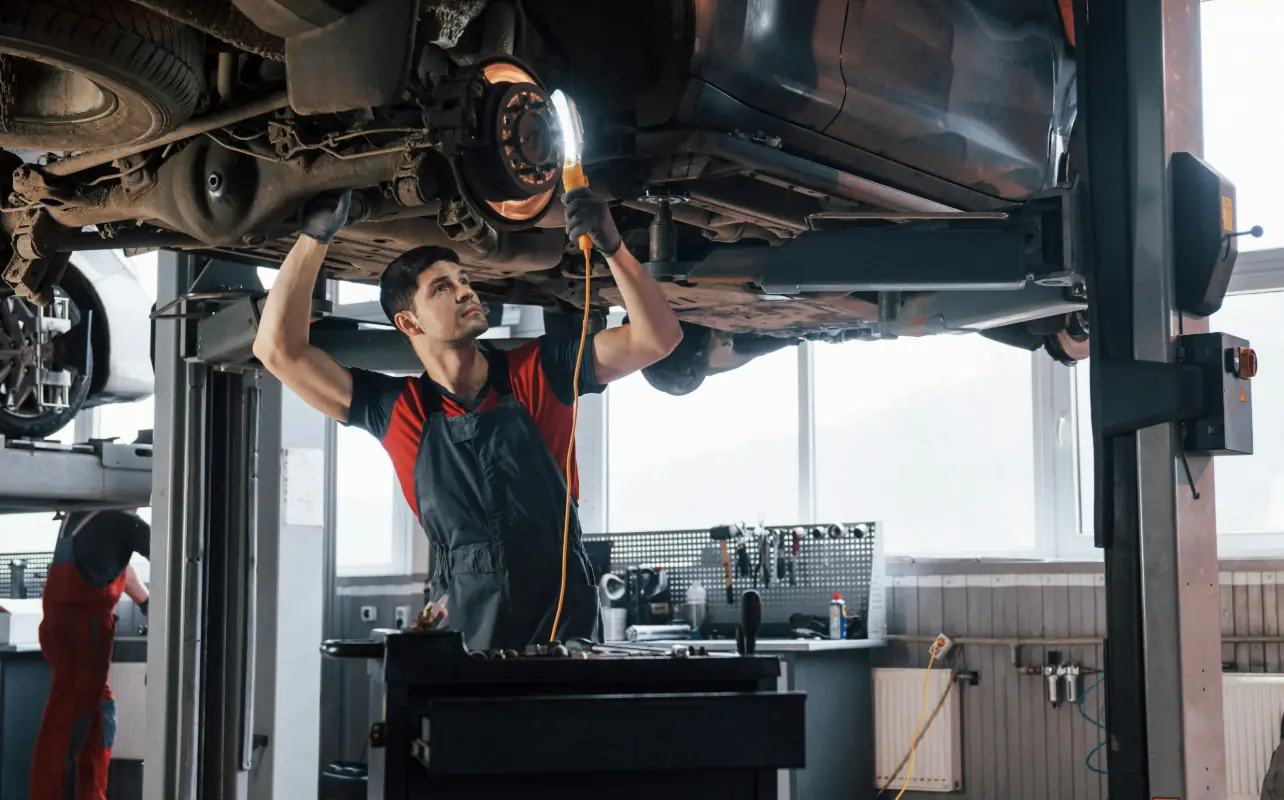
A properly functioning suspension and steering system is essential for a comfortable ride, stable handling, and safe control of your vehicle. At API Auto Repair, our Suspension & Steering Repair services involve a thorough inspection and expert repair of worn components such as shocks, struts, ball joints, tie rods, and power steering systems. We address issues like excessive bouncing, uneven tire wear, steering wheel vibrations, or difficulty steering. Our certified technicians use precision tools to diagnose alignment problems and replace faulty parts with high-quality components, restoring your vehicle's handling and ride comfort. Trust us to ensure your vehicle drives smoothly and responds precisely to your commands.
Your suspension and steering systems work together as the foundation of how your vehicle handles, rides, and keeps you safe on the road. The suspension absorbs road imperfections through springs, shocks, and struts, while the steering system translates your inputs at the wheel into precise tire movement through tie rods, ball joints, the steering rack, and the power steering pump or electric motor. When either system has worn or damaged components, every other safety system — brakes, anti-lock braking, traction control, electronic stability control, and modern collision-avoidance technology — operates outside its design parameters. Worn suspension and steering parts don't just make the ride uncomfortable. They lengthen stopping distances, reduce cornering grip, accelerate uneven tire wear, and in extreme cases lead to loss of vehicle control.
API Auto Repair has been diagnosing and repairing suspension and steering systems in Elkridge for over thirty years. We've seen every failure mode — from collapsed strut springs after Maryland's brutal pothole season to leaking power steering racks on early 2000s domestic vehicles to electric power steering motor failures on more recent imports. Our diagnostic process begins with a road test to characterize the symptom, followed by a thorough underbody inspection on the lift to identify worn components by visual inspection, hand-testing for play, and measurement when applicable. Many shops will replace whatever part you came in for and call it done; we identify the underlying cause, document related wear, and tell you honestly which parts truly need replacement now versus which can wait.
Suspension and steering wear in Maryland follows specific patterns shaped by our regional driving conditions. Howard County's pothole density during the late winter and early spring freeze-thaw cycles damages suspension components at a rate well above the national average. Frequent lane changes and stop-and-go traffic on I-95, I-695, US-1, and Route 100 stress tie rod ends and ball joints from constant micro-movements. Road salt and brine treatments accelerate corrosion on coil springs, control arm bushings, sway bar links, and exposed steering linkage. Vehicles that have been Maryland-owned for more than five years show characteristic regional wear that we can identify visually: rust-pitted spring perches, salt-corroded sway bar end links, deteriorated rubber bushings, and oxidized steering rack boots that have begun to crack.
We service all major suspension and steering configurations: traditional MacPherson struts, double-wishbone setups, multi-link rear suspension, solid rear axles on trucks, and air suspension systems on luxury vehicles. We service hydraulic power steering, electric power steering (EPS), and electro-hydraulic hybrid systems. Our equipment includes spring compressors rated for safe coil-spring service, ball joint presses, tie rod separators, alignment-grade torque equipment, and computer alignment racks for verification work after suspension replacement. The combination of equipment, training, and pattern recognition from thirty years of Maryland service work is what separates accurate suspension repair from parts-cannon guesswork.
Features
Shock & Strut Replacement
Improving ride comfort and vehicle stability.
Steering System Repair
Ensuring precise and responsive steering.
Wheel Bearing Replacement
Addressing noise and vibration issues from worn bearings.
Alignment Check
Verifying proper wheel alignment after suspension work.
Signs You Need This Service
Excessive Bouncing After Hitting Bumps
If your vehicle bounces more than once or twice after hitting a bump or speed hump, your shocks or struts are likely worn beyond serviceable condition. The 'bounce test' — pressing down firmly on a corner of the vehicle and releasing — should result in one settle and stop. More than two oscillations means replacement is overdue.
Vehicle Pulls to One Side While Driving Straight
Pulling can indicate alignment issues, but it can also point to a worn ball joint, a collapsed coil spring, or uneven tire wear that's traceable back to suspension wear. Diagnosis distinguishes between these causes — alignment alone won't fix a worn-out ball joint that's letting the wheel angle drift.
Steering Wheel Vibration at Highway Speeds
Steady steering wheel vibration above 50 mph often points to wheel balance issues, but persistent vibration can also indicate a worn tie rod end, a damaged tire from impact, or a worn wheel bearing. Vibration that worsens during braking suggests warped rotors, but vibration through the steering wheel alone usually traces to suspension or steering components.
Clunking, Knocking, or Popping Noises Over Bumps
Sharp clunking sounds when driving over bumps or speed humps almost always indicate worn sway bar end links, ball joints, control arm bushings, or strut mount bearings. The specific noise location and character helps us identify the failed component during inspection — clunks transmitted through the steering wheel point to different parts than clunks felt through the floor.
Loose, Wandering, or Vague Steering Feel
Steering that feels disconnected, requires constant correction to drive straight, or has noticeable play before the wheels respond indicates worn steering linkage components — typically tie rod ends, the steering rack itself, or the inner tie rod sockets. Excessive play is a Maryland State Inspection failure and a serious safety concern.
Uneven, Cupped, or Feathered Tire Wear Patterns
Tires reveal suspension and alignment problems through their wear patterns. Inner or outer edge wear suggests alignment issues. Cupping (scalloped wear pattern) usually indicates worn shocks or struts. Feathering (sharp edges on one side of the tread blocks) points to worn tie rods or alignment problems. Your tires are diagnostic indicators if you know how to read them.
Power Steering Whine or Stiff Steering
Hydraulic power steering systems develop whining noises when fluid is low, the pump is failing, or air has been introduced into the system. Stiff or notchy steering — particularly at low speeds when parking — indicates a failing pump, contaminated fluid, or a leaking rack. Electric power steering systems can fail silently with sudden loss of assist requiring immediate diagnosis.
Our Service Process
- 1
Road Test to Characterize Symptoms
We start every suspension and steering service with a brief road test. The road test reveals symptoms that don't show up in the parking lot — pulling under braking, vibration at specific speeds, clunks over expansion joints, steering wheel position when driving straight. The data from the road test guides which components to focus on during the static inspection.
- 2
Visual Inspection on the Lift
On the lift, we inspect every component of the suspension and steering systems: shocks and struts for leaks and rod corrosion, springs for breakage and corrosion, ball joints for movement and boot integrity, tie rod ends for play, control arm bushings for cracking and excessive movement, sway bar end links and bushings, strut mounts, and the steering rack boots and seals. We document findings with measurements and photographs when relevant.
- 3
Hand-Testing Suspension Components for Play
Many wear conditions can't be identified by visual inspection alone. We use pry bars and weight transfer to test ball joints, tie rod ends, and control arm bushings for excessive play. Hand-testing reveals the difference between cosmetic wear and functional failure — components that look worn might still be within tolerance, while components that look fine might have hidden internal play.
- 4
Steering System Function Tests
We test the steering system through its full range of motion, listening for clicks, knocks, or grinding that indicate worn components. Power steering systems are tested for proper assist at idle and highway speeds. Hydraulic systems have fluid level and condition checked; electric systems have fault codes scanned and motor function verified through diagnostic equipment.
- 5
Written Estimate With Required vs Recommended
Before any work begins, you receive a written estimate that distinguishes between required repairs (safety failures, severe wear, components that will fail soon) and recommended repairs (worn but still functional components that should be addressed at the same service to save labor cost). You decide which work to authorize. We never start parts replacement without your specific approval.
- 6
Component Replacement With OEM-Equivalent Parts
We use OEM or OEM-equivalent parts from quality manufacturers (Moog, MEVOTECH, Beck/Arnley, Mevotech Premium, Delphi, Bilstein, KYB, and similar) matched to your vehicle's specifications. Specific applications — performance vehicles, luxury cars, vehicles that tow — sometimes warrant premium upgrade options that we'll explain when relevant.
- 7
Torque All Fasteners to Manufacturer Specification
Suspension and steering components have specific torque requirements that must be met to ensure safety and longevity. Under-torqued bolts can loosen and lead to component failure; over-torqued bolts can fracture and cause sudden failure. Every fastener is torqued with calibrated torque equipment to manufacturer specification, in the correct sequence when applicable.
- 8
Wheel Alignment After Major Suspension Work
Replacing tie rods, control arms, struts, or ball joints changes wheel alignment angles. We always recommend alignment after major suspension work and discuss this when scheduling. Skipping alignment after these repairs causes accelerated tire wear and can leave the vehicle handling poorly. Alignment is performed on our computer alignment rack with before-and-after specs printed for your records.
What's Included in This Service
Front Suspension Component Inspection
Shocks, struts, springs, ball joints, control arms, tie rod ends, sway bar links, and bushings all checked for wear or damage.
Rear Suspension Component Inspection
Shocks, springs, control arms, sway bar links, lateral arms, and rear bushings checked thoroughly.
Steering Linkage Inspection
Inner and outer tie rod ends, steering rack boots, idler arms (where applicable), and pitman arms checked for play and damage.
Power Steering System Check
Fluid level and condition (hydraulic systems), pump operation, hose condition, and electric system fault codes verified.
Sway Bar and Stabilizer Component Inspection
Sway bar end links and bushings tested for movement; sway bar mountings inspected for cracking or detachment.
Strut Mount and Bearing Inspection
Strut mount bearings tested for binding or noise during steering; mount integrity verified for cracks or rubber failure.
Wheel Bearing Function Check
Bearings tested for noise, looseness, and proper operation through wheel rotation and lateral force testing.
Pre-Repair Documentation
Photographs of worn components and measurement records included with the written diagnostic report.
Post-Repair Road Test
Verification drive after all repairs to confirm proper steering response, no pulling, smooth ride quality, and no remaining symptoms.
Wheel Alignment When Required
Alignment performed on computer alignment rack after major suspension work, with before-and-after specs documented.
Why Choose API Auto Repair
Diagnostic-First Approach Prevents Unnecessary Repairs
Suspension and steering symptoms often have multiple possible causes. We diagnose root cause through road testing, visual inspection, and hand testing before recommending replacement. This approach saves customers thousands by avoiding the parts-cannon guesswork where shops replace components hoping to fix symptoms.
30+ Years of Maryland-Specific Pattern Recognition
Maryland's road conditions create predictable wear patterns. We've seen them on tens of thousands of vehicles. That experience often saves diagnostic time — we know which components fail first on specific models, which years had factory defects, which problems cascade into related failures. Pattern recognition matters.
OEM-Equivalent Parts From Trusted Manufacturers
We use Moog, Mevotech Premium, Beck/Arnley, Bilstein, KYB, Delphi, and similar quality suppliers — not the cheapest available aftermarket parts. Quality parts last longer, fit properly, and maintain proper alignment angles. The price difference between budget parts and OEM-quality is small versus the labor cost of doing the work twice.
Alignment Rack and Calibrated Torque Equipment
Suspension repair done correctly requires post-repair alignment and proper torque to manufacturer specifications. Many shops skip alignment to keep the bill down or use uncalibrated tools that under- or over-torque fasteners. We invest in the right equipment so the job is done correctly the first time.
Family-Owned, Locally Operated, Honest Recommendations
We're family-owned and have been in Elkridge since 1995. Our customers come back because we tell them honestly which work needs to happen now, which can wait, and which doesn't need to happen at all. That honesty is our reputation, and it's why we have a 4.8-star average across 117+ Google reviews.
Suspension and Steering Repair Pricing in Elkridge, MD
Suspension and steering repair pricing varies dramatically based on which components need replacement and how labor-intensive the access is on your specific vehicle. Common single-component replacements run as follows: outer tie rod end replacement is typically $150–$350 per side. Inner tie rod replacement runs $200–$400 per side, often combined with outer for $400–$700 total per side when both are worn. Sway bar end link replacement is $80–$200 per pair. Ball joint replacement runs $200–$500 per side for typical vehicles, higher on trucks with heavier components or pressed-in joints requiring specialty tools. Control arm replacement (typically including ball joint and bushings as a complete assembly) ranges $300–$700 per side.
Strut and shock replacement is the most common major suspension repair. Strut assembly replacement (complete strut with spring, mount, and bumper as a unit) typically runs $400–$1,000 per pair installed for most passenger vehicles, $700–$1,500 per pair for trucks and SUVs. Shock absorber replacement runs $300–$600 per pair for vehicles with shock-and-spring rear suspension. Performance and specialty applications — coilover suspension, electronic damping systems, air suspension components — vary widely and we quote them individually. Air suspension repairs in particular can range from $400 for a leaking line to $3,000+ for replacement of an air spring assembly.
Steering system repairs span an even wider range. Power steering hose replacement runs $200–$500 depending on which hose. Power steering pump replacement is typically $500–$1,200 for hydraulic systems. Steering rack replacement (the most expensive common steering repair) runs $1,000–$2,500 depending on vehicle and whether the rack is hydraulic or electric. Electric power steering motor replacement runs $800–$2,000+ depending on integration and programming requirements. We provide written estimates before any work begins, and we explain when premium options (genuine OEM versus quality aftermarket) make sense versus when they don't justify the price difference.
Tips to Extend the Life of Your Service
Inspect Suspension Annually After Year 5
Vehicles older than five years benefit from annual suspension inspections, typically combined with the spring tire rotation. Many wear conditions develop gradually and aren't obvious until they're advanced. Annual inspection catches issues when they're cheap to fix rather than when they've cascaded into multiple component failures.
Replace Suspension Components in Pairs When Possible
Replacing one shock or strut with a worn-out unit on the other side creates handling imbalances. Replace shocks and struts in pairs across the same axle to maintain symmetric performance. The same applies to sway bar end links and to tie rod ends in many cases — symmetric wear means symmetric replacement.
Avoid Aggressive Pothole Hits
Maryland's pothole season damages suspension components at predictable rates. Slowing down for major potholes (when traffic safely allows) and avoiding rough lanes when possible reduces cumulative damage. Major pothole hits can bend control arms, break ball joints, crack wheels, and cause internal tire damage that doesn't show up immediately.
Service Power Steering Fluid at Manufacturer Intervals
Hydraulic power steering systems require periodic fluid service per manufacturer specification — typically every 50,000–100,000 miles. Fluid that's neglected becomes contaminated and degrades pump and rack seals from inside. The cost of fluid service is small compared to pump or rack replacement.
Address Small Symptoms Before They Cascade
A worn ball joint creates loads that accelerate wear on tie rods, control arm bushings, and tires. A worn strut mount creates noise that masks more serious problems and accelerates strut failure. Each small symptom that's ignored creates additional wear on related components. Early diagnosis often turns a $200 repair into a $200 repair instead of a $1,500 repair six months later.
Get an Alignment After Any Suspension Work
Replacing tie rods, control arms, ball joints, struts, or springs changes wheel alignment angles. Driving without alignment correction causes accelerated tire wear and poor handling. The alignment cost is much smaller than the cost of premature tire replacement, and it's required for proper post-repair operation.
Serving Elkridge & Howard County, MD
Howard County's road infrastructure is uniquely hard on suspension components. The combination of heavy commuter traffic on I-95, I-695, US-1, and Route 100 with frequent freeze-thaw cycles during winter creates persistent pothole problems that damage suspension components at rates well above national averages. We see seasonal spikes in suspension repairs every February through April as Maryland drivers discover the damage from winter potholes — bent control arms, broken sway bar links, damaged tires from sidewall pinching, and cracked wheels.
Maryland's heavy use of road salt and brine for winter road treatment accelerates corrosion on exposed suspension components. Coil springs, sway bar end links, control arm bushings, and steering linkage all corrode faster in salt-treated environments than in milder climates. Vehicles that live primarily outdoors during Maryland winters show characteristic regional wear that we identify routinely: rust-pitted spring perches, deteriorated bushing rubber, and salt-corroded fasteners that are difficult to remove without damage.
We work with customers across Howard County including BWI airport-area commuters, Fort Meade military families, NSA-region government workers, and contractors and tradespeople from the Elkridge–Hanover–Jessup industrial corridor. Each customer segment has somewhat different suspension wear patterns based on driving intensity and load. Heavy-duty pickup truck owners towing trailers see different wear patterns than commuter sedan owners. We tailor our service recommendations to actual usage rather than a one-size-fits-all template.
Shocks vs Struts: Understanding the Difference and Why It Matters
Shocks and struts are often referred to interchangeably, but they're distinct components with different roles in the suspension system. A shock absorber dampens the up-and-down motion of the suspension by converting kinetic energy into heat through hydraulic resistance. A strut is a structural component that combines a shock absorber with a coil spring and serves as a structural pivot point for the suspension. Most modern front suspensions use struts (specifically MacPherson struts), while many rear suspensions use shocks paired with separate coil springs. Some vehicles use struts at all four corners, and some trucks use shocks at all four corners.
The functional difference matters when components wear or fail. A failed shock absorber affects ride quality and handling but doesn't compromise the structural integrity of the suspension. A failed strut, in contrast, can affect alignment angles directly and may compromise the structural geometry of the suspension. Strut replacement also typically requires either a complete loaded-strut assembly (which includes the strut, spring, mount, and bearing as a single unit) or a more involved disassembly process that requires a spring compressor for safety. Shocks are simpler to replace.
Cost-wise, complete loaded-strut assemblies have made strut replacement faster and safer over the past decade. Pre-assembled units like the Monroe Quick-Strut, KYB Strut-Plus, and similar products eliminate the need to compress dangerous coil springs in the shop, which speeds up the job and improves safety. The trade-off is slightly higher parts cost compared to bare struts. We typically recommend loaded assemblies for most customers because the labor savings often offset the parts cost, and the safety benefit of not handling compressed springs is meaningful.
When shocks or struts wear, the ride degrades gradually rather than failing suddenly. Many drivers don't notice the deterioration until they drive a freshly serviced vehicle and realize how much harshness, bouncing, and instability they had been tolerating. The 'bounce test' (pressing down on a corner of the vehicle and counting oscillations) identifies severely worn units; gentler wear is harder to detect without comparison. We typically recommend strut and shock replacement at 50,000 to 100,000 miles depending on driving conditions and vehicle weight, with heavier vehicles and aggressive driving conditions favoring the lower end of that range.
Ball Joints, Tie Rods, and Bushings: The Wear Items That Matter Most
Ball joints are the pivot points that allow the suspension to move up and down while letting the wheels steer left and right. They consist of a steel ball inside a socket, typically grease-filled and protected by a rubber boot. When the boot fails or the grease dries out, the ball and socket wear against each other and develop play. Worn ball joints make clunking noises over bumps, accelerate tire wear, and in severe cases can separate completely — which causes the wheel to detach from the suspension and the vehicle to drop suddenly. Ball joint failure is a primary cause of catastrophic suspension failures and a Maryland State Inspection failure when play exceeds specification.
Tie rod ends connect the steering rack or steering linkage to the steering knuckle. They allow the wheels to pivot for steering while transmitting steering input from the rack. Tie rod ends consist of a similar ball-and-socket design as ball joints, with similar failure modes — worn boots let grease escape, the joint develops play, and steering becomes loose and imprecise. Worn tie rod ends cause excessive play in the steering, uneven tire wear (specifically inside or outside edge wear or feathering), and inability to maintain alignment. Like ball joints, severely worn tie rod ends can fail catastrophically and cause loss of steering control.
Bushings are the rubber or polyurethane components that connect suspension parts to the vehicle frame and to each other. Control arm bushings, sway bar bushings, strut mount bushings, subframe bushings — every connection point has bushings of some type. Bushings degrade through age (rubber dries and cracks), through chemical contamination (oil leaks attack rubber), and through mechanical wear (constant flexing creates fatigue cracks). Worn bushings cause clunking noises, wandering steering, alignment drift, and accelerated wear on connected components. Replacing failed bushings often restores handling significantly more than replacing the more visible components like shocks or springs.
These components — ball joints, tie rods, and bushings — are often the actual cause of suspension symptoms that customers attribute to bigger components. A vehicle that 'rides rough' might not need new struts; it might need new control arm bushings. A vehicle with 'loose steering' might not need a new steering rack; it might need new tie rod ends. Diagnosis matters because the right repair can be 20% of the cost of the wrong repair. We hand-test each of these components during inspection and identify which actually need replacement versus which still have life remaining.
Air Suspension Repair: A Specialty Service for Luxury and Performance Vehicles
Air suspension is increasingly common on luxury vehicles (Audi A8, Mercedes S-Class, BMW 7-series, Range Rover, Jeep Grand Cherokee Summit, RAM 1500 Limited) and on some performance vehicles. Air suspension uses pneumatic air springs (sometimes called air bags or air struts) that can adjust ride height and stiffness electronically. The system also includes an air compressor, lines, valves, height sensors, and an electronic control module. When properly functioning, air suspension provides exceptional ride quality and the ability to lower or raise the vehicle for different driving conditions.
When air suspension fails, the failures can range from minor to expensive. The most common failure is a leaking air spring — typically caused by age-related rubber deterioration or rubbing against suspension components. A leaking air spring causes one corner of the vehicle to sit lower than others when parked, sometimes accompanied by audible compressor cycling as the system tries to maintain height. Air spring replacement runs $500–$1,500 per corner depending on vehicle. Compressor failure causes the system to be unable to maintain or restore height — typically a $400–$1,200 replacement. Height sensor failures cause incorrect height readings and uneven ride heights — typically $200–$500 each.
Air suspension diagnosis requires manufacturer-grade scan tools that can communicate with the ride control module, read fault codes, and command the system to perform specific tests. We have these tools and the experience to interpret what they're showing. We also work with specialty suppliers for air suspension components because OEM parts are often the only safe choice for these systems — aftermarket air springs vary widely in quality, and a failure of an aftermarket spring can damage the compressor and require additional repairs.
Some customers with older luxury vehicles convert from air suspension to conventional coil spring suspension when air components fail repeatedly. This is a legitimate option for cost-conscious owners but should be considered carefully. Conversion kits run $1,500–$3,500 installed and may compromise ride quality compared to functioning air suspension. We discuss this option honestly when it makes sense for your situation and your ownership horizon.
How Suspension Wear Affects Maryland State Inspection Pass/Fail
Maryland State Inspection includes specific suspension and steering checks that catch worn components before they fail catastrophically. Inspectors check for excessive play in ball joints (typically more than 1/4 inch of vertical or horizontal movement is failing), excessive play in tie rod ends (similar criteria), broken or sagging coil springs, leaking shocks or struts (active fluid leaks, not just discoloration), damaged or torn boots on ball joints and tie rod ends, broken or missing sway bar end links, and damaged steering rack boots. Each of these is documented as a fail item if found.
Several findings can fail inspection that customers don't expect. Severely worn shocks or struts that no longer dampen properly fail the inspection even if they're not actively leaking. Cracked or torn rubber boots fail because they expose grease-filled joints to contamination that will accelerate wear. Bent steering linkage components from impact damage fail. Steering racks with internal play that allows wheels to move without driver input fail. The inspection is strict because each of these conditions affects vehicle safety in ways that aren't obvious from inside the cabin.
If your vehicle is approaching inspection — particularly if you're transferring a title or registering an out-of-state vehicle — and you suspect suspension issues, get a pre-inspection check done before the official inspection. We can identify likely fail items, quote repairs, and let you decide whether to address them before paying the inspection fee. This avoids the cost of a failed inspection followed by repairs and re-inspection, which is more expensive than addressing the issues upfront.
Common pass-with-condition findings include slightly worn but still functional ball joints, tie rod ends with minor play that's within specification, and shocks that are showing age but haven't failed. We document these as 'monitor' items on our inspection report so you know what to expect at the next inspection cycle. Maryland inspections are a single-point checkpoint, but suspension wear is gradual — knowing what's coming helps you budget for upcoming repairs rather than facing surprises.
Related Services
Wheel Alignment in Elkridge, MD
Improve handling and tire life with precision wheel alignment at API Auto Repair in Elkridge, MD.
Tire Services in Elkridge, MD
Need new tires or a rotation? API Auto Repair offers fast, affordable tire service in Elkridge, MD. Schedule your visit today.
Brake Repair & Replacement in Elkridge, MD
Get expert brake repair in Elkridge, MD. API Auto Repair offers fast, safe brake service at competitive prices.
Certified Maryland State Inspections in Elkridge
Need a Maryland state inspection? Visit API Auto Repair in Elkridge for fast, certified service.
Car Battery Testing & Replacement in Elkridge
Dead battery? Visit API Auto Repair in Elkridge, MD for fast testing and high-quality battery replacements.
Got Questions?